
- What Is Honey Mustard Glazed Pork Tenderloin?
- Tips for Cooking and Prepping
- Recipe Variations and Substitutes
- What to Serve with Honey Mustard Pork Tenderloin
- Storing, Make-Ahead, and Freezing Tips
- FAQs
- Honey Mustard Glazed Pork Tenderloin with Roasted Fingerling Potatoes Recipe
If you’re looking for a dinner that feels fancy but comes together with minimal fuss, this honey mustard glazed pork tenderloin is it. Sweet, tangy, and roasted right alongside crispy fingerling potatoes, it’s the kind of meal that turns a weeknight into something special without a mountain of dishes.
What Is Honey Mustard Glazed Pork Tenderloin?
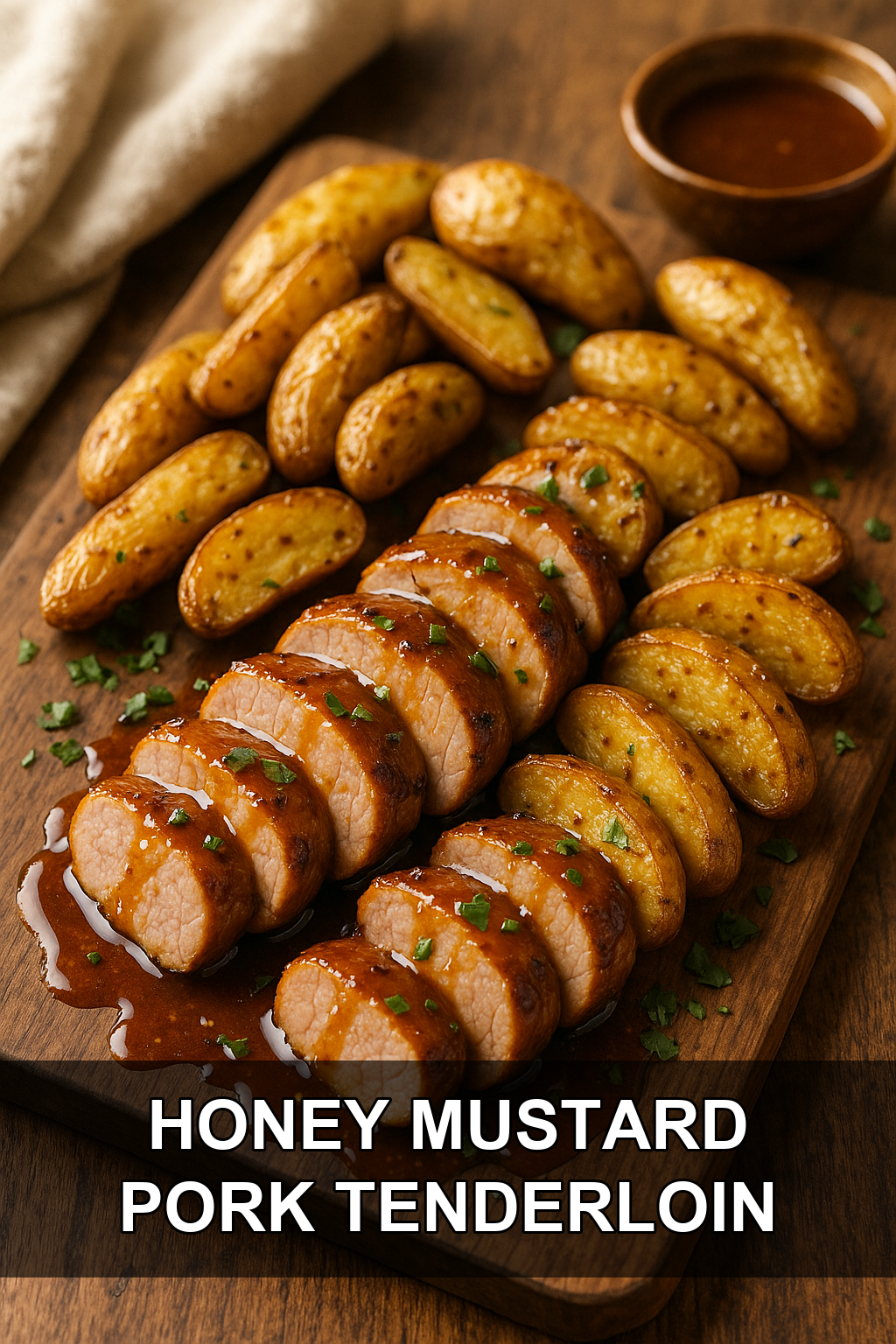
Honey mustard glazed pork tenderloin is exactly what it sounds like: a lean, tender cut of pork brushed with a sticky-sweet mixture of honey, mustard, and a few savory seasonings, then roasted until the outside caramelizes into a glossy, golden crust. Pork tenderloin is naturally mild and cooks quickly, which makes it the perfect canvas for a bold glaze like this one—each bite gets that irresistible balance of sweetness from the honey and sharp tang from the mustard.
Pairing it with roasted fingerling potatoes isn’t just about convenience, though that’s a huge bonus since everything cooks on one sheet pan. Fingerlings are small, waxy potatoes with a naturally creamy texture and thin skin, so they roast up crispy on the outside and buttery on the inside, soaking up any glaze that drips down from the pork as it rests. Together, this dish gives you protein and starch in one pan, one oven, and one clean-up.
Tips for Cooking and Prepping
#1: Don’t skip the sear
Searing the tenderloin in a hot skillet for a couple of minutes per side before glazing and roasting locks in juices and gives you a deeper caramelized crust once it hits the oven.
#2: Use an instant-read thermometer
Pork tenderloin is thin and cooks fast, so it’s easy to overshoot doneness. Pull it at 140-145°F internal temperature and let it rest—it will climb a few more degrees as it sits.
#3: Cut fingerling potatoes in half lengthwise
Halving the potatoes creates more flat surface area for browning and helps them cook at roughly the same rate as the pork, so everything finishes together.
#4: Reserve some glaze for basting
Split your honey mustard glaze into two portions—one to coat the pork before roasting and one to brush on halfway through—so you get layers of flavor instead of a single burnt-on coating.
#5: Give the potatoes a head start
Toss the fingerlings with oil and roast for about 10 minutes before adding the pork to the pan, since potatoes generally need a bit longer than the tenderloin to turn fully tender and crisp.
#6: Let the pork rest before slicing
Resting for 5-10 minutes under loose foil keeps the juices inside the meat instead of running out onto the cutting board the moment you slice it.
Recipe Variations and Substitutes
Swap Dijon mustard for whole grain or yellow mustard depending on how sharp or mild you want the glaze, and try maple syrup in place of honey for a slightly deeper, earthier sweetness. You can also add a splash of apple cider vinegar or a squeeze of lemon to brighten the glaze, or toss in fresh rosemary and thyme with the potatoes for an herby, autumnal twist. No fingerling potatoes on hand? Baby Yukon golds or red potatoes work just as well cut into similar-sized pieces.
What to Serve with Honey Mustard Pork Tenderloin
Since the potatoes are already roasting alongside the pork, all you really need is a fresh vegetable to round out the plate—think steamed green beans, a simple arugula salad, or roasted Brussels sprouts. A crusty piece of bread is great for mopping up any extra glaze, and a crisp white wine or apple cider pairs beautifully with the honey mustard flavors.
Storing, Make-Ahead, and Freezing Tips
Leftover pork and potatoes keep well in an airtight container in the fridge for up to 4 days; reheat gently in a 300°F oven to avoid drying out the pork. You can mix the honey mustard glaze up to 3 days ahead and store it covered in the fridge, and the tenderloin can be trimmed and seasoned a day in advance. For freezing, slice the cooked pork, freeze in a freezer-safe bag for up to 2 months, and thaw overnight in the fridge before reheating (potatoes are best made fresh, as they can turn grainy after freezing).
FAQs
What temperature should pork tenderloin be cooked to?
Pork tenderloin is safe and juicy when cooked to an internal temperature of 145°F, followed by a 3-5 minute rest. Pulling it at 140°F and letting it rest allows carryover cooking to bring it up the rest of the way without drying out.
Can I use pork loin instead of pork tenderloin?
You can, but keep in mind pork loin is a larger, thicker cut that requires a longer cooking time and different technique, so it won’t cook in the same amount of time as the tenderloin and potatoes in this recipe. If substituting, plan on roasting the loin separately or adjusting the total cook time significantly.
Why is my honey mustard glaze burning in the oven?
Honey caramelizes quickly and can scorch at high heat, especially if it’s applied too early or too thickly. Add a portion of the glaze partway through roasting rather than all at the start, and keep the oven temperature around 400°F rather than higher.
Do I need to soak or par-cook the fingerling potatoes first?
No soaking or boiling is necessary for this recipe—fingerling potatoes are thin-skinned and small enough to roast through fully raw as long as they’re halved and given a slight head start in the oven before the pork joins the pan.
Can I make this recipe on a grill instead of in the oven?
Yes, you can grill the pork tenderloin over medium-high heat, turning and basting with glaze until it reaches 145°F, while the potatoes can be parboiled briefly then finished in a grill basket or foil packet for a smoky variation on this dish.
Honey Mustard Glazed Pork Tenderloin with Roasted Fingerling Potatoes Recipe
Prep time: 15 min | Cook time: 35 min | Total time: 50 min | Servings: 4
Ingredients
For the Pork and Glaze
- 1 1/2 lb pork tenderloin, trimmed
- 1/3 cup honey
- 1/4 cup Dijon mustard
- 1 tbsp whole grain mustard
- 2 cloves garlic, minced
- 1 tbsp olive oil
- 1 tsp apple cider vinegar
- 1/2 tsp smoked paprika
- Salt and freshly ground black pepper, to taste
For the Roasted Fingerling Potatoes
- 1 1/2 lb fingerling potatoes, halved lengthwise
- 2 tbsp olive oil
- 2 sprigs fresh rosemary, chopped (or 1 tsp dried)
- 1/2 tsp garlic powder
- Salt and freshly ground black pepper, to taste
For Garnish
- Chopped fresh parsley
- Extra honey mustard glaze, warmed, for drizzling
Instructions
- Preheat the oven to 400°F and line a large sheet pan with parchment paper or lightly grease it.
- In a small bowl, whisk together the honey, Dijon mustard, whole grain mustard, garlic, olive oil, apple cider vinegar, and smoked paprika. Set aside half the glaze for basting later.
- Toss the halved fingerling potatoes with olive oil, chopped rosemary, garlic powder, salt, and pepper. Spread them out on one side of the prepared sheet pan and roast for 10 minutes.
- While the potatoes roast, pat the pork tenderloin dry and season generously with salt and pepper. Heat a large oven-safe skillet or the stovetop side of your sheet pan setup over medium-high heat with a drizzle of oil, and sear the tenderloin for 2-3 minutes per side until golden brown all over.
- Brush the seared pork all over with half of the honey mustard glaze, then nestle it onto the sheet pan alongside the partially roasted potatoes.
- Return the pan to the oven and roast for 18-22 minutes, brushing the pork with the remaining glaze halfway through, until the pork reaches an internal temperature of 140-145°F and the potatoes are fork-tender and golden.
- Remove the pan from the oven, tent the pork loosely with foil, and let it rest for 5-10 minutes to allow the juices to redistribute.
- Slice the pork tenderloin into medallions and serve alongside the roasted fingerling potatoes. Garnish with fresh parsley and drizzle with warmed extra glaze before serving.
For extra caramelization, broil the pan for the last 1-2 minutes of cooking, watching closely so the glaze doesn’t burn. Leftover glaze also makes a great dipping sauce or salad dressing base.
Leave a Reply
You must be logged in to post a comment.