
- What Is Healthy Indian Food, Really?
- Tips for Cooking and Prepping
- Recipe Variations and Substitutes
- What to Serve With Dal Tadka
- Storing, Make-Ahead, and Freezing Tips
- FAQs
- Healthy Dal Tadka Recipe
If you think healthy eating means giving up bold, comforting flavors, Indian food is about to change your mind. This post is packed with real tips for cooking lighter Indian meals at home, plus a free downloadable meal plan and a nourishing dal tadka recipe you’ll want to make on repeat.
What Is Healthy Indian Food, Really?
Healthy Indian cooking isn’t about stripping away spice or flavor — it’s about smart swaps like using less oil, choosing whole grains over refined ones, loading up on legumes and vegetables, and cooking with fresh spices instead of heavy cream or excess ghee. Traditional Indian home cooking, especially in regional households, already leans on lentils, vegetables, yogurt, and whole spices that are naturally anti-inflammatory and nutrient-dense.
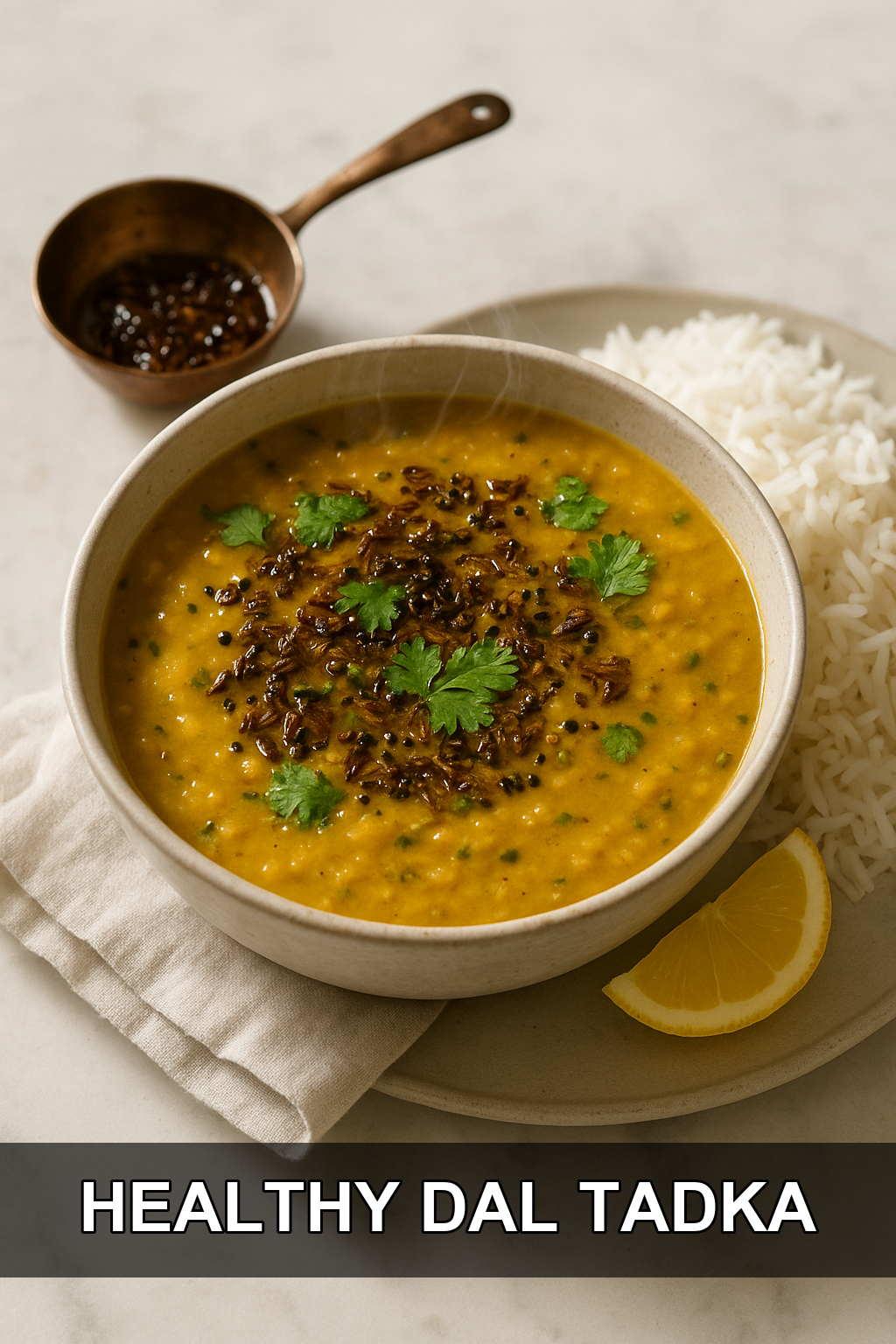
The dish at the center of this post, dal tadka, is a perfect example. It’s a simple lentil curry finished with a fragrant tempering (tadka) of spices bloomed in a small amount of ghee or oil. It’s high in plant protein and fiber, gluten-free, and endlessly customizable, making it an ideal anchor recipe for anyone building a healthy Indian meal plan.
Tips for Cooking and Prepping
#1: Rinse your lentils until the water runs clear
This removes excess starch and any dust from packaging, giving you a cleaner-tasting, less gummy dal.
#2: Don’t skip the tadka step
Blooming cumin, garlic, and dried chilies in hot oil for just 30-60 seconds unlocks flavors that plain simmered spices can’t replicate, so you can use less salt and oil overall while still getting big flavor.
#3: Use a pressure cooker or Instant Pot for creamier texture
Lentils cooked under pressure break down more evenly, giving you that silky, restaurant-style consistency without needing added cream or butter.
#4: Add a pinch of turmeric early, not at the end
Turmeric needs a few minutes of cooking time to mellow its raw, bitter edge and fully infuse the dal with color and warmth.
#5: Finish with acid for brightness
A squeeze of lemon juice or a splash of tomato stirred in at the end balances the earthiness of the lentils without needing extra salt or fat.
#6: Prep your spice tin ahead of time
Measure out cumin seeds, mustard seeds, turmeric, and chili powder into small bowls before you start cooking so the fast-moving tadka step doesn’t burn while you scramble for jars.
Recipe Variations and Substitutes
This dal is wonderfully flexible: swap yellow moong dal for masoor dal (red lentils) for a quicker cook time, or use toor dal for a heartier, more traditional texture. For extra nutrition, stir in chopped spinach, grated carrot, or diced zucchini during the last 10 minutes of cooking. Vegan? Use coconut oil or a neutral oil instead of ghee, and it’s already dairy-free.
What to Serve With Dal Tadka
Pair this dal with steamed basmati rice, brown rice, or quinoa for a fuller meal, and add a side of sautéed greens or a cucumber-tomato salad to round things out. For a lower-carb option, serve it alongside cauliflower rice or warm whole wheat roti, and top with a dollop of plain yogurt for extra protein and cooling contrast.
Storing, Make-Ahead, and Freezing Tips
Dal tadka stores beautifully in an airtight container in the fridge for up to 5 days, and the flavor actually deepens overnight. To freeze, cool completely and store in freezer-safe containers or bags for up to 3 months; thaw overnight in the fridge and reheat gently on the stovetop with a splash of water to loosen the texture.
FAQs
Is dal tadka healthy for weight loss?
Yes, dal tadka is high in plant-based protein and fiber, which helps keep you full, and it’s naturally low in fat when made with minimal oil, making it a smart addition to a weight-conscious meal plan.
What is the difference between dal fry and dal tadka?
Dal fry typically has the tempering (spices sautéed in oil) mixed into the lentils during cooking, while dal tadka has the tempering poured over the top just before serving for a more intense, fresh burst of flavor.
Can I make this recipe oil-free?
You can dry-toast the cumin and mustard seeds in a nonstick pan instead of oil, though you’ll lose a bit of richness; a teaspoon of oil or ghee goes a long way in flavor without adding significant calories.
How do I get my dal to taste like restaurant dal?
The secret is usually a generous tadka finished with a spoonful of ghee, plus simmering the dal long enough for the lentils to fully break down into a creamy consistency.
Where can I get the free Indian meal plan mentioned in this post?
Simply enter your email in the sign-up box on this page and the free 7-day healthy Indian meal plan, including breakfasts, lunches, and dinners, will be sent straight to your inbox.
Healthy Dal Tadka Recipe
Prep time: 10 min | Cook time: 30 min | Total time: 40 min | Servings: 4
Ingredients
For the Dal
- 1 cup yellow moong dal or toor dal, rinsed
- 3 cups water, plus more as needed
- 1/2 teaspoon turmeric powder
- 1/2 teaspoon salt, or to taste
- 1 small tomato, diced
- 1/2 cup chopped spinach (optional)
For the Tadka (Tempering)
- 1 tablespoon ghee or neutral oil
- 1 teaspoon cumin seeds
- 1/2 teaspoon mustard seeds
- 3 cloves garlic, minced
- 1/2 inch ginger, grated
- 1 dried red chili or 1/4 teaspoon red chili powder
- 1/4 teaspoon asafoetida (hing), optional
- 2 tablespoons chopped fresh cilantro
- 1 tablespoon lemon juice
Instructions
- Add the rinsed lentils, water, turmeric, and salt to a pot or Instant Pot. If using a pot, bring to a boil, then simmer partially covered for 20-25 minutes until soft; if using an Instant Pot, cook on high pressure for 8 minutes with a natural release.
- Stir in the diced tomato and chopped spinach, and simmer the dal uncovered for another 5 minutes until slightly thickened, mashing some of the lentils with the back of a spoon for a creamier texture.
- In a small pan, heat the ghee or oil over medium heat. Add the cumin seeds and mustard seeds, and let them sizzle for about 30 seconds until fragrant and popping.
- Add the minced garlic, grated ginger, dried red chili, and asafoetida to the pan, and sauté for 30-45 seconds until the garlic is golden but not burnt.
- Pour the hot tadka over the simmered dal and stir to combine, letting the flavors meld for a minute or two.
- Stir in the lemon juice and half the cilantro, taste and adjust salt as needed, then garnish with the remaining cilantro before serving hot with rice or roti.
For a smokier flavor, add a pinch of smoked paprika to the tadka; for extra protein, stir in a handful of cooked chickpeas along with the tomato.
Leave a Reply
You must be logged in to post a comment.