
- What Is Spam Musubi?
- Tips for Cooking and Prepping
- Recipe Variations and Substitutes
- Serving Suggestions
- Storing and Make-Ahead Tips
- FAQs
- Hawaiian Spam Musubi Recipe
If you’ve ever wandered through a Hawaiian convenience store or beach picnic, chances are you’ve spotted these little rice-and-Spam bundles wrapped in nori. Spam musubi is salty, sweet, savory, and endlessly snackable, and the good news is you can make a batch at home with just a handful of pantry staples. Grab your musubi mold and let’s bring a taste of the islands to your kitchen.
What Is Spam Musubi?
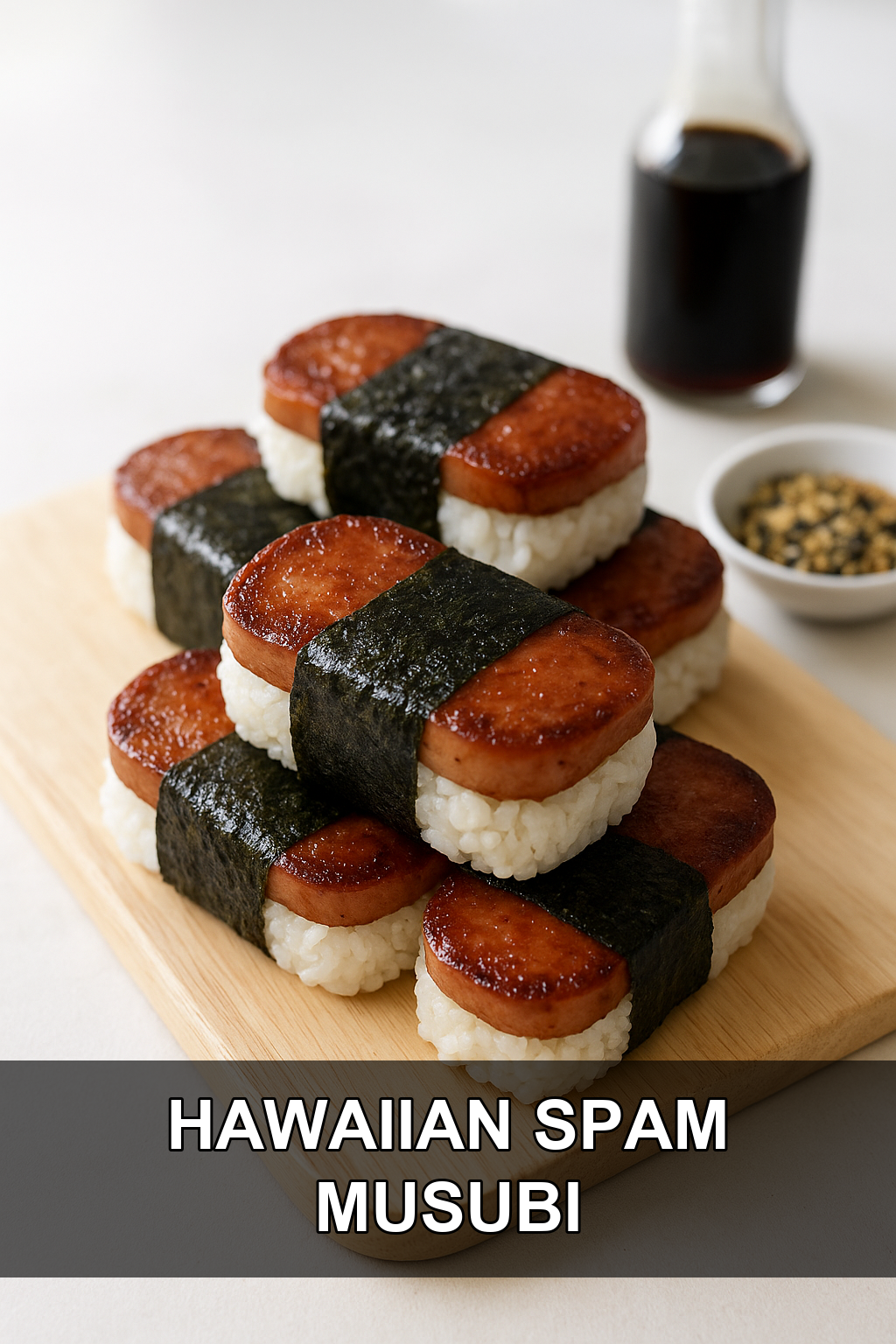
Spam musubi is a beloved Hawaiian snack made by stacking a slice of glazed, pan-fried Spam on a block of sushi rice, then wrapping the whole thing in a strip of nori seaweed, similar to how you’d wrap sushi. It’s part of Hawaii’s plantation-era food history, when Japanese, Filipino, and other immigrant communities blended their culinary traditions with the canned meat that became a wartime and post-war pantry staple across the islands.
Today you’ll find musubi everywhere in Hawaii, from gas station shelves to school lunches to backyard barbecues, and it’s earned a cult following on the mainland too. The combination of sticky rice, umami-rich seaweed, and sweet-salty Spam glazed in soy and oyster sauce makes it a portable, satisfying bite that’s just as good cold as it is warm.
Tips for Cooking and Prepping
#1: Marinate the Spam long enough
Give the Spam the full 15 minutes in the soy-oyster-sugar marinade so the sweet and savory flavors really soak into the meat before it hits the pan.
#2: Get the pan hot for a caramelized crust
Fry the marinated Spam over medium heat until the edges turn slightly crispy and caramelized; that little bit of char is what gives musubi its signature depth of flavor.
#3: Keep your hands and mold wet
Sushi rice is sticky, so dip your fingers and the musubi mold in water frequently as you press the rice to keep everything from sticking and to get clean, even blocks.
#4: Use warm, freshly cooked rice
Rice that’s still warm packs together much more easily than cold rice, which tends to crumble and fall apart when you try to shape it in the mold.
#5: Don’t skip the furikake
A light sprinkle of furikake between the rice and Spam (or on top) adds extra savory sesame and seaweed flavor without any extra work.
Recipe Variations and Substitutes
While classic Spam musubi sticks to the soy-oyster glaze, you can easily switch things up. Try teriyaki sauce instead of the soy-oyster-sugar mixture for a slightly sweeter glaze, add a thin ribbon of scrambled egg or a slice of American cheese for a ‘musubi sandwich’ twist, or use low-sodium Spam and soy sauce if you’re watching your salt intake. Brown sugar can also stand in for white sugar for a deeper caramel note.
Serving Suggestions
Spam musubi is a fantastic grab-and-go snack, lunchbox addition, or potluck contribution served alongside other island favorites like macaroni salad, poke, or grilled teriyaki chicken. Pack them in wax paper or plastic wrap for picnics and road trips, or serve a platter of them warm as an appetizer for a Hawaiian-themed dinner party.
Storing and Make-Ahead Tips
Musubi is best enjoyed the day it’s made while the rice is still soft, but leftovers can be wrapped individually in plastic wrap and refrigerated for up to 2 days. You can also fry the Spam and cook the rice ahead of time, storing them separately, then assemble the musubi fresh whenever you’re ready to eat; this keeps the rice from drying out or hardening in the fridge.
FAQs
Can I make Spam musubi without a mold?
Yes, you can shape the rice by hand into a rectangular block the size of a Spam slice, or even use the empty Spam can (with both ends removed) as an improvised mold.
What kind of rice should I use for musubi?
Short-grain sushi rice is best because its higher starch content makes it sticky enough to hold its shape once pressed and wrapped in nori.
Can I freeze Spam musubi?
Freezing isn’t recommended because the rice texture becomes hard and grainy once thawed; it’s better to freeze the cooked, glazed Spam separately and assemble fresh musubi with newly cooked rice.
Is Spam musubi eaten warm or cold?
It’s traditionally served warm right after assembly, but it’s also commonly eaten at room temperature or even chilled, since it holds up well as a packed snack or lunch item.
Why does my nori get soggy or tear?
Nori softens quickly once it touches warm rice or moisture, so work efficiently, use just enough water to seal the wrap, and try to eat the musubi within a few hours of assembling for the best texture.
Hawaiian Spam Musubi Recipe
Prep time: 25 min | Cook time: 5 min | Total time: 30 min | Servings: 8
Ingredients
For the Spam Marinade
- 12 ounces Spam, sliced into 8-10 slices
- 1/4 cup oyster sauce
- 1/4 cup soy sauce
- 1/2 cup sugar
For Assembly
- Nori (roasted seaweed used for sushi), cut into halves or thirds
- 6 cups cooked sushi rice
- Furikake (optional)
Instructions
- Slice the Spam into about 8-10 slices depending on how thick you like it. Place it in a Ziplock bag. Mix the oyster sauce, soy sauce, and sugar until the sugar is dissolved, then add it to the bag with the Spam. Marinate for 15 minutes.
- Drain off the marinade and fry the Spam on each side over medium heat until slightly crispy or until it reaches your desired doneness.
- Place a strip of nori on a cutting board, shiny side down. Place your musubi mold across the middle of the nori.
- Add sushi rice to the mold, pressing down firmly and evenly so there is about 1 to 1 1/2 inches of rice. Dip the mold and your fingers in water as you go to prevent sticking.
- Optional: sprinkle on some furikake for extra flavor.
- Remove the mold from the rice, leaving a neat block of rice on the nori. Add a slice of cooked Spam on top of the rice.
- Wrap up one side of the nori and press it onto the top of the Spam, then wrap up the other side, like wrapping a small package. Use a little water on your finger to seal the nori if needed. Serve warm.
For a fun twist, brush a little extra reserved marinade (boiled first to kill any raw meat residue) over the fried Spam for an extra glossy, caramelized finish.
Leave a Reply
You must be logged in to post a comment.