
- What Is Spam Musubi?
- Tips for Cooking and Prepping
- Recipe Variations and Substitutes
- Serving Suggestions
- Storing and Make-Ahead Tips
- FAQs
- Hawaiian Spam Musubi Recipe
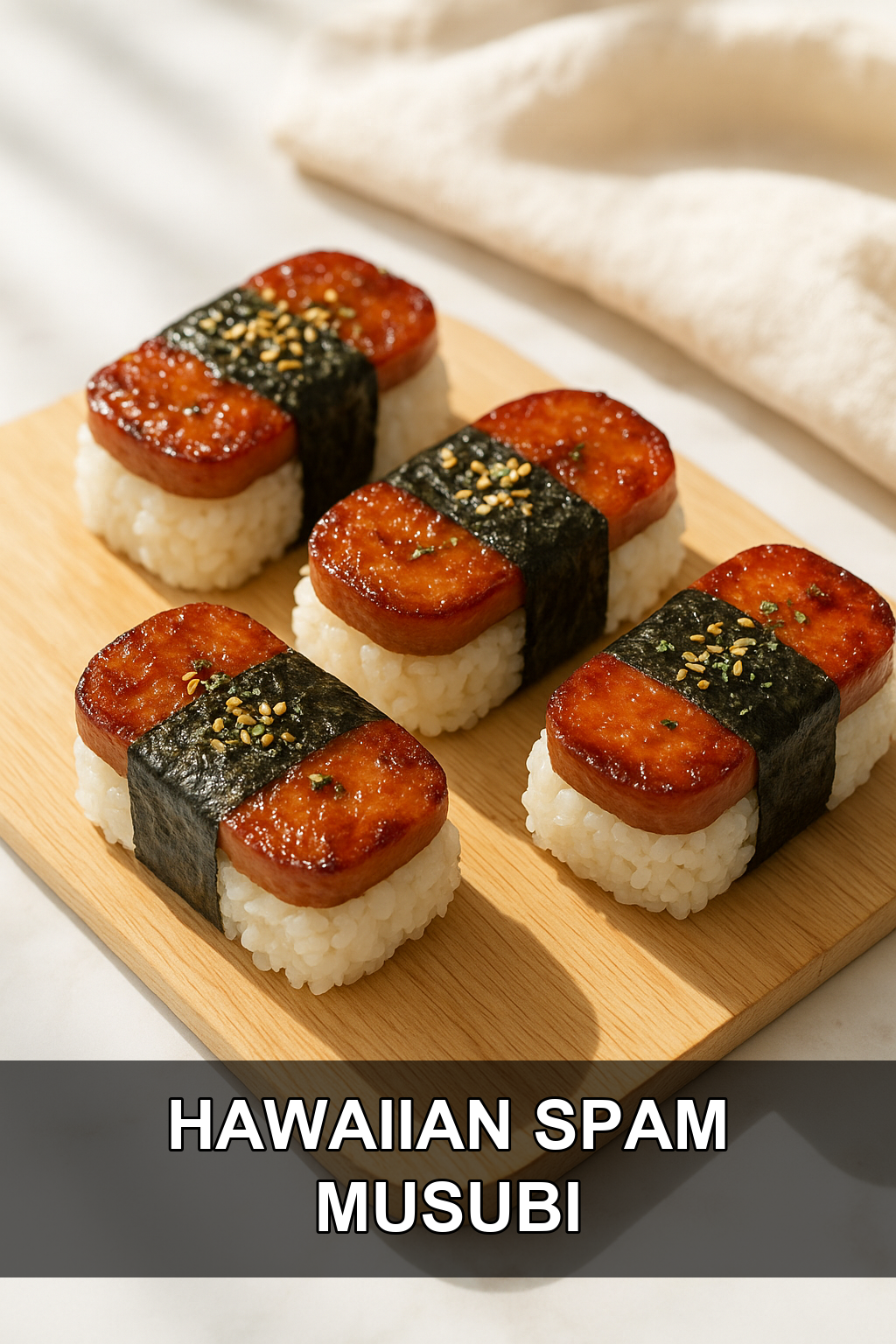
If you’ve never had Spam musubi, get ready to fall in love. This iconic Hawaiian snack layers glazed, pan-fried Spam over sticky white rice, all wrapped up in a crisp sheet of nori for the ultimate grab-and-go bite. It’s sweet, salty, savory, and dangerously easy to make at home.
What Is Spam Musubi?
Spam musubi is a beloved Hawaiian snack that combines a slice of sweet-savory glazed Spam with a block of sticky rice, all held together with a strip of nori (like a sushi belt). It’s often compared to a handheld sushi roll, but it’s really its own category of comfort food — hearty, portable, and perfect for picnics, road trips, or a quick lunch.
The dish traces its roots to Hawaii’s plantation era, when Spam became a pantry staple thanks to its long shelf life and affordability, especially during and after World War II. Over time, home cooks and local shops turned canned meat into an ingenious island classic that’s now sold everywhere from gas stations to gourmet food trucks across Hawaii.
Tips for Cooking and Prepping
#1: Use day-old or well-cooked short-grain rice
Short-grain or sushi rice has the starch content needed for that signature sticky texture, which is essential for the musubi to hold its shape once pressed.
#2: Don’t skip the glaze step
Tossing the fried Spam in the soy-brown sugar-mirin mixture right after frying lets the glaze cling to the hot slices, giving you that sticky-sweet caramelized coating in every bite.
#3: Get a good sear on the Spam
Fry the Spam slices for a full 2-3 minutes per side until deeply golden brown — this crispy edge is what keeps the texture interesting against the soft rice.
#4: Press the rice firmly and evenly
Whether you’re using a musubi mold or a cleaned-out Spam can, pack the rice down firmly so the finished musubi holds together when sliced or unwrapped.
#5: Keep your hands or mold lightly wet
Sticky rice loves to stick to everything except where you want it. Dampen your fingers or the mold with a little water to make shaping much easier.
#6: Wrap the nori while the rice is still warm
Warm rice helps the nori soften slightly and mold around the shape, making it easier to fold and seal without cracking.
Recipe Variations and Substitutes
Musubi is endlessly adaptable: swap the classic Spam for Portuguese sausage for a spicier bite, or use grilled tofu for a vegetarian version. For gluten-free eaters, tamari replaces soy sauce and rice paper can stand in for nori, while furikake and mirin are both easy to omit if you don’t have them on hand.
Serving Suggestions
Musubi is a meal on its own, but it’s also fantastic alongside miso soup, a simple cucumber salad, or other Hawaiian plate lunch favorites like mac salad. Pack a few in a lunchbox, serve them at a potluck, or enjoy one straight off the cutting board as an afternoon snack.
Storing and Make-Ahead Tips
Musubi is best eaten the day it’s made since rice firms up as it cools, but you can prep the glazed Spam and cooked rice ahead of time and assemble just before serving. Wrap finished musubi tightly in plastic wrap to keep it fresh and portable for a few hours at room temperature.
FAQs
Can I make Spam musubi ahead of time?
Yes, though it’s best enjoyed fresh. You can fry and glaze the Spam and cook the rice a day in advance, then assemble the musubi right before you plan to eat or pack it.
Do I need a special mold to make musubi?
A musubi press makes shaping easier, but you can absolutely use a cleaned, both-ends-removed Spam can as a mold — it’s actually the traditional method many home cooks use.
How do I store leftover Spam musubi?
Wrap leftovers tightly in plastic wrap and store in the fridge for up to a day, then bring to room temperature or gently microwave before eating since cold rice turns hard and dry.
Can I freeze Spam musubi?
Freezing isn’t recommended since the rice texture becomes crumbly and dry after thawing; it’s best made fresh or refrigerated for only a short time.
What can I use instead of Spam?
Portuguese sausage is a popular swap for a spicier, more seasoned flavor, while grilled tofu works well as a vegetarian alternative that still soaks up the sweet soy glaze.
Hawaiian Spam Musubi Recipe
Prep time: 15 min | Cook time: 10 min | Total time: 25 min | Servings: 4
Ingredients
For the Sauce
- 1/4 cup soy sauce (substitute with tamari for gluten-free)
- 2 tablespoons light brown sugar (can replace with coconut sugar)
- 2 tablespoons mirin (optional; omit if unavailable)
For the Musubi
- 1 tablespoon neutral oil, like canola or vegetable
- 1 can Spam (can be substituted with Portuguese sausage or grilled tofu)
- 4 sheets roasted sushi nori (use rice paper for gluten-free)
- 1 tablespoon furikake (can be omitted if not available)
- 2 cups cooked short-grain white rice (sushi rice is best for stickiness)
Instructions
- Whisk the sauce: In a small bowl, combine soy sauce, light brown sugar, and mirin (if using). Mix until well blended and set aside.
- Fry the Spam: Heat oil in a skillet over medium heat. Fry Spam slices for 2-3 minutes per side until golden brown.
- Coat the Spam: Drizzle the soy mixture over the fried Spam slices and toss gently to coat.
- Prepare the nori: Lay a nori sheet on a cutting board and use a musubi maker or Spam can to shape the musubi.
- Layer the ingredients: Place crispy Spam slices in the mold, sprinkle with furikake, and fill with sticky rice. Press down firmly.
- Unmold and wrap: Remove the musubi from the mold and fold the nori over the rice and Spam.
- Serve or store: Enjoy immediately or wrap tightly for later enjoyment.
For gluten-free musubi, use tamari instead of soy sauce and rice paper in place of nori. If you don’t have a musubi mold, a cleaned-out Spam can works perfectly as a stand-in.
Leave a Reply
You must be logged in to post a comment.