
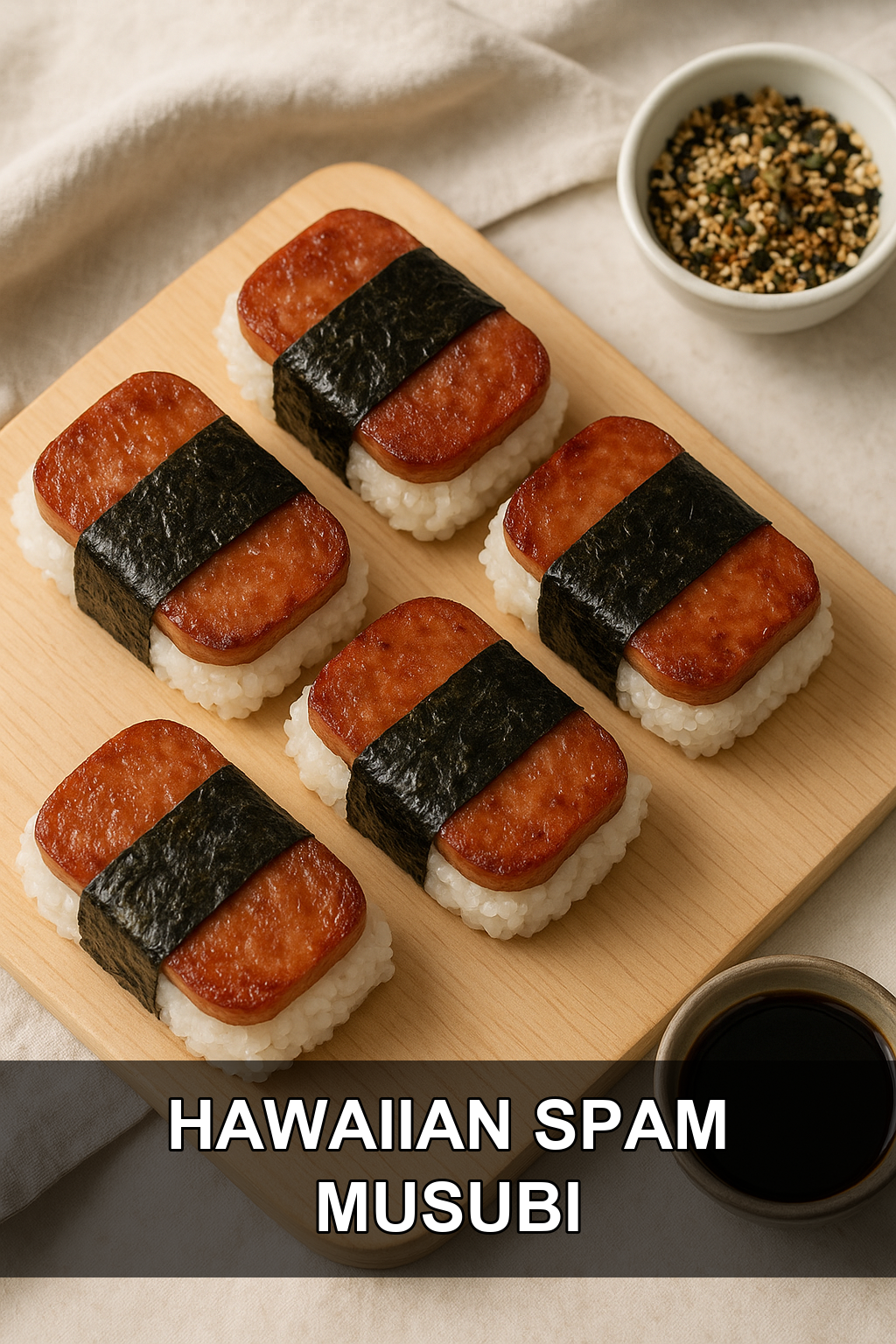
- What Is Spam Musubi?
- Tips for Cooking and Prepping
- Recipe Variations and Substitutes
- Serving Suggestions
- Storing, Make-Ahead, and Freezing Tips
- FAQs
- Hawaiian Spam Musubi Recipe
If you’ve never had Spam musubi, you’re in for a treat: sticky white rice, a savory-sweet glazed slice of Spam, all wrapped up in a neat little nori belt. It’s the ultimate grab-and-go snack from the Hawaiian Islands, and once you make it at home you’ll understand why it has such a cult following.
What Is Spam Musubi?
Spam musubi is a beloved Hawaiian snack made by layering a block of rice and a slice of pan-fried, glazed Spam, then wrapping the whole thing in a strip of nori seaweed like a little edible belt. It’s a close cousin to Japanese onigiri, but with a distinctly local Hawaiian twist thanks to the addition of canned Spam, a legacy of World War II rationing that turned into a full-blown island staple.
You’ll find musubi at gas stations, convenience stores, plate lunch counters, and family potlucks all across Hawaii, usually wrapped in plastic and ready to eat on the go. It’s portable, filling, and hits that perfect balance of salty, sweet, and savory — no wonder it’s become popular well beyond the islands.
Tips for Cooking and Prepping
#1: Use a musubi mold for clean, even shapes
A rectangular musubi press makes it so much easier to get that classic tidy shape, and it also helps compact the rice so your musubi holds together instead of crumbling apart.
#2: Wet your hands or the mold before pressing rice
Sticky rice loves to stick to everything except where you want it. Keep a small bowl of water nearby to dampen your hands, the mold, or a spoon so the rice releases cleanly.
#3: Don’t skip searing the Spam properly
Let the Spam slices get a real golden-brown crust on both sides before adding the sauce; this caramelizes the edges and keeps the slices from turning soggy once glazed.
#4: Let the sauce reduce slightly in the pan
Cooking the shoyu, sugar, cooking wine, and garlic mixture right in the Spam pan for a minute or two thickens it into a sticky glaze that clings to each slice instead of pooling underneath.
#5: Season the rice while it’s still warm
If you’re using furikake, sprinkle it over the rice while it’s warm and slightly steamy so the seasoning sticks and distributes evenly throughout each musubi.
#6: Moisten the nori ends before folding
A light dab of water on the nori’s edges acts like glue, helping it seal neatly around the rice and Spam so your musubi doesn’t unravel before you get to eat it.
Recipe Variations and Substitutes
Musubi is endlessly customizable once you’ve got the basic method down. Try adding a layer of scrambled or fried egg between the rice and Spam for a heartier version, swap furikake for toasted sesame seeds if that’s what you have on hand, or use low-sodium soy sauce and a lighter Spam variety to cut back on salt without sacrificing flavor.
Serving Suggestions
Musubi is fantastic on its own as a snack or light lunch, but it also pairs beautifully with a side of macaroni salad or kalua pork for a mini plate-lunch spread at home. Pack a couple in a lunchbox with some fresh fruit, or serve a platter of them at a potluck alongside other island favorites like poke or lomi salmon.
Storing, Make-Ahead, and Freezing Tips
Spam musubi is best enjoyed fresh or within a few hours of making it, since the rice firms up and the nori softens over time. You can store leftovers wrapped tightly in plastic wrap in the fridge for up to 2 days, and gently reheat them in the microwave for 20-30 seconds before eating; freezing isn’t recommended since the rice texture suffers once thawed.
FAQs
Do I need a musubi mold to make this recipe?
A mold definitely makes shaping easier and gives you that classic uniform look, but you can also use a small loaf pan lined with plastic wrap or simply shape the rice by hand if you don’t have one.
Can I make Spam musubi ahead of time for a lunchbox or picnic?
Yes, you can prep them a few hours ahead and wrap each musubi tightly in plastic wrap to keep them fresh and hold their shape; just try to eat them within the same day for the best texture.
What kind of rice works best for musubi?
Short-grain or medium-grain white rice works best because its natural stickiness helps the musubi hold together; fluffy long-grain rice like basmati or jasmine won’t compact the same way.
Is Spam musubi served hot or cold?
It can be enjoyed either way — freshly made and warm right after cooking, or at room temperature or chilled if you’re packing it for later, which is exactly how it’s traditionally sold at Hawaiian convenience stores.
Can I use turkey Spam or another Spam flavor?
Absolutely, turkey Spam, low-sodium Spam, or even the spicy Spam variety all work well in this recipe and let you customize the flavor and sodium level to your preference.
Hawaiian Spam Musubi Recipe
Prep time: 5 min | Cook time: 45 min | Total time: 50 min | Servings: 10
Ingredients
For the Musubi
- 3 cups cooked rice
- 1 can Spam
- 3 sheets nori (seaweed sheet)
- 1/2 tsp furikake seasoning (optional)
- 3 eggs (optional)
For the Glaze
- 2 tbsp shoyu (soy sauce)
- 2 tbsp white cooking wine
- 2 tbsp sugar
- 1 clove garlic, crushed
Instructions
- Wash and cook the rice in a rice cooker. While it cooks, cut the nori sheets into 3-inch wide strips.
- In a small bowl, whisk together the shoyu, white cooking wine, sugar, and crushed garlic to make the glaze; set aside.
- Open the can of Spam and slice it lengthwise into 7-10 flat slices, about 1 inch thick.
- If using eggs, scramble or fry them in a lightly oiled pan and set aside.
- Fry the Spam slices in a pan over medium heat for 3-4 minutes on one side. Flip, add the prepared glaze to the pan, and let it cook for 1-2 minutes before flipping once more and cooking for another minute until the slices are glossy and caramelized.
- If using furikake, sprinkle it into the warm cooked rice and mix gently to combine.
- Lay a strip of nori down and set the musubi mold on top. Add a scoop of rice into the mold and press down firmly with the mold’s handle.
- Layer a slice of cooked Spam (and egg, if using) on top of the pressed rice, then push the contents out of the mold while sliding the rectangular mold up and over everything to shape it.
- Wet the ends of the nori strip with a little water and fold them toward the center to seal the musubi.
- Serve warm, or wrap tightly in plastic wrap for an easy on-the-go lunch or snack.
For extra flavor, double the glaze and brush a little extra over the Spam right before wrapping. Musubi molds are inexpensive and widely available online if you plan on making this a regular recipe.
Leave a Reply
You must be logged in to post a comment.