
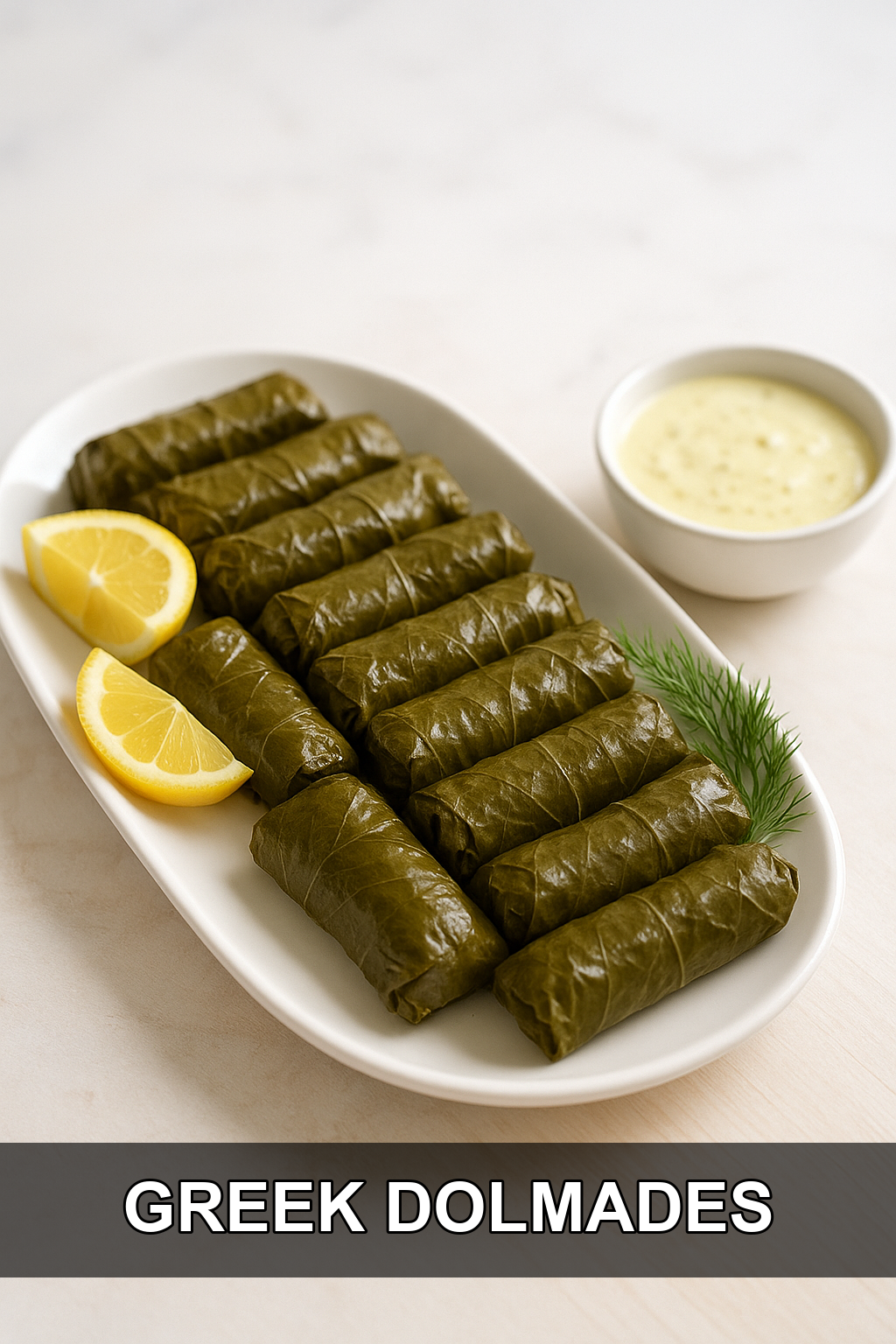
- What Are Greek Dolmades?
- Tips for Cooking and Prepping
- Recipe Variations and Substitutes
- Serving Suggestions
- Storing, Make-Ahead, and Freezing Tips
- FAQs
- Greek Dolmades Recipe for a Perfect Dinner
There’s something special about a platter of homemade dolmades—those little bundles of rice, herbs, and lemon wrapped snugly in tender vine leaves. This recipe walks you through the whole process, from simmering the fragrant filling to rolling and cooking the leaves, plus a bright, creamy lemon sauce to serve alongside. It takes a bit of patience, but the reward is a dinner that tastes even better the next day.
What Are Greek Dolmades?
Dolmades (also called dolmadakia) are grape or vine leaves stuffed with a seasoned rice filling, a beloved dish found throughout Greece and much of the Mediterranean and Middle East. While meat-filled versions exist, the vegetarian style—packed with dill, mint, parsley, and lemon—is a classic taverna staple, often served as a meze or light main.
The magic of dolmades lies in the balance of flavors: the herbaceous filling, the tang of lemon, and the slightly briny, slightly earthy vine leaves that hold it all together. Slow simmering allows the rice to soak up all those aromatics while the leaves soften into a delicate, almost silky wrapper.
Tips for Cooking and Prepping
#1: Rinse your rice well
Rinsing the short grain rice before cooking removes excess starch, which helps keep the filling from becoming gummy once it’s rolled and simmered inside the leaves.
#2: Don’t overfill the leaves
A heaped teaspoon of filling per leaf is usually enough—overstuffing makes rolling difficult and increases the chance the dolmades will burst or unravel during cooking.
#3: Line the pot for protection
Lining the bottom of the pot with torn or spare vine leaves and a layer of lemon slices prevents the bottom layer of dolmades from scorching during the long simmer.
#4: Weigh them down while cooking
Placing a heavy plate directly on top of the rolled leaves keeps them tightly packed and stops them from unrolling as the rice expands and the liquid simmers.
#5: Let them rest before serving
Dolmades genuinely taste better the next day—resting in the fridge overnight allows the rice to fully absorb the remaining liquid and the flavors to deepen.
Recipe Variations and Substitutes
This filling is easily adaptable: swap in risotto rice for the paella rice, add chopped capers for a briny kick, or leave them out entirely if you prefer a milder filling. For the sauce, you can use a neutral vegan yogurt (almond-based works best) or make a creamy cashew or sunflower seed sauce for a nut-free option—both are seasoned with garlic, lemon juice, salt, and pepper to taste.
Serving Suggestions
Serve dolmades chilled or at room temperature as a meze platter alongside olives, hummus, and warm pita, or make them the centerpiece of a light dinner with a simple Greek salad on the side. A generous dollop of the lemony cashew or yogurt sauce and a wedge of fresh lemon really brings the whole dish together.
Storing, Make-Ahead, and Freezing Tips
Dolmades are practically made for meal prep—store them in an airtight container in the fridge for up to a week, and the flavor only improves after the first day. Leftovers freeze well too, so it’s worth making a double batch and tucking some away for a future no-fuss dinner.
FAQs
Can I use jarred vine leaves for dolmades?
Yes, jarred vine leaves in brine are exactly what this recipe calls for—just rinse them thoroughly in plenty of water to remove excess salt before rolling.
Why do you weigh down the dolmades while cooking?
Weighing them down with a heavy plate keeps the tightly rolled leaves from unraveling as they simmer and the rice expands, so they hold their shape once cooked.
Can I make dolmades ahead of time?
Absolutely, and it’s actually recommended—dolmades taste best when made a day ahead and chilled overnight, giving the rice and herbs time to fully develop their flavor.
What can I use instead of vegan yogurt for the sauce?
You can blend soaked cashews or sunflower seeds with water until smooth and creamy, then season with garlic, lemon juice, salt, and pepper for a rich dairy-free alternative to yogurt.
Can I freeze leftover dolmades?
Yes, cooked dolmades freeze well in an airtight container; just thaw them in the fridge overnight and gently reheat or serve chilled.
Greek Dolmades Recipe for a Perfect Dinner
Prep time: 60 min | Cook time: 60 min | Total time: 120 min | Servings: 6
Ingredients
For the Rice Filling
- 60-120 ml / ¼-½ cup olive oil
- 1 onion, diced finely
- 1 bunch spring onions / scallions, diced finely
- 4 garlic cloves, diced finely
- 400 g / 2 cups short grain rice (paella or risotto rice work well)
- 30 g / 1 oz dill, finely chopped
- 15 g / ½ oz mint leaves, finely chopped
- 60 g / 2 oz fresh parsley, finely chopped
- zest of 1 unwaxed lemon, plus 4-6 tbsp lemon juice
- 1½ tsp fine salt, more to taste
- heaped ¼ tsp pepper, to taste
- a generous grating of nutmeg
- 1/3 cup capers, chopped (optional)
For Rolling and Cooking
- approx. 80 vine leaves in brine
- 1 large lemon, sliced into 3 mm slices
- extra olive oil and lemon juice, for the cooking liquid
For the Lemon Cream Sauce
- neutral tasting vegan yogurt, or 135 g / 1 cup cashews, or 100 g / 1 cup sunflower seeds
- 1 garlic clove, finely grated
- lemon juice, to taste
- salt and pepper, to taste
Instructions
- Heat 60 ml / ¼ cup of olive oil in a large, shallow pot with a matching lid. Add the diced onion and sauté for about 5 minutes, stirring occasionally.
- Add the chopped spring onions and garlic and continue sautéing, stirring frequently, until the onion turns translucent.
- Stir in the well-rinsed rice and sauté for about 2 minutes. Add the chopped herbs, lemon zest, salt, pepper, nutmeg, and capers (if using), and mix well.
- Pour in 360 ml / 1½ cups of water, cover, and bring to a gentle boil. Simmer for about 5 minutes, until the water is absorbed. Remove the lid and let the mixture cool slightly before filling the leaves.
- While the filling cools, trim the stems off the vine leaves with kitchen scissors. Rinse well in plenty of water and pat dry on a clean kitchen towel. Set torn or smaller leaves aside for lining the pot.
- Line a medium pot with 20 or so reject vine leaves, then arrange a layer of lemon slices on top to prevent the bottom dolmades from scorching.
- Place a vine leaf on a clean surface, veiny side up. Spoon a heaped teaspoon of filling near the base, fold the bottom flaps up, fold in the sides, and roll upward like a burrito—rolling snugly but leaving a little slack for the rice to expand.
- Arrange the rolled dolmades seam-side down in the prepared pot, packing them tightly in layers until all the filling and leaves are used.
- Pour in about 380 ml / 1½ cups of boiling water, 4 tbsp olive oil (or 30 ml / 2 tbsp water if using less oil), and 4-6 tbsp lemon juice, so the liquid just covers the dolmades.
- Weigh the rolls down with a heavy plate to keep them from unraveling during cooking.
- Bring the pot to a gentle simmer over low heat and cook for 45-60 minutes. Turn off the heat and let the pot stand for another hour so the remaining liquid is absorbed and the rice finishes cooking.
- Transfer to the fridge and chill overnight—dolmades taste best the day after cooking and keep in an airtight container for about a week, or can be frozen.
- For the sauce, if using cashews or sunflower seeds, soak them in boiling water for 30 minutes, then drain and rinse.
- Blend the soaked nuts or seeds with just enough water to create a silky, cream-like consistency.
- For an extra thick, luxurious texture, place the blended mixture in a muslin cloth over a sieve set over a bowl and let the excess water drain away overnight in the fridge.
- Season the sauce with lemon juice, grated garlic, salt, and pepper. If using yogurt instead, an almond-based variety works best; coconut yogurt tends to clash with the flavors of the dish.
For a lower-oil version, reduce the olive oil in the cooking liquid to 2 tablespoons plus extra water. Adjust the lemon juice up to 6 tablespoons for a more pronounced citrus flavor.
Leave a Reply
You must be logged in to post a comment.