
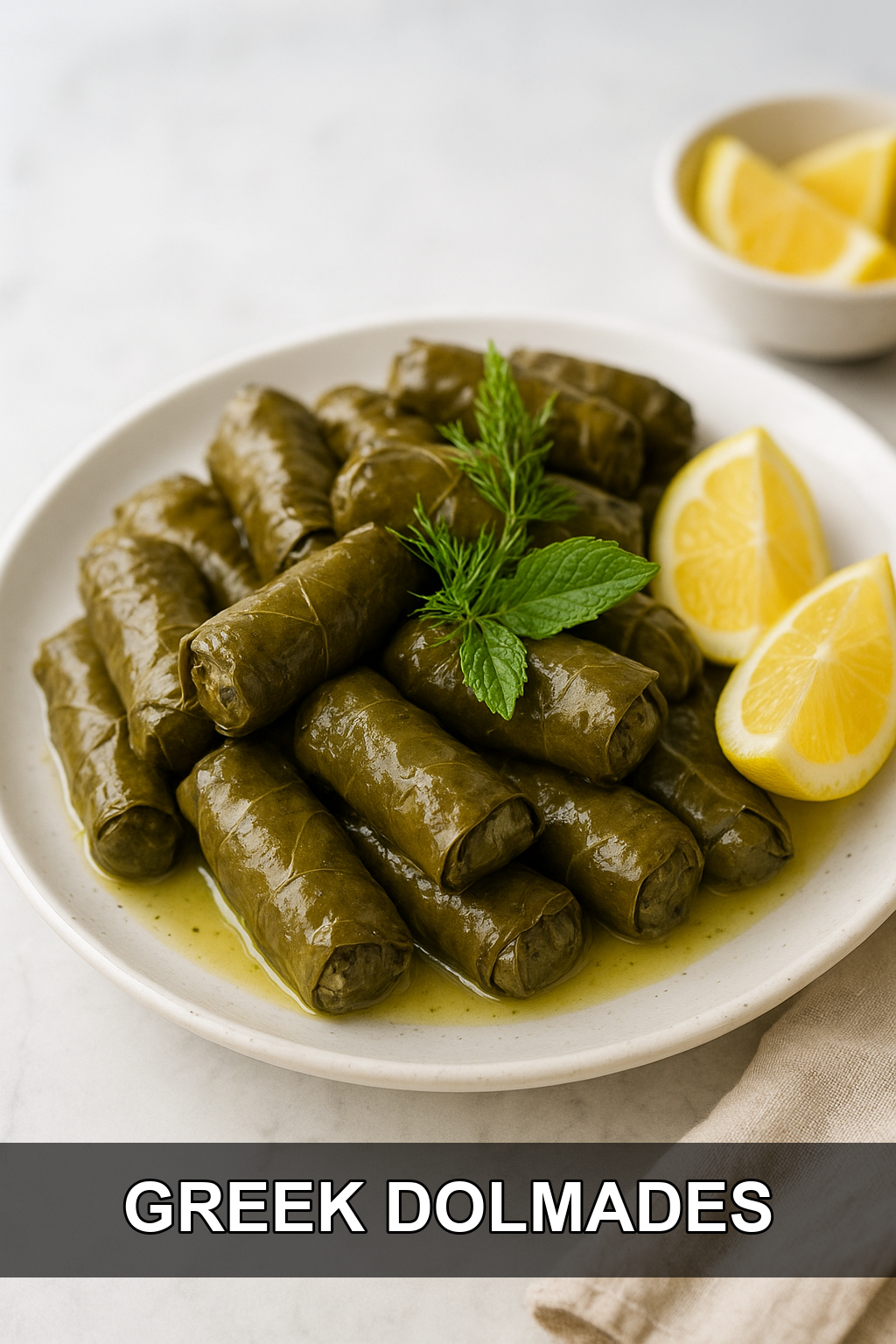
- What Are Greek Dolmades?
- Tips for Cooking and Prepping
- Recipe Variations and Substitutes
- Serving Suggestions
- Storing, Make-Ahead, and Freezing Tips
- FAQs
- Greek Dolmades: Master This Classic Dish
There’s something deeply satisfying about a platter of homemade dolmades, those tender vine leaves wrapped snugly around a fragrant herb and rice filling. This is a labor-of-love recipe passed down through generations of Greek kitchens, and while it takes some patience, the payoff is a batch of bright, lemony, herb-flecked bites that beat anything from a jar. Let’s roll up our sleeves and master this beloved classic together.
What Are Greek Dolmades?
Dolmades (also spelled dolmathes) are grape or vine leaves stuffed with a savory filling, most commonly a mixture of rice, fresh herbs, and onions, then simmered gently until tender. The word “dolma” actually comes from Turkish and means “stuffed thing,” a nod to the shared culinary heritage of stuffed vegetable and leaf dishes found throughout Greece, Turkey, and the wider Eastern Mediterranean and Middle East.
In Greek households, dolmades are a staple of the mezze table, often made in huge batches for holidays, name days, and family gatherings. This particular version is the meatless, herb-forward style, packed with dill, mint, and parsley, and finished with a silky lemon-flour sauce that ties everything together with a bright, tangy finish.
Tips for Cooking and Prepping
#1: Blanch fresh vine leaves just until they change color
If using fresh leaves, boil them only until they shift from bright green to an olive khaki shade, then shock them in cold water immediately. Overcooking makes them fragile and prone to tearing when you roll.
#2: Save the torn leaves for the pot lining
Any leaves that rip or are too small to fill neatly aren’t wasted; use them to line the bottom of your pot before layering the dolmades, which helps prevent sticking and scorching.
#3: Don’t overfill your leaves
A single teaspoon of filling per leaf is plenty since the rice will expand as it cooks. Overstuffing leads to leaves that split open or filling that squeezes out during simmering.
#4: Pack them tightly in the pot
Arranging the dolmades snugly, seam-side down and in tight layers, keeps them from unrolling as they cook and helps them hold their shape once finished.
#5: Keep them submerged while simmering
Check the water level periodically and top up with more boiling water as needed; dolmades that peek above the water line can dry out or cook unevenly.
#6: Let them cool before serving
Dolmades firm up and taste best at room temperature, so resist the urge to serve them piping hot straight out of the pot.
Recipe Variations and Substitutes
This version skips meat entirely, but many Greek families add ground beef or lamb to the filling for a heartier, main-course style dolma, which typically gets simmered in a lighter broth or tomato-based liquid instead of finished with the lemon-egg sauce. You can also swap the fresh herbs slightly, using more mint and less dill or vice versa, depending on your family’s tradition, or add a spoonful of tomato paste to the filling for a subtle warmth and color.
Serving Suggestions
Dolmades shine as part of a mezze spread alongside tzatziki, hummus, feta, olives, and warm pita or crusty bread. They also make a lovely light lunch on their own with a wedge of lemon and a simple Greek salad, or as a starter before a larger Greek feast featuring grilled meats or fish.
Storing, Make-Ahead, and Freezing Tips
Cooked dolmades keep beautifully in the refrigerator for up to 4-5 days in an airtight container, and many say they taste even better the next day once the flavors have settled. You can also freeze uncooked, rolled dolmades in a single layer before cooking, then simmer them straight from frozen (adding a few extra minutes to the cook time), which makes this a fantastic make-ahead project for parties or holidays.
FAQs
Can I use jarred or brined grape leaves instead of fresh?
Yes, jarred brined vine leaves work great and are far more convenient than fresh; just rinse them well under cool water to remove excess salt before using, and trim off the tough stems.
Why did my dolmades fall apart while cooking?
This usually happens when they aren’t rolled tightly enough or aren’t packed snugly into the pot; make sure each roll is taut and arrange them close together so they support one another as they simmer.
Can I skip the eggs in the filling?
Yes, the eggs are optional and mainly help bind the filling slightly; leaving them out still yields a delicious, fully vegan filling as long as you roll the leaves snugly.
How long do leftover dolmades last, and can I freeze the cooked ones?
Cooked dolmades stay fresh in the fridge for about 4-5 days, and yes, you can freeze cooked dolmades for up to 2-3 months, though the texture is slightly softer after thawing compared to fresh.
What size pot do I need for 100 dolmades?
You’ll want a wide, heavy-bottomed pot large enough to hold the dolmades in two or three snug layers rather than one shallow layer; a large stockpot or wide Dutch oven works well for this batch size.
Greek Dolmades: Master This Classic Dish
Prep time: 75 min | Cook time: 75 min | Total time: 150 min | Servings: 85
Ingredients
For the Vine Leaves
- 100 vine leaves (fresh or brined)
For the Filling
- 1/2 cup finely chopped dill
- 1 cup finely chopped mint
- 1/2 cup finely chopped flat leaf parsley
- 10 large spring (green) onions, finely chopped
- 1 medium yellow onion, chopped
- 2 cups uncooked long grain rice, rinsed
- 2 eggs (optional, see notes)
- 6 tbsp freshly squeezed lemon juice
- 1/2 teaspoon pepper
- 2 teaspoons salt
- 1/2 cup Greek olive oil
For the Pot
- 3 tbsp Greek olive oil, for the bottom of the pot
- 1/4 teaspoon salt
- 1/3 cup olive oil, for drizzling
For the Lemon Sauce
- 1/4 cup freshly squeezed lemon juice
- 1/2 tbsp all-purpose flour
- 1/2 cup water from the pot
Instructions
- Prepare your vine leaves: wash them well, whether fresh or brined, and set aside any severely torn leaves for later.
- If using fresh vine leaves, bring a large pot of water to a boil and add the leaves, boiling for 1-2 minutes until they change from bright green to an olive khaki color. Drain and immediately plunge into a bowl of cold water to stop the cooking process, then drain again in a colander and stack the leaves flat on a plate.
- Make the filling: in a large bowl, combine the dill, mint, parsley, spring onions, yellow onion, rice, eggs (if using), 6 tablespoons lemon juice, 2 teaspoons salt, pepper, and 1/2 cup olive oil. Mix thoroughly until well combined.
- To wrap, lay a vine leaf rib-side up with the stem end toward you. Place a teaspoon of filling near the stem end, then fold up and fold in each side, rolling tightly into a taut cylinder. Check each roll for exposed filling and re-wrap if needed.
- Any leftover unfilled vine leaves can be rolled together, wrapped tightly in plastic, and frozen for future use; thaw overnight in the fridge before using.
- Add 3 tablespoons olive oil to the bottom of a large pot and line it with any torn vine leaves.
- Arrange the dolmades snugly in the pot in layers and sprinkle with 1/4 teaspoon salt.
- Boil water separately, then pour it over the dolmades until they are just barely covered. Drizzle with 1/3 cup olive oil.
- Place a heat-proof plate on top of the dolmades to weigh them down, cover the pot with a lid, and bring to a boil. Once boiling, reduce to low heat and simmer for about 1 hour 15 minutes.
- Check occasionally to make sure the dolmades stay covered with water, topping up with more boiling water as needed.
- Taste a dolma to check for doneness; the rice should be fully cooked and tender.
- Remove the pot from heat. In a small bowl, whisk together 1/4 cup lemon juice and 1/2 tablespoon flour with about 1/2 cup water from the pot until smooth. Pour this over the dolmades and gently shake the pot to coat them evenly.
- Let the dolmades cool to room temperature before serving with lemon wedges.
The eggs are optional and mainly help bind the filling slightly; feel free to omit them for a fully vegan version. This recipe makes a large batch, perfect for holidays or freezing extras for later.
Leave a Reply
You must be logged in to post a comment.