
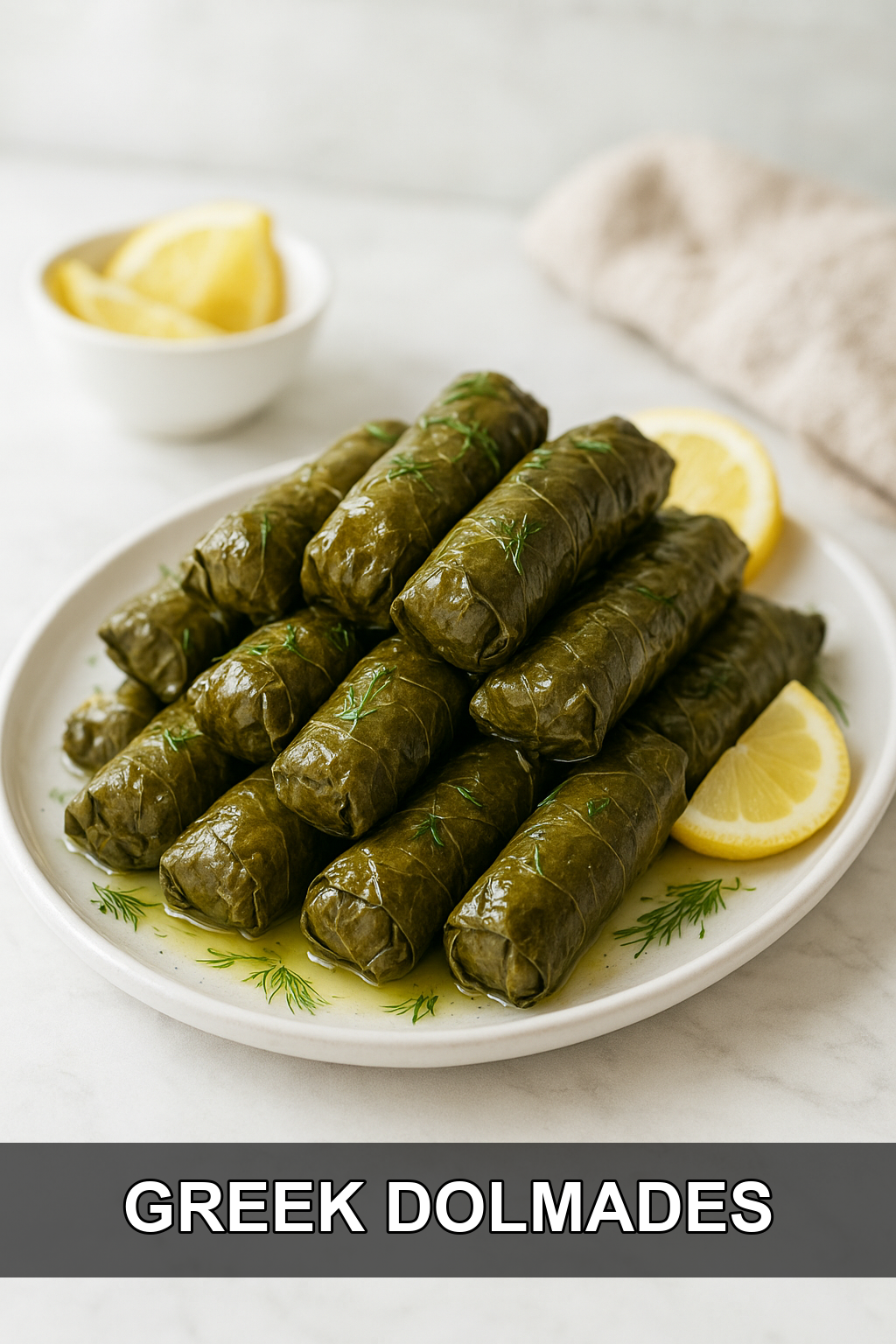
- What Are Greek Dolmades?
- Tips for Cooking and Prepping
- Recipe Variations and Substitutes
- Serving Suggestions
- Storing, Make-Ahead, and Freezing Tips
- FAQs
- Greek Dolmades: Master the Classic
There’s something deeply satisfying about rolling your own dolmades from scratch — the fragrant rice filling, the tangy lemon, the tender vine leaves that fall apart at the fork. This classic Greek recipe takes a little patience, but the payoff is a platter of homemade dolmades that beats anything from a jar.
What Are Greek Dolmades?
Dolmades (also called dolmathes or dolmadakia) are grape or vine leaves wrapped snugly around a savory filling, a dish beloved across Greece and the wider Mediterranean and Middle East. In Greek cuisine, the most traditional version is meat-free, made with rice, onions, fresh dill, and parsley, then simmered slowly in olive oil and lemon juice until the leaves turn silky and the rice is tender.
These little parcels show up on nearly every meze table in Greece, served alongside olives, feta, and warm bread. While they look intricate, dolmades are really just a rice pilaf rolled into leaves and gently poached — once you get the rolling technique down, the rest comes together easily.
Tips for Cooking and Prepping
#1: Blanch fresh leaves properly, drain jarred ones well
If using fresh vine leaves, blanch them briefly in boiling water until pliable, then cool in a colander. Jarred leaves just need a good rinse to remove excess brine before you start rolling.
#2: Parboil the rice, don’t fully cook it
The rice filling only needs to absorb the water and soften partially, since it will continue cooking inside the leaves. Fully cooked rice at this stage can turn mushy by the time the dolmades are done simmering.
#3: Don’t overfill each leaf
A single teaspoon of filling per leaf is plenty — rice expands as it cooks, and an overstuffed dolmada is far more likely to split open in the pot.
#4: Pack them tightly in the pot
Line the dolmades snugly, fold-side down, with no gaps between them. This keeps them from unrolling or bursting while they simmer.
#5: Weigh them down while cooking
Placing an inverted plate on top of the dolmades before adding water keeps them submerged and holds their shape as the water reduces.
Recipe Variations and Substitutes
While this version is the classic meat-free Greek style, many home cooks add ground beef or lamb to the rice filling for a heartier version, often served warm with an egg-lemon (avgolemono) sauce instead of cold with olive oil. You can also swap dill for mint, or add a pinch of allspice or cinnamon for a more Middle Eastern-inspired flavor. If vine leaves are hard to find, blanched Swiss chard or cabbage leaves make a decent stand-in, though the flavor will differ slightly.
Serving Suggestions
Dolmades are typically served cold or at room temperature as part of a Greek meze spread, alongside tzatziki, feta cheese, olives, and warm pita. A generous squeeze of fresh lemon juice right before serving brightens everything up, and a drizzle of good olive oil never hurts.
Storing, Make-Ahead, and Freezing Tips
Dolmades actually taste even better the next day once the flavors have had time to settle, so they’re a great make-ahead appetizer. Store cooled dolmades in an airtight container in the fridge for up to 5 days, layered with a little olive oil to keep them from drying out. To freeze, arrange cooked and cooled dolmades in a single layer on a tray until firm, then transfer to a freezer bag for up to 2 months; thaw in the fridge overnight before serving.
FAQs
Can I use jarred vine leaves instead of fresh?
Yes, jarred vine leaves work perfectly well and are actually more convenient — just rinse them thoroughly to remove excess brine and trim off any tough stems before rolling.
Why did my dolmades fall apart while cooking?
This usually happens when the leaves aren’t rolled tightly enough or when there are gaps between the dolmades in the pot. Packing them snugly and weighing them down with an inverted plate helps keep them intact.
Can I make dolmades vegan?
This classic recipe is already naturally vegan, since the filling is just rice, onion, herbs, and olive oil with no meat or dairy involved.
How do I know when the rice filling is ready?
The rice should be parboiled, not fully cooked — it should have absorbed most of the water and softened slightly, but still have some bite, since it will finish cooking inside the leaves.
Can I serve dolmades warm?
Traditionally this style of dolmades is served cold or at room temperature, but you can serve them warm right after the resting period if you prefer; just note the flavors are often more pronounced once cooled.
Greek Dolmades: Master the Classic
Prep time: 40 min | Cook time: 40 min | Total time: 80 min | Servings: 60
Ingredients
- 60 vine leaves, drained and rinsed
- 250g rice (1 cup)
- 1 cup olive oil
- 2 onions, finely chopped
- 2 cups warm water
- juice of 2 lemons
- 2 tbsps dill, chopped
- 1/2 cup parsley, chopped
- salt and pepper
Instructions
- Prepare the vine leaves: if using jarred leaves, rinse well, remove the stems, and leave them in a colander to drain. If using fresh leaves, wash thoroughly, remove the stems, blanch in boiling water until pliable, then remove with a slotted spoon and let cool completely in a colander.
- Rinse the rice under running water and drain. Heat a large saucepan over medium heat, add 1/3 of the olive oil along with the chopped onions, and sauté until translucent but not colored.
- Add the rice to the pan and sauté for 1 more minute. Pour in the 2 cups of warm water and half the lemon juice, then simmer for about 7 minutes, until the rice absorbs the liquid and is parboiled.
- Season the rice mixture with salt and pepper, stir in the chopped dill and parsley, then remove from the heat and set aside to cool slightly. This is your dolmades filling.
- Line the bottom of a large pot with a layer of torn or imperfect vine leaves. Lay a whole leaf shiny side down on a flat surface, add about 1 teaspoon of filling near the stem end, fold the bottom over the filling, fold in the sides, and roll up tightly. Don’t overfill, as the rice will expand during cooking.
- Place each rolled dolmada fold-side down into the pot, packing them tightly in snug layers with no gaps, to prevent them from opening while cooking.
- Drizzle the remaining olive oil and lemon juice over the dolmades, and season with salt and pepper. Place an inverted plate on top to hold them in place, then pour in enough water to just cover them.
- Cover the pot with a lid and simmer for 30-40 minutes, until the water has been absorbed and only the oil remains.
- Remove the pot from the heat, take off the lid and plate, and let the dolmades cool for at least 30 minutes before serving.
- Serve the dolmades cold or at room temperature with a fresh squeeze of lemon juice.
For a heartier, non-vegetarian version, add ground beef or lamb to the rice filling and serve warm with an egg-lemon (avgolemono) sauce instead of olive oil and lemon.
Leave a Reply
You must be logged in to post a comment.