
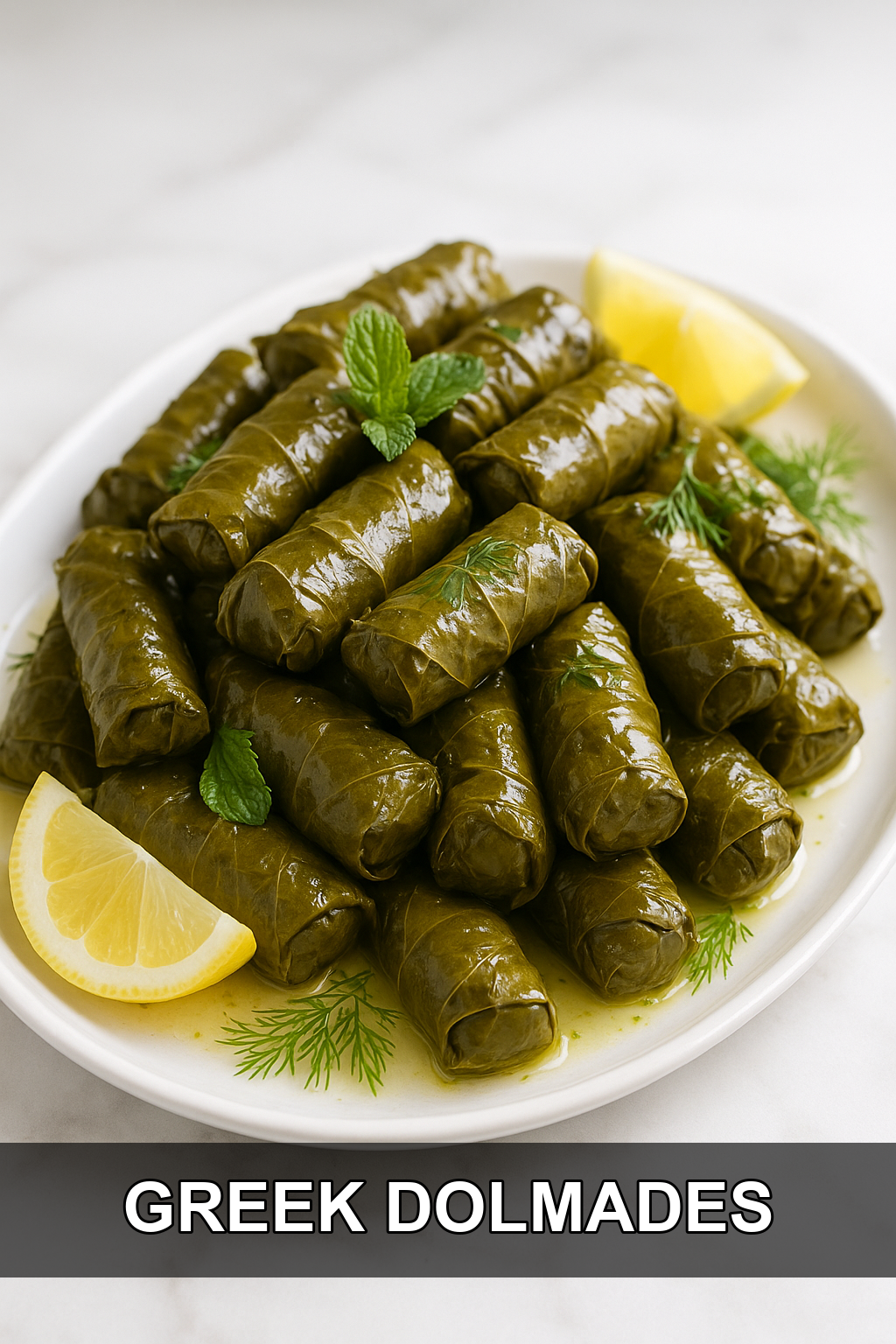
- What Are Greek Dolmades?
- Tips for Cooking and Prepping
- Recipe Variations and Substitutes
- Serving Suggestions
- Storing, Make-Ahead, and Freezing Tips
- FAQs
- Greek Dolmades: Authentic Recipe You’ll Love
There’s something magical about a platter of homemade dolmades — those tender grape leaves wrapped around a savory, herb-flecked filling of beef and rice. This authentic Greek recipe has been passed down through generations for good reason, and once you learn the simple rolling technique, you’ll want to make a batch every season.
What Are Greek Dolmades?
Dolmades (also spelled dolmathes or dolma) are grape leaves stuffed with a savory filling, a dish found throughout Greece, Turkey, and the broader Eastern Mediterranean and Middle East. While vegetarian versions filled with rice, herbs, and pine nuts are common, this Greek take uses ground beef along with rice, fresh mint, dill, and parsley for a heartier, deeply aromatic bite.
The leaves themselves come from grapevines and have a slightly tangy, earthy flavor that mellows as they simmer, turning tender enough to eat, stem and all is removed but the leaf becomes completely edible. Traditionally served at celebrations, potlucks, and family gatherings, dolmades are almost always made in large batches because they’re just as delicious cold the next day as they are fresh off the stove.
Tips for Cooking and Prepping
#1: Rinse and soak jarred grape leaves first
Jarred grape leaves are packed in brine, which can make them overly salty if used straight from the jar. Rinse them well under cool water and soak briefly to soften and remove excess salt before rolling.
#2: Break up the beef as finely as possible
Since the filling needs to sit neatly in a small spoonful on each leaf, cook the ground beef until it’s very finely crumbled rather than in large chunks, which makes rolling tight little dolmades much easier.
#3: Don’t fully cook the rice before rolling
The rice only needs to par-cook in the filling mixture since it will continue softening while the dolmades simmer in the pot; fully cooked rice at this stage can turn mushy by the time they’re done.
#4: Roll snugly but not too tight
Roll the leaves firmly enough that the filling stays put, but leave a little room for the rice to expand as it finishes cooking, otherwise the leaves can tear during simmering.
#5: Weigh the dolmades down while they cook
Placing an upside-down heavy plate over the rolled leaves keeps them submerged and prevents them from unrolling or bobbing around in the simmering water.
Recipe Variations and Substitutes
Ground lamb or a lamb-beef blend is a popular swap for the ground beef and gives the filling an even more traditional Greek flavor. For a vegetarian version, skip the meat entirely and increase the rice, adding extra herbs, chopped tomato, and a splash of olive oil for richness. You can also experiment with the fresh herbs — some cooks lean heavier on dill, while others prefer more mint or add a pinch of oregano for a different herbal note.
Serving Suggestions
Dolmades are traditionally served as part of a mezze spread alongside tzatziki, hummus, warm pita, olives, and feta cheese. They also make a lovely light lunch or appetizer on their own, drizzled with the bright lemon sauce or a simple squeeze of fresh lemon and a drizzle of good olive oil.
Storing, Make-Ahead, and Freezing Tips
Cooked dolmades keep beautifully in the refrigerator for up to 5 days, stored in an airtight container, and many people think they taste even better the next day once the flavors have melded. To freeze, arrange cooled dolmades in a single layer on a baking sheet to freeze solid, then transfer to a freezer bag or container for up to 3 months; reheat gently in a covered pot with a little water or broth.
FAQs
Can I use fresh grape leaves instead of jarred?
Yes, fresh grape leaves work great as long as they’re young and tender; simply blanch them in boiling water for about 30 seconds to soften before rolling.
Why are my dolmades falling apart while cooking?
This usually happens when the leaves aren’t rolled tightly enough or the pot isn’t weighted down, so be sure to roll snugly and place a heavy plate on top of the layered dolmades before simmering.
Can I make dolmades ahead of time for a party?
Absolutely — dolmades can be fully cooked a day or two in advance and stored in the fridge, then served cold or gently reheated before your event.
What can I do with leftover grape leaves or filling?
Leftover filling can be used to stuff bell peppers, zucchini, or cabbage leaves using the same simmering method, while extra grape leaves can be stored in brine in the fridge for your next batch.
Do I have to make the lemon sauce?
No, the lemon sauce is optional, but it adds a lovely bright, tangy finish that complements the rich meat and rice filling, so it’s worth trying at least once.
Greek Dolmades: Authentic Recipe You’ll Love
Prep time: 30 min | Cook time: 30 min | Total time: 60 min | Servings: 70
Ingredients
For the Dolmades
- 70 grape leaves
- 2 tbsp olive oil
- 1 onion, finely chopped
- 2 cloves garlic, minced
- 1 lb ground beef
- 1 cup rice, rinsed and uncooked
- 1 tsp salt
- 1/2 tsp black pepper
- 1/3 cup mint, chopped
- 1/3 cup dill, chopped
- 1/3 cup parsley, chopped
- 1/4 tsp allspice
- 1 tbsp tomato paste
- 1/2 lemon, juiced
For the Optional Lemon Sauce
- 1 lemon, juiced
- 1 tbsp cornstarch
- 1/4 cup dolmades water
Instructions
- If using fresh grape leaves, blanch them in boiling water for 30 seconds and set aside.
- Heat the olive oil in a saucepan over medium heat. Add the onion and cook until translucent, then add the garlic and stir until fragrant, about 2 minutes.
- Add the ground beef to the same pan as the onions and garlic and brown it, breaking it up as much as possible to make it manageable for rolling in the grape leaves.
- Once the ground beef is cooked, add the herbs, lemon juice, and rice, and simmer until the rice is mostly cooked, about 10-15 minutes.
- Lay out one grape leaf at a time, vein-side up, on a flat surface. Scoop about 1 tablespoon of the meat and rice mixture into the center of the leaf. Fold the stem to the center, then fold in the sides, then roll to the tip of the leaf. Repeat with the remaining leaves.
- Layer the dolmades, seam-side down, in a large pot and cover them with water. Place a heavy dinner plate upside down over them to keep them from floating or opening while cooking.
- Simmer for approximately 30 minutes, or until cooked through.
- While the dolmades are cooking, make the optional lemon sauce by whisking together the cornstarch, lemon juice, and a bit of the water from the dolmades pot in a small bowl.
- Once the dolmades are done cooking, remove them from the water and place them on a platter, then drizzle with the lemon sauce. Enjoy!
This recipe makes a large batch, perfect for gatherings or freezing for later; feel free to halve it for a smaller crowd, but dolmades freeze so well it’s rarely a waste to make the full amount.
Leave a Reply
You must be logged in to post a comment.