
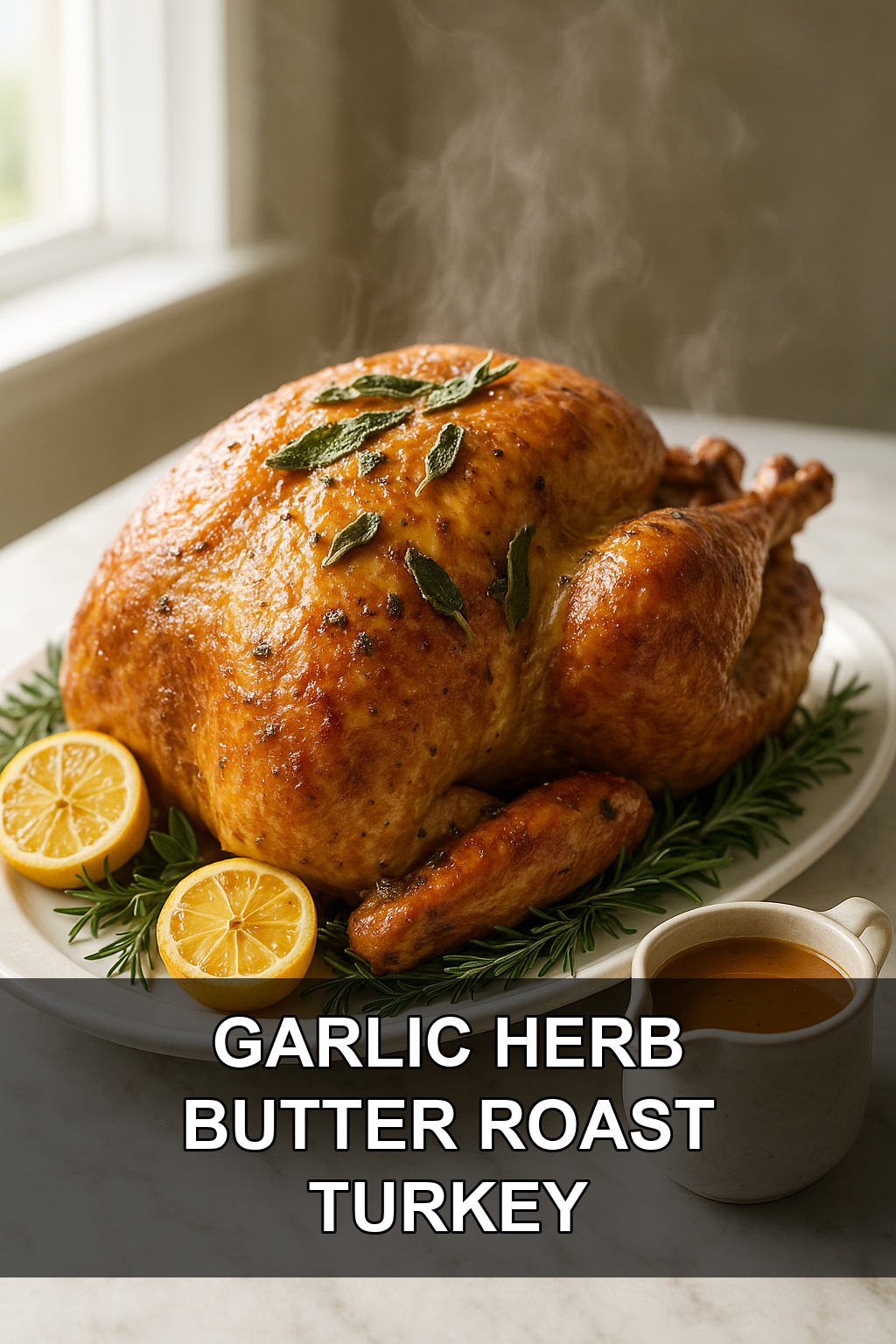
- What Is Garlic Herb Butter Roast Turkey?
- Tips for Cooking and Prepping
- Recipe Variations and Substitutes
- What to Serve with Roast Turkey
- Storing, Make-Ahead, and Freezing Tips
- FAQs
- Garlic Herb Butter Roast Turkey with Crispy Sage and Pan Gravy Recipe
There’s a reason the golden, garlic-butter-slathered turkey is the star of every holiday table—it’s equal parts impressive and comforting. This version gets a crispy sage garnish and a rich pan gravy made straight from the drippings, so nothing goes to waste and every bite is packed with flavor.
What Is Garlic Herb Butter Roast Turkey?
Garlic Herb Butter Roast Turkey is exactly what it sounds like: a whole turkey generously rubbed both under and over the skin with a compound butter made from garlic, fresh herbs, and lemon zest, then roasted until deeply golden and juicy. The butter bastes the bird from the inside out as it melts, keeping the breast meat moist while the skin crisps up beautifully in the oven.
This version takes things a step further by frying whole sage leaves in butter until they turn brittle and lacy, then using them as a stunning (and edible) garnish. The pan drippings left behind after roasting become the base for a deeply savory gravy, tying the whole dish together into a classic holiday centerpiece that tastes like it took far more effort than it actually did.
Tips for Cooking and Prepping
#1: Dry the skin thoroughly before buttering
Pat the turkey completely dry with paper towels, inside and out, before applying the herb butter. Excess moisture on the skin steams instead of crisps, so a dry surface is key to that deep golden color.
#2: Loosen the skin and butter underneath first
Gently work your fingers between the skin and breast meat to create pockets, then push most of the compound butter directly against the meat. This is where flavor and moisture matter most, not just on the surface.
#3: Truss loosely and tuck the wings
Tucking the wing tips under the body and loosely tying the legs together helps the turkey cook more evenly and prevents the thinner wing and leg tips from drying out or burning before the breast is done.
#4: Use a leave-in meat thermometer
Pull the turkey when the thickest part of the thigh hits 165°F, not when the breast does, since the thigh is the last part to finish cooking. A probe thermometer takes the guesswork out entirely.
#5: Fry the sage low and fast
Fresh sage leaves crisp up in butter in under 30 seconds per side; any longer and they turn bitter and dark instead of lacy and green, so keep a close eye on the pan.
#6: Save every drop of the drippings
Pour the pan drippings through a fine mesh strainer before making gravy to catch any burnt bits, then use the fond stuck to the roasting pan itself for extra depth by deglazing with wine or stock.
Recipe Variations and Substitutes
You can easily swap the herb blend to suit what’s on hand—rosemary, thyme, and sage are classic, but marjoram or tarragon work beautifully too. For a citrusy twist, add orange zest instead of lemon, or stir a splash of maple syrup into the butter for subtle sweetness. If you’re short on time, a dry brine (just salting the turkey a day ahead) can stand in for a wet brine and still yields incredibly juicy meat.
What to Serve with Roast Turkey
This turkey pairs perfectly with classic holiday sides like buttery mashed potatoes, roasted Brussels sprouts, cornbread stuffing, and cranberry sauce. Don’t forget dinner rolls for sopping up every last bit of that pan gravy.
Storing, Make-Ahead, and Freezing Tips
The compound herb butter can be made up to 3 days ahead and stored in the fridge, or frozen for up to 2 months—just let it soften before rubbing onto the turkey. Leftover cooked turkey keeps well in an airtight container in the fridge for up to 4 days, or in the freezer for up to 3 months, and the gravy freezes beautifully in a separate container for up to 2 months.
FAQs
How long does it take to roast a turkey with garlic herb butter?
A general rule is about 13 minutes per pound at 325°F, so a 14-pound turkey takes roughly 3 to 3.5 hours, but always confirm doneness with a meat thermometer reading 165°F in the thigh.
Should I brine the turkey before adding the herb butter?
Brining is optional but recommended for extra juicy meat, especially if you’re not basting frequently; a simple overnight dry brine with salt works wonderfully alongside the herb butter.
Can I make the pan gravy ahead of time?
You can make a base gravy ahead using turkey stock and then whisk in the actual pan drippings the day of roasting to finish it with fresh flavor and the right consistency.
Why is my turkey skin not getting crispy?
Wet skin, a low oven temperature, or overcrowding the roasting pan are usually the culprits; make sure the skin is patted very dry and the oven is fully preheated before roasting.
Do I need to cover the turkey with foil while roasting?
Tenting the breast loosely with foil for the first portion of roasting helps prevent the breast from browning too quickly before the thighs finish cooking, then remove it for the final 30-45 minutes to crisp the skin.
Garlic Herb Butter Roast Turkey with Crispy Sage and Pan Gravy Recipe
Prep time: 30 min | Cook time: 210 min | Total time: 240 min | Servings: 10
Ingredients
For the Turkey
- 1 whole turkey (12-14 lbs), thawed and patted dry
- 1 cup unsalted butter, softened
- 8 cloves garlic, minced
- 2 tbsp chopped fresh rosemary
- 2 tbsp chopped fresh thyme
- 2 tbsp chopped fresh sage
- Zest of 1 lemon
- 2 tsp kosher salt, plus more for seasoning cavity
- 1 tsp black pepper
- 1 lemon, halved
- 1 small onion, quartered
- 4 cloves garlic, smashed (for the cavity)
- 2 cups low-sodium chicken or turkey stock, for the roasting pan
For the Crispy Sage
- 4 tbsp unsalted butter
- 20 fresh sage leaves
For the Pan Gravy
- Pan drippings from roasted turkey
- 1/4 cup all-purpose flour
- 2-3 cups turkey or chicken stock, as needed
- 1/4 cup dry white wine (optional)
- Salt and black pepper, to taste
Instructions
- Preheat the oven to 325°F and set an oven rack in the lower third position. Remove the turkey giblets, pat the turkey completely dry inside and out with paper towels, and place it on a rack set inside a large roasting pan.
- In a bowl, mash together the softened butter, minced garlic, rosemary, thyme, sage, lemon zest, salt, and pepper until fully combined.
- Gently loosen the skin over the breast and thighs with your fingers, then push about two-thirds of the herb butter directly under the skin against the meat. Rub the remaining butter all over the outside of the turkey.
- Season the turkey cavity with salt, then stuff it with the halved lemon, quartered onion, and smashed garlic cloves. Tuck the wing tips under the body and loosely tie the legs together with kitchen twine.
- Pour the 2 cups of stock into the bottom of the roasting pan. Roast the turkey uncovered for 45 minutes, then tent the breast loosely with foil and continue roasting.
- Continue roasting, basting every 30-45 minutes with the pan juices, until a meat thermometer inserted into the thickest part of the thigh reads 165°F, about 2.5 to 3 hours total depending on size. Remove the foil for the last 30-45 minutes to crisp the skin.
- Transfer the turkey to a cutting board, tent loosely with foil, and let it rest for at least 20-30 minutes before carving.
- While the turkey rests, make the crispy sage: melt 4 tablespoons of butter in a skillet over medium heat. Fry the sage leaves in batches for about 20-30 seconds per side until crisp and bright green, then transfer to a paper towel-lined plate.
- For the gravy, pour the pan drippings through a fine mesh strainer into a measuring cup, skimming off excess fat but reserving about 1/4 cup of the fat in the pan.
- Set the roasting pan over medium heat on the stovetop, whisk the flour into the reserved fat, and cook for 1-2 minutes until golden and fragrant.
- Slowly whisk in the strained drippings, wine if using, and enough stock to reach your desired consistency. Simmer, whisking often, until thickened, about 5-7 minutes. Season with salt and pepper to taste.
- Carve the turkey, garnish with the crispy fried sage leaves, and serve warm with the pan gravy on the side.
For extra-crispy skin, let the buttered turkey chill uncovered in the fridge for a few hours (or overnight) before roasting to dry out the skin further. Leftover herb butter can be frozen and used later on roasted vegetables or bread.
Leave a Reply
You must be logged in to post a comment.