
- What Is Garaetteok?
- Tips for Cooking and Prepping
- Recipe Variations and Substitutes
- Serving Suggestions
- Storing, Make-Ahead, and Freezing Tips
- FAQs
- Garaetteok (Korean Cylindrical Rice Cake) Recipe
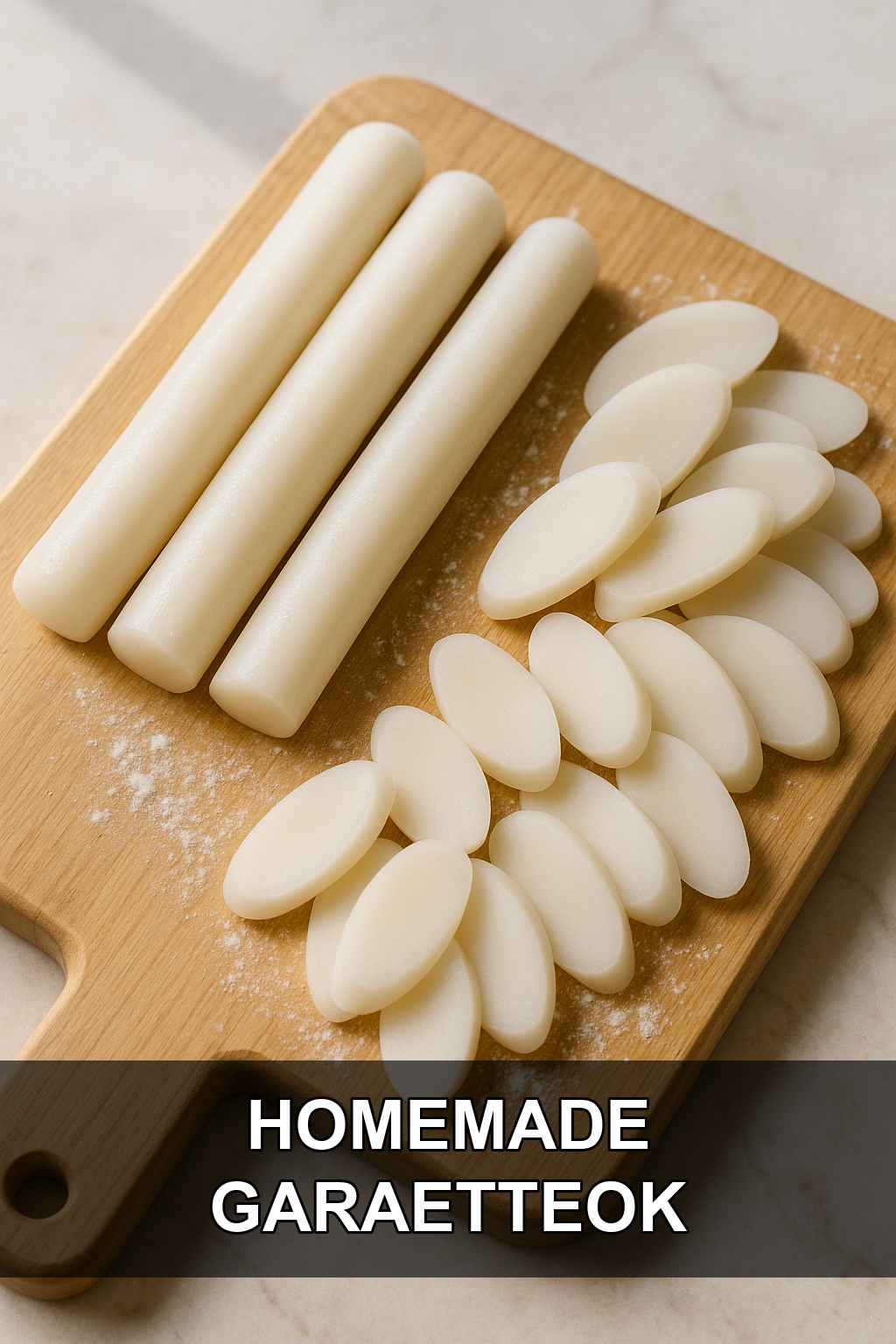
If you’ve ever wondered how those chewy, snow-white cylinders in tteokbokki and tteokguk are made, garaetteok is the answer. This homemade version walks you through turning rice flour into smooth, elastic rice cake dough, then shaping it into either short pieces for stir-fries or thin ovals for soup, all without a trip to the Korean grocery store.
What Is Garaetteok?
Garaetteok is a type of Korean rice cake (tteok) made from finely milled, non-glutinous short-grain rice that’s steamed or cooked into a dough, then pounded and rolled into long cylinders. It’s the base ingredient behind two of Korea’s most beloved comfort foods: tteokbokki, the spicy stir-fried rice cake dish, and tteokguk, the milky white rice cake soup traditionally eaten on Korean New Year’s Day (Seollal) to symbolize gaining another year of age.
Unlike glutinous rice cakes made from sweet rice, garaetteok uses regular short or medium-grain rice, which gives it a firmer, chewier bite that holds up beautifully to boiling, stir-frying, or slicing paper-thin. Making it at home lets you control the texture and freshness in a way that’s hard to match with pre-packaged tubes from the store.
Tips for Cooking and Prepping
#1: Soak the rice a full 12 hours
Fully hydrated rice grinds into a much finer, smoother flour, which directly translates into smoother, less grainy rice cakes. Don’t rush this step — an overnight soak is ideal.
#2: Sift the flour more than once
Rice flour clumps easily, and any unground grains left behind will show up as gritty bits in your finished garaetteok. Sift in small batches and re-grind anything coarse before moving on.
#3: Add the boiling water gradually
Mixing in the water in three separate 1/4 cup additions (for the microwave method) helps the flour hydrate evenly instead of forming dry pockets or a stiff, unworkable dough.
#4: Protect your hands when kneading hot dough
The steamed or microwaved dough comes out scorching hot, so layer thick cotton gloves under food-safe gloves (or use heat-resistant food gloves) before kneading and pounding it smooth.
#5: Chill before slicing for tteokguk
Refrigerating the shaped log for about an hour firms it up just enough to get clean, thin diagonal ovals — slicing warm dough tends to squish and distort the shape.
#6: Oil your hands, not the dough
A light coating of sesame oil on your palms keeps the sticky dough from clinging to your skin as you roll it into cylinders, without making the rice cakes greasy.
Recipe Variations and Substitutes
You can cook the rice cake dough either in the microwave or in a steamer, both methods are included below and produce nearly identical results, so pick whichever fits your kitchen setup. If you don’t want to soak and grind rice from scratch, store-bought wet-milled rice flour (the fresh, refrigerated kind sold at Korean markets) works perfectly as a shortcut and skips straight to the dough-making step.
Serving Suggestions
Cut into finger-length cylinders, garaetteok is ready for spicy tteokbokki simmered in gochujang sauce, or pan-fried with a soy-garlic glaze as a simple side. Sliced into thin ovals, it’s destined for tteokguk, the savory beef or anchovy broth soup often garnished with egg ribbons, scallions, and roasted seaweed.
Storing, Make-Ahead, and Freezing Tips
Freshly shaped garaetteok can be refrigerated in an airtight container for up to 3-4 days, though rice cakes do firm up over time in the fridge. For longer storage, freeze the shaped pieces in a single layer on a tray before transferring them to a freezer bag; they’ll keep well for up to a month and can go straight from freezer to boiling water or stir-fry pan without thawing.
FAQs
Can I use store-bought rice flour instead of grinding my own?
Yes, fresh wet-milled rice flour from a Korean grocery store works great and lets you skip the soaking, grinding, and sifting steps entirely, just start with the flour and follow the dough-making instructions.
Why did my rice cakes turn out gritty instead of smooth?
Gritty texture almost always comes from under-ground or under-sifted rice flour, so run any coarse bits back through the food processor and sift a second time before making the dough.
Can I skip soaking the rice overnight?
Soaking for a shorter time will still work in a pinch, but a full 12-hour soak fully hydrates the grains, which makes them much easier to grind into a fine, even flour.
Is the microwave method or steamer method better?
Both produce chewy, smooth rice cake dough, the microwave version is faster and uses less equipment, while the steamer method is more traditional and handles slightly larger batches easily.
How long do homemade garaetteok last?
Stored in an airtight container, they keep about 3-4 days in the refrigerator or up to a month in the freezer, just boil or soften frozen pieces briefly in hot water before using them in soup or stir-fry.
Garaetteok (Korean Cylindrical Rice Cake) Recipe
Prep time: 45 min | Cook time: 25 min | Total time: 70 min | Servings: 4
Ingredients
For the Rice Cake Dough
- 2 cups wet-milled rice flour (300g), from short or medium grain rice such as sushi rice
- 1 Tbsp cornstarch
- 1 tsp fine salt
- 3/4 cup water, boiled, divided into three 1/4 cup portions (for microwave method, 175g)
- 1/4 cup water, boiled (for steamer method, 60g)
For Shaping
- 1/2 tsp sesame oil
Instructions
- If making your own rice flour from scratch: rinse 2.5 cups (about 535g) of short or medium-grain rice, such as sushi rice, under cold water until it runs clear. Cover with water in a bowl and soak for about 12 hours or overnight.
- Drain the rice thoroughly and let it sit in a fine-mesh strainer at room temperature for about 1 hour to shed excess surface moisture; it should weigh roughly 697g once hydrated.
- Grind the soaked rice in a powerful food processor until it forms a fine, flour-like powder, working in batches and scraping down the sides as needed for even grinding.
- Sift the flour into a clean bowl in two or three small batches for ease, removing clumps or ungrouned grains; sift a second time to ensure a very fine texture. Re-grind and re-sift any coarse leftovers. You should end up with about 4.5 cups of fine rice flour.
- Microwave method: Combine the rice flour, cornstarch, fine salt, and 1/4 cup of the boiling water in a microwave-safe bowl and mix well. Add another 1/4 cup of boiling water and mix until smooth; the mixture should be easy to stir, not stiff like cookie dough.
- Cover the bowl with cling wrap, leaving a small gap for steam to escape, and microwave on high for 2 minutes (based on a 1250W microwave).
- Carefully remove the bowl, stir in the final 1/4 cup of boiling water, cover again, and microwave on high for another 1 minute 30 seconds. Remove from the microwave.
- Line a cutting board with a silicone baking mat or several layers of cling wrap, then transfer the hot dough onto the prepared surface.
- Wearing thick cotton gloves under food-safe gloves (or heat-resistant food gloves), knead the dough, then pound it with a pestle for about 5 minutes until smooth and elastic. Divide into 5 equal pieces.
- Steamer method: Line a steamer basket with a silicone steaming mat, perforated baking paper, or a clean tea towel. Combine the rice flour, cornstarch, salt, and 1/4 cup boiling water, mixing to form a shaggy dough, then break it into smaller pieces and spread over the liner for even cooking. Cover and steam over high heat for 15 minutes.
- Transfer the steamed dough to a mat-lined cutting board, and again knead and pound it with a pestle for about 5 minutes, wearing protective gloves, until smooth and elastic. Divide into 5 equal pieces.
- For tteokbokki-style rice cakes: lightly coat your palms with about 1/2 teaspoon of sesame oil and rub it over the dough pieces to prevent sticking. Roll each piece into a cylinder 1 to 1.5cm (0.4 to 0.6 inch) in diameter, trim the ends, and cut into 6cm (about 2.5 inch) lengths, roughly the size of a little finger. These are ready for tteokbokki or stir-fries.
- For tteokguk-style rice cakes: divide the dough into 2 pieces instead, oil your palms with sesame oil, and roll each piece into a thicker cylinder about 2 to 3cm (0.8 to 1.2 inches) in diameter.
- Place the thicker logs on a plate, cover with cling wrap, and refrigerate for about 1 hour until firm for easier slicing. Slice thinly on a diagonal, about 0.5cm (0.2 inch) thick, into oval shapes. These are ready to use in tteokguk.
Steps 1-4 are only needed if you’re grinding your own rice into flour; if using store-bought wet-milled rice flour, start directly at the dough-mixing step. Choose either the microwave or steamer method, both yield the same chewy dough.
Leave a Reply
You must be logged in to post a comment.