
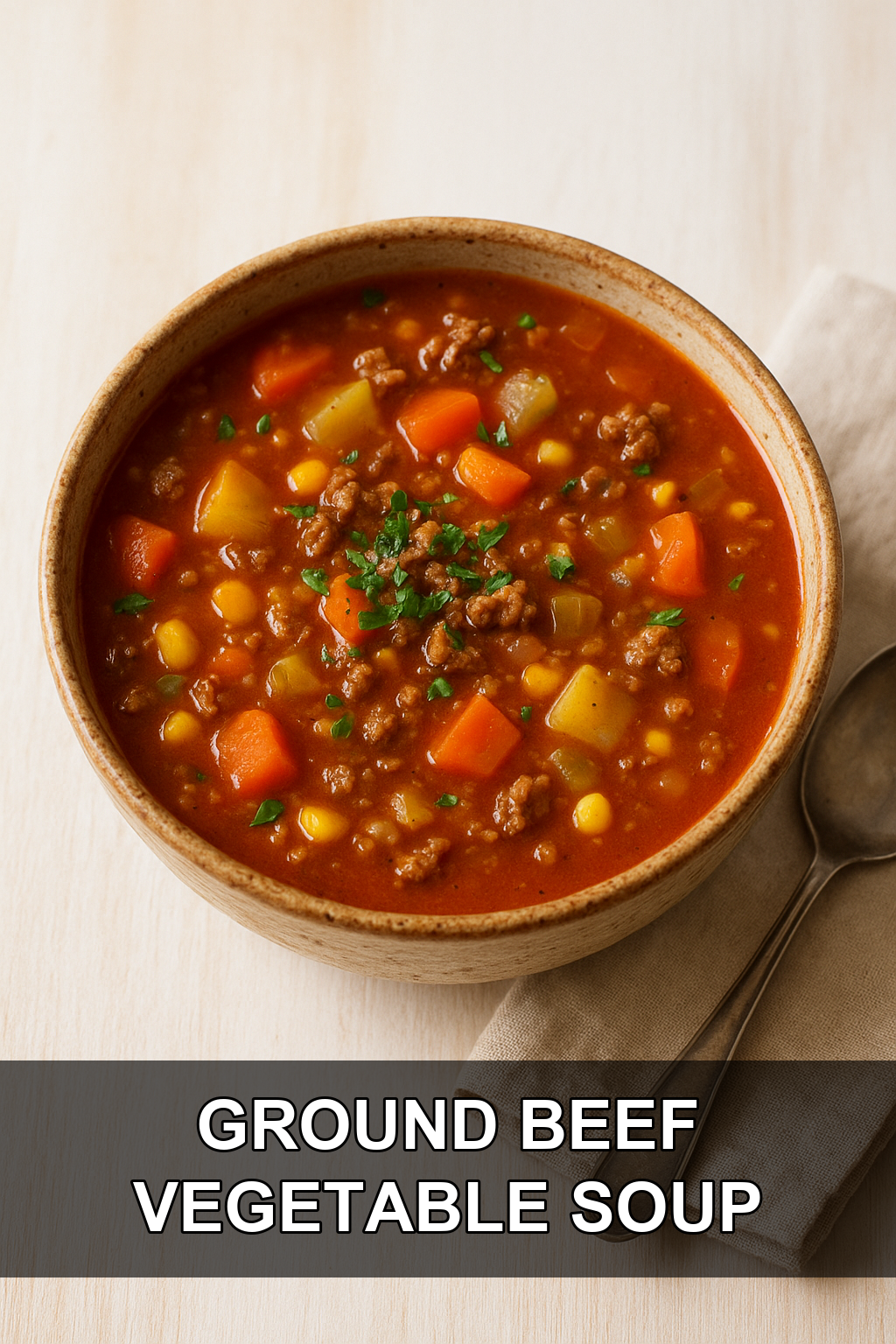
- What Is Ground Beef and Vegetable Soup?
- Tips for Cooking and Prepping
- Recipe Variations and Substitutions
- Serving Suggestions
- Storing and Freezing Tips
- FAQs
- Easy Freezer-Friendly Ground Beef and Vegetable Soup Recipe
When grocery bills feel tighter than ever, this ground beef and vegetable soup is the kind of recipe that saves the day — and your wallet. It’s hearty, endlessly customizable with whatever veggies you have on hand, and it freezes like a dream so you can always have a homemade dinner ready to go.
What Is Ground Beef and Vegetable Soup?
Ground beef and vegetable soup is a classic American comfort food built on browned ground beef, a tomato-based broth, and a mix of hearty vegetables like potatoes, carrots, celery, and corn. It’s the kind of soup grandmothers have been making for generations, using whatever was in the garden or pantry that week — which is exactly what makes it such a flexible, budget-friendly meal today.
Unlike fussier soups that call for specialty stock or unusual produce, this one is built entirely around ingredients you can find at any grocery store, often for just a few dollars. It’s a one-pot meal that stretches a single pound of ground beef across six or more servings, making it a go-to for families trying to eat well without overspending.
Tips for Cooking and Prepping
#1: Brown the beef and drain the fat well
Browning the ground beef first and draining excess grease keeps the soup from turning oily and helps the flavors stay clean and savory rather than heavy.
#2: Use the cheapest cut of ground beef you can find
Since the beef gets broken up and simmered in broth, an 80/20 or even 85/15 ground beef works perfectly here — there’s no need to buy leaner, pricier ground beef for this recipe.
#3: Buy frozen vegetables when fresh prices spike
Frozen mixed vegetables, corn, and peas are just as nutritious as fresh, often cheaper, and already chopped, which saves both money and prep time.
#4: Use bouillon instead of boxed broth
Beef or chicken bouillon cubes or paste cost a fraction of the price of pre-made broth and let you control the salt level and quantity exactly as needed.
#5: Chop vegetables uniformly for even cooking
Cutting potatoes, carrots, and celery into similar-sized pieces ensures everything softens at the same rate instead of some pieces turning mushy while others stay firm.
#6: Make a double batch to freeze half
Since this soup takes the same amount of hands-on time whether you make one pot or two, doubling the recipe means a free dinner is waiting in your freezer for a busy night.
Recipe Variations and Substitutions
This soup is incredibly forgiving, so feel free to swap in whatever vegetables are cheapest or already in your fridge — cabbage, green beans, zucchini, or canned diced tomatoes all work well. Ground turkey or ground chicken can replace the beef for a lighter version, and if you want to stretch it further, add a cup of small pasta, rice, or barley during the last 15-20 minutes of cooking.
Serving Suggestions
This soup is a full meal on its own, but it pairs beautifully with crusty bread, saltine crackers, or a simple side salad for extra bulk. A sprinkle of shredded cheddar or a dollop of sour cream on top adds a comforting, restaurant-style touch without much added cost.
Storing and Freezing Tips
Let the soup cool completely before transferring to airtight containers or freezer bags, then store in the fridge for up to 4 days or in the freezer for up to 3 months. For best texture, slightly undercook any potatoes if you plan to freeze the soup, since they can become grainy after freezing and reheating.
FAQs
Can I freeze ground beef and vegetable soup?
Yes, this soup freezes exceptionally well for up to 3 months. Just cool it completely before freezing in airtight containers or freezer bags, and leave a little room at the top since liquids expand as they freeze.
Do potatoes get mushy when frozen in soup?
Potatoes can turn slightly grainy after freezing and thawing, but cooking them just until fork-tender (not fully soft) before freezing helps minimize this texture change.
What vegetables work best in this soup?
Carrots, celery, potatoes, corn, green beans, and diced tomatoes are classic choices, but any sturdy vegetable you have on hand — fresh or frozen — will work well in this recipe.
Can I make this soup in a slow cooker?
Absolutely — brown the ground beef first, then add everything to a slow cooker and cook on low for 6-7 hours or high for 3-4 hours until the vegetables are tender.
How can I make this soup on an even tighter budget?
Use bouillon instead of store-bought broth, buy frozen vegetables on sale, and bulk up the soup with inexpensive pasta, rice, or extra potatoes to stretch the servings further.
Easy Freezer-Friendly Ground Beef and Vegetable Soup Recipe
Prep time: 15 min | Cook time: 35 min | Total time: 50 min | Servings: 8
Ingredients
- 1 lb ground beef
- 1 small onion, diced
- 2 cloves garlic, minced (or 1/2 tsp garlic powder)
- 3 carrots, peeled and diced
- 2 celery stalks, diced
- 2 medium potatoes, peeled and diced
- 1 can (14.5 oz) diced tomatoes
- 1 can (8 oz) tomato sauce
- 4 cups beef broth (or 4 cups water + 4 tsp beef bouillon)
- 1 cup frozen corn
- 1 cup frozen green beans or peas
- 1 tsp dried thyme or Italian seasoning
- 1 bay leaf
- Salt and pepper, to taste
- 1 tbsp oil, if needed for browning
Instructions
- In a large pot or Dutch oven, brown the ground beef over medium-high heat, breaking it up with a spoon, about 5-7 minutes. Drain excess fat.
- Add the diced onion, garlic, carrots, and celery to the pot with the beef. Cook for 4-5 minutes, stirring occasionally, until the onion softens.
- Stir in the diced potatoes, diced tomatoes, tomato sauce, and beef broth. Add the thyme, bay leaf, salt, and pepper.
- Bring the soup to a boil, then reduce heat to low, cover, and simmer for 20 minutes, or until the potatoes are fork-tender.
- Stir in the frozen corn and green beans (or peas) and simmer for another 5-8 minutes until heated through.
- Remove the bay leaf, taste and adjust seasoning as needed, then ladle into bowls and serve hot.
For freezing, slightly undercook the potatoes so they hold their texture better after thawing and reheating. This soup also tastes even better the next day, making it a great make-ahead option.
Leave a Reply
You must be logged in to post a comment.