
- What Is a Poke Bowl?
- Tips for Cooking and Prepping
- Recipe Variations and Substitutes
- Serving Suggestions
- Storing and Make-Ahead Tips
- FAQs
- Easy Poke Bowl Recipe
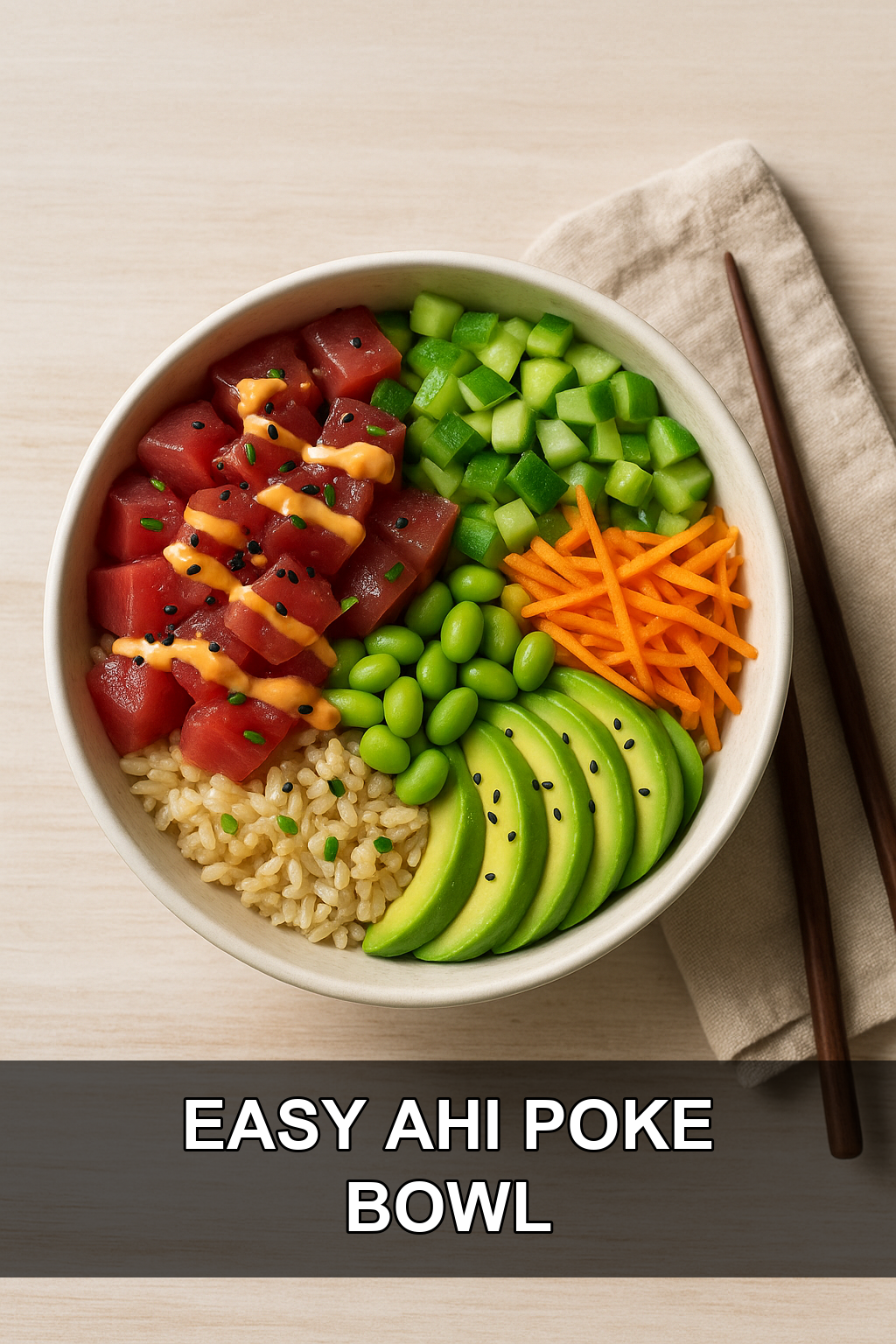
If you love the fresh, vibrant flavors of your favorite sushi restaurant but don’t want to leave the house, this easy poke bowl recipe is about to become your new go-to. It layers marinated ahi tuna, crunchy veggies, and creamy avocado over a bed of brown rice, all finished with a spicy mayo drizzle that ties everything together. Best of all, it comes together with minimal cooking and maximum flavor.
What Is a Poke Bowl?
Poke (pronounced POH-keh) is a Hawaiian dish that traditionally features cubed raw fish, most commonly ahi tuna, tossed with soy sauce, sesame oil, and other seasonings. The word “poke” actually means “to slice or cut” in Hawaiian, referring to how the fish is prepared before serving.
What started as a simple fisherman’s snack has evolved into a full-blown meal, especially in the mainland U.S., where poke bowls are typically built on a base of rice and topped with an array of fresh vegetables, creamy avocado, and flavorful sauces. This easy poke bowl recipe keeps things approachable for home cooks while staying true to the fresh, bold flavors that make poke so craveable.
Tips for Cooking and Prepping
#1: Start with sushi-grade tuna
Since the tuna isn’t cooked, it’s essential to use sushi-grade or sashimi-grade ahi tuna from a reputable fishmonger or seafood counter. This ensures the fish is safe to eat raw and has the clean, buttery flavor poke is known for.
#2: Dice the tuna evenly
Use a sharp knife to cut the tuna into small, uniform cubes so every bite marinates evenly and looks as good as it tastes.
#3: Let the tuna marinate while you prep
Tossing the tuna with soy sauce, sesame oil, rice vinegar, and honey first gives it time to soak up flavor while you chop the vegetables and cook the rice, so no extra time is wasted.
#4: Make the spicy mayo ahead of time
Whisking together mayo and sriracha, then transferring it to a ziplock bag with the tip snipped off, gives you a simple piping bag for a clean, restaurant-style drizzle over each bowl.
#5: Keep the toppings organized in piles
Arranging the cucumber, edamame, and carrots in separate little piles around the tuna (rather than mixing everything together) makes for a more visually appealing bowl and lets each flavor shine.
#6: Add avocado last
Slice the avocado right before assembling the bowls so it stays bright green and creamy instead of browning while you prep other ingredients.
Recipe Variations and Substitutes
This poke bowl recipe is easy to customize based on what you have on hand or your personal taste. Swap the ahi tuna for sushi-grade salmon, cooked shrimp, or cubed tofu for a different protein, and try white rice, quinoa, or cauliflower rice instead of brown rice for a lighter or lower-carb base. You can also add extras like mango, radish, seaweed salad, or crispy wonton strips for even more texture and flavor.
Serving Suggestions
Poke bowls are a complete meal on their own, but they pair wonderfully with a side of miso soup, a simple seaweed salad, or crispy vegetable spring rolls for a fuller spread. For gatherings, set up a poke bowl bar with all the toppings laid out so guests can build their own bowls exactly how they like them.
Storing and Make-Ahead Tips
Because this dish contains raw fish, it’s best enjoyed the same day it’s made, but you can prep components ahead to save time. Cook the rice, chop the vegetables, and make the spicy mayo up to a day in advance, storing everything separately in the fridge, then marinate the tuna and assemble the bowls right before serving.
FAQs
Can I use frozen tuna for poke bowls?
Yes, as long as it’s labeled sushi-grade or previously frozen at a temperature that eliminates parasites, which is standard practice for tuna sold for raw consumption. Thaw it fully in the refrigerator before dicing and marinating.
How long should the tuna marinate?
Just 10 to 15 minutes is enough time for the tuna to soak up the soy sauce, sesame oil, rice vinegar, and honey without becoming overly salty or breaking down in texture.
Is this poke bowl recipe gluten-free?
It can be easily made gluten-free by swapping the regular soy sauce for tamari or a certified gluten-free soy sauce, since the rest of the ingredients are naturally gluten-free.
Can I cook the tuna instead of serving it raw?
Absolutely, you can quickly sear the tuna cubes in a hot pan for about 30 seconds per side if you prefer it cooked, though the texture and flavor will be different from traditional poke.
What’s the best rice to use for poke bowls?
Brown rice is used in this recipe for its nutty flavor and extra fiber, but sushi rice or jasmine rice also work well if you prefer a softer, stickier texture.
Easy Poke Bowl Recipe
Prep time: 10 min | Cook time: 40 min | Total time: 50 min | Servings: 4
Ingredients
For the Poke
- 1 lb sushi-grade ahi tuna, diced
- 2 tbsp soy sauce
- 1 tbsp sesame oil
- 1 tbsp rice vinegar
- 1 tsp honey
For the Spicy Mayo
- 1/4 cup light mayo
- 1 tsp sriracha
- Salt and pepper, to taste
For the Bowls
- 4 cups cooked brown rice
- 1 cup diced cucumber
- 1/2 cup shredded carrots
- 1/2 cup shelled edamame
- 2 large avocados, peeled and sliced
- 1 tbsp black sesame seeds
- 1 tsp green onion, sliced
Instructions
- Use a sharp knife to cut the tuna into a small dice. Add the tuna to a medium bowl along with the soy sauce, sesame oil, rice vinegar, and honey. Toss to combine, then let the tuna marinate while you prepare the rest of the ingredients.
- In a separate bowl, stir together the mayo and sriracha. Season with salt and pepper to taste, then spoon the mixture into a ziplock bag and snip off the tip to create a makeshift piping bag.
- Divide the cooked brown rice evenly between four bowls. Spoon the marinated tuna onto one section of each bowl, then arrange piles of cucumber, edamame, and carrots around it. Fan half an avocado over the top of each bowl.
- Drizzle the spicy mayo over each bowl, then sprinkle with green onion and black sesame seeds before serving.
For the best texture and flavor, use tuna that’s very fresh and keep it well chilled until you’re ready to marinate and serve. Leftover components (minus the raw tuna) can be stored separately in the fridge for up to 2 days.
Leave a Reply
You must be logged in to post a comment.