
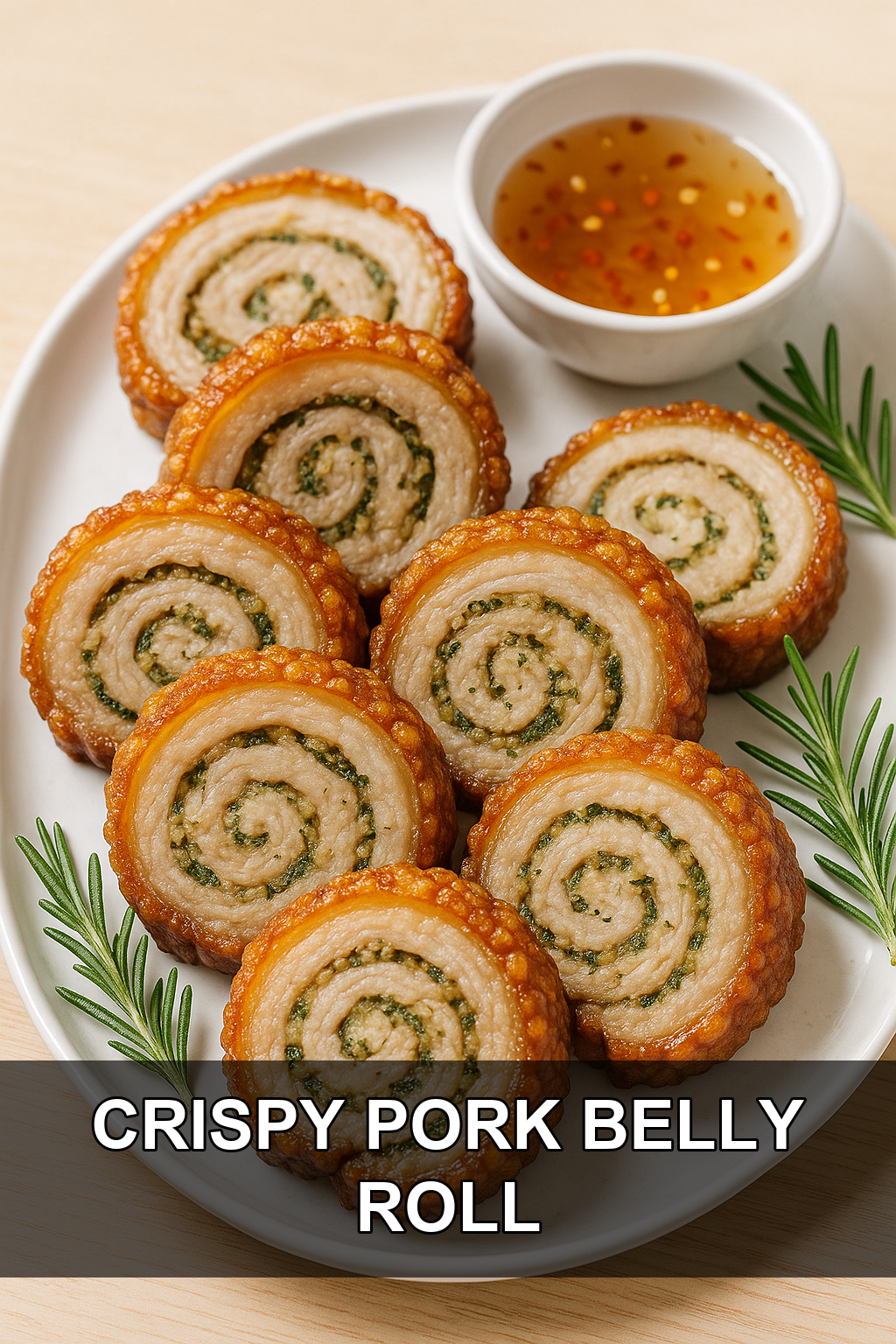
- What Is Crispy Pork Belly Roll?
- Tips for Cooking and Prepping
- Recipe Variations and Substitutes
- Serving Suggestions
- Storing, Make-Ahead, and Freezing Tips
- FAQs
- Crispy Pork Belly Roll with Garlic Herb Stuffing Recipe
If you love the sound of shattering crackling and juicy, garlicky meat in every bite, this crispy pork belly roll is about to become your new obsession. Rolled tight with a fragrant garlic herb stuffing and served alongside a bright, tangy vinegar dip, it’s the kind of centerpiece roast that looks like it took a professional chef all day — but really just takes patience and a hot oven.
What Is Crispy Pork Belly Roll?
Crispy pork belly roll, sometimes called porchetta-style pork belly, is a boned pork belly that’s seasoned, filled with a savory herb and garlic stuffing, then rolled up tightly and tied before roasting low and slow. The final blast of high heat turns the outer skin into shattering, bubbly crackling while the inside stays tender, juicy, and infused with garlic, rosemary, and fennel flavor throughout every spiral slice.
This dish borrows heavily from Italian porchetta traditions and Filipino and Chinese lechon-style rolled pork, both of which prize the contrast between crisp skin and soft, well-seasoned meat. The tangy vinegar dip — a simple mix of vinegar, garlic, chili, and a touch of sugar — cuts through the richness of the pork belly, making each bite feel balanced instead of heavy.
Tips for Cooking and Prepping
#1: Dry the skin thoroughly before roasting
Pat the pork belly skin completely dry with paper towels and let it air-dry uncovered in the fridge for several hours or overnight; excess moisture is the number one enemy of crispy crackling.
#2: Score the skin, not the meat
Use a sharp knife or box cutter to score shallow lines through just the skin and fat layer, being careful not to cut into the meat, so the skin can crackle without the stuffing juices leaking out.
#3: Season the inside generously before rolling
Since the outer skin is left mostly bare for crackling, all the garlic, herbs, salt, and pepper should go on the meat side so the flavor is locked in as it rolls and roasts.
#4: Tie it snugly at even intervals
Use kitchen twine every inch to two inches along the roll so it holds its cylindrical shape, which ensures even cooking and clean, spiral-patterned slices later.
#5: Roast low first, then blast high heat at the end
Start at a lower temperature to render the fat and cook the meat through gently, then crank the oven up (or use the broiler) for the final 15-20 minutes to puff and crisp the skin.
#6: Rest before slicing
Let the roll rest for at least 15 minutes after roasting so the juices redistribute; slicing too early will cause the filling to spill out and the meat to seize up.
Recipe Variations and Substitutes
Swap the classic garlic-rosemary-fennel stuffing for a lemongrass and chili version for a Southeast Asian twist, or add chopped sun-dried tomatoes and parmesan for an Italian-leaning porchetta. If pork belly isn’t available, a boneless pork shoulder with the fat cap left on works as a substitute, though the skin won’t crackle quite as dramatically.
Serving Suggestions
Slice the roll into thick pinwheels and serve over steamed rice or alongside roasted potatoes and a crisp green salad to balance the richness. It also makes an incredible sandwich filling piled onto a crusty roll with pickled vegetables and a drizzle of the vinegar dip.
Storing, Make-Ahead, and Freezing Tips
Store leftover pork belly roll in an airtight container in the fridge for up to 4 days; reheat slices in a hot oven or air fryer to re-crisp the skin rather than microwaving. You can roll and tie the pork belly a day ahead and refrigerate uncovered to let the skin dry out further, then roast fresh the next day. For freezing, wrap cooled slices tightly and freeze up to 2 months, though the crackling will soften upon thawing.
FAQs
Why isn’t my pork belly skin getting crispy?
The most common culprit is leftover moisture on the skin, so make sure to dry it thoroughly and let it sit uncovered in the fridge before roasting, and finish with high heat or a broiler at the end.
Can I make the garlic herb stuffing ahead of time?
Yes, you can chop the garlic and herbs and mix the stuffing up to a day in advance; just keep it refrigerated in a sealed container until you’re ready to roll the pork belly.
What’s the best way to slice a rolled pork belly?
Use a sharp serrated or carving knife and slice straight down through the twine markers into pinwheels about three-quarters of an inch thick for the best mix of crackling and stuffing in each piece.
Can I cook this in an air fryer instead of the oven?
Yes, a large air fryer can work well for smaller rolls; cook at a lower temperature until the internal meat reaches doneness, then increase to the highest setting for the last 10-15 minutes to crisp the skin.
What can I use instead of vinegar for the dipping sauce?
Fresh lime or calamansi juice makes a great substitute for vinegar if you want a slightly sweeter, citrus-forward dip while still keeping that necessary acidity to cut the richness of the pork.
Crispy Pork Belly Roll with Garlic Herb Stuffing Recipe
Prep time: 30 min | Cook time: 150 min | Total time: 180 min | Servings: 8
Ingredients
For the Pork Belly
- 1 whole pork belly, skin-on, about 4-5 lbs, boneless
- 2 tablespoons kosher salt, divided
- 1 teaspoon baking powder (for extra crispy skin)
- 1 tablespoon vegetable oil
For the Garlic Herb Stuffing
- 8 cloves garlic, minced
- 2 tablespoons fresh rosemary, finely chopped
- 2 tablespoons fresh thyme leaves
- 1 tablespoon fennel seeds, lightly crushed
- 1 teaspoon crushed red pepper flakes
- Zest of 1 lemon
- 2 tablespoons olive oil
- 1 teaspoon freshly cracked black pepper
For the Tangy Vinegar Dip
- 1/2 cup white or cane vinegar
- 2 cloves garlic, minced
- 1 small chili, thinly sliced (optional)
- 1 tablespoon sugar
- 1/2 teaspoon salt
- 1 tablespoon soy sauce (optional, for depth)
Instructions
- Pat the pork belly completely dry with paper towels, then place it uncovered on a rack set over a tray in the fridge for at least 4 hours or overnight to dry out the skin.
- Flip the pork belly skin-side down on a clean surface. Season the meat side generously with 1 tablespoon of the salt and freshly cracked black pepper.
- In a small bowl, mix the minced garlic, rosemary, thyme, crushed fennel seeds, red pepper flakes, lemon zest, and olive oil to form the stuffing paste. Spread this evenly over the meat side of the pork belly, leaving a small border around the edges.
- Starting from one long edge, tightly roll the pork belly into a cylinder, keeping the skin on the outside. Tie the roll securely with kitchen twine at 1 to 2 inch intervals to hold its shape.
- Pat the outside skin dry again, then rub it with the remaining 1 tablespoon of salt mixed with the baking powder, working it into the scored lines. Score the skin in a shallow crosshatch pattern if not already done, being careful not to cut into the meat.
- Place the rolled pork belly on a rack set inside a roasting pan. Rub the oil lightly over the skin. Roast at 300°F (150°C) for about 2 hours, until the internal temperature reaches around 195°F (90°C) and the meat is tender.
- Increase the oven temperature to 475°F (245°C), or switch on the broiler, and roast for another 15-20 minutes, watching closely, until the skin puffs up and turns deeply golden and crackly.
- Meanwhile, whisk together the vinegar, minced garlic, sliced chili, sugar, salt, and soy sauce in a small bowl to make the tangy dip. Set aside to let the flavors meld.
- Remove the pork belly roll from the oven and let it rest for 15-20 minutes before removing the twine.
- Slice into thick pinwheels using a sharp knife and serve warm with the tangy vinegar dip on the side.
For extra-crispy skin, an optional overnight uncovered dry-brine in the fridge makes a noticeable difference. Leftover slices reheat beautifully in an air fryer at 400°F for 5-6 minutes to re-crisp the skin.
Leave a Reply
You must be logged in to post a comment.