
- What Is Coconut Eggplant Curry?
- Tips for Cooking and Prepping
- Recipe Variations and Substitutes
- Serving Suggestions
- Storing, Make-Ahead, and Freezing Tips
- FAQs
- Coconut Eggplant Curry with Toasted Cashews and Basmati Rice Recipe
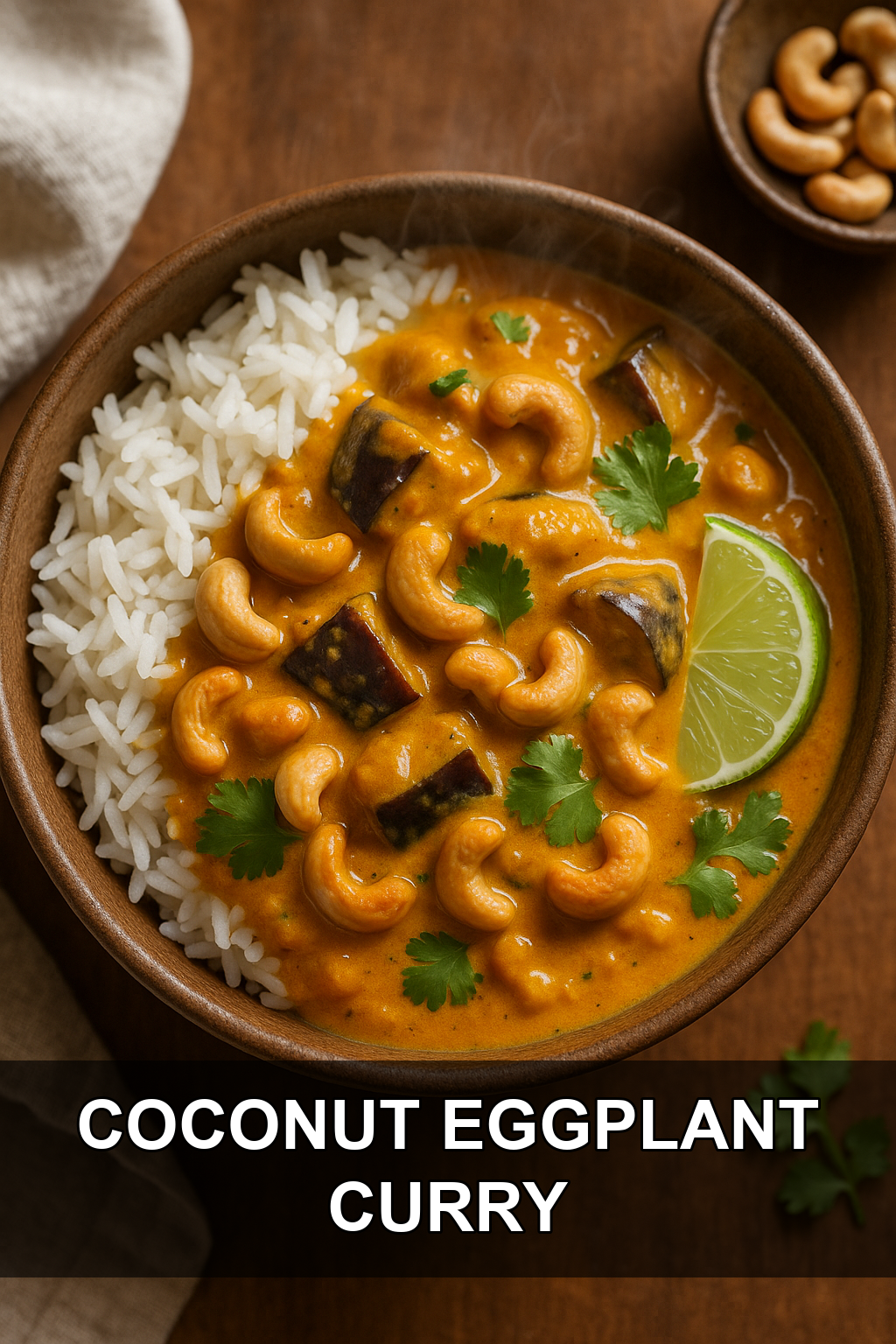
This coconut eggplant curry is the kind of dish that makes your whole kitchen smell like a cozy Southeast Asian spice shop. Tender roasted eggplant simmers in a rich, fragrant coconut milk sauce, then gets finished with a shower of toasted cashews for crunch, all piled onto fluffy basmati rice. It’s comforting, deeply flavorful, and easier to make than you’d think.
What Is Coconut Eggplant Curry?
Coconut eggplant curry is a vegetarian curry built around soft, silky eggplant simmered in a spiced coconut milk base. It draws inspiration from South and Southeast Asian cooking traditions, particularly Indian and Thai-style curries, where eggplant (or ‘aubergine’) is prized for how it absorbs bold flavors while turning almost custard-like when cooked low and slow. The coconut milk lends a naturally sweet, creamy backbone that balances warming spices like curry powder, turmeric, ginger, and garlic.
What sets this version apart is the toasted cashew topping, which adds a buttery crunch and a subtle nuttiness that plays beautifully against the soft eggplant and creamy sauce. Served over basmati rice, it becomes a complete, satisfying meal that’s naturally vegan and gluten-free, yet still feels indulgent enough for a weekend dinner.
Tips for Cooking and Prepping
#1: Salt the eggplant first
Sprinkling cubed eggplant with salt and letting it sit for 15-20 minutes draws out excess moisture and bitterness, which helps it caramelize better and prevents a watery curry.
#2: Roast or sear before simmering
Don’t skip browning the eggplant in a hot pan or oven before adding it to the sauce; this step builds deep flavor and keeps the eggplant from turning mushy once it hits the liquid.
#3: Toast the cashews separately
Toast cashews in a dry skillet or the oven just until golden and fragrant, then set them aside so they stay crisp instead of softening in the sauce.
#4: Bloom your spices in fat
Cook curry powder, turmeric, and ginger in a bit of oil or coconut oil for 30-60 seconds before adding liquid; this wakes up the spices and prevents a raw, chalky taste.
#5: Rinse the basmati rice
Rinse basmati rice under cold water until it runs clear to remove excess starch, which keeps the grains light, fluffy, and separate instead of clumpy.
#6: Let the curry rest before serving
Give the curry 5-10 minutes off the heat before plating; the sauce thickens slightly and the flavors settle, making every bite richer.
Recipe Variations and Substitutes
This curry is very forgiving, so feel free to swap in what you have. Add chickpeas or diced potatoes for extra heartiness, use full-fat coconut milk for maximum creaminess or light coconut milk for a lighter version, or stir in spinach or bell peppers near the end for added color and nutrients. If you don’t have cashews, toasted almonds, peanuts, or pepitas make a great crunchy substitute.
Serving Suggestions
Serve this curry hot over basmati rice with a wedge of lime, a sprinkle of fresh cilantro, and extra toasted cashews on top. It also pairs wonderfully with warm naan or roti for scooping up the sauce, and a simple cucumber salad or mango chutney on the side adds a refreshing contrast.
Storing, Make-Ahead, and Freezing Tips
The curry (without the cashews) keeps well in an airtight container in the fridge for up to 4 days and actually tastes even better the next day as the flavors meld. It also freezes beautifully for up to 3 months; just thaw overnight in the fridge and reheat gently on the stove, adding the toasted cashews fresh right before serving so they stay crunchy.
FAQs
Can I make coconut eggplant curry ahead of time?
Yes, this curry is a great make-ahead meal. Prepare it up to 2 days in advance, store it in the fridge, and reheat gently on the stove, adding fresh toasted cashews right before serving.
Why is my eggplant curry watery or mushy?
This usually happens if the eggplant wasn’t salted and drained first or wasn’t browned before simmering. Salting removes excess moisture, and searing or roasting the eggplant first helps it hold its shape in the sauce.
What type of eggplant works best for this curry?
Standard globe eggplant works well, but Japanese or Chinese eggplant is even better since it has fewer seeds, a thinner skin, and less bitterness, making it especially tender in curry.
Is this curry spicy?
As written, this curry is mild to medium and family-friendly, but you can easily increase the heat by adding fresh chili, cayenne, or a spoonful of chili paste to suit your taste.
Can I use a different type of rice?
Basmati rice is traditional for its fragrant, fluffy texture, but jasmine rice, brown rice, or even cauliflower rice all work well as substitutes if that’s what you have on hand.
Coconut Eggplant Curry with Toasted Cashews and Basmati Rice Recipe
Prep time: 20 min | Cook time: 35 min | Total time: 55 min | Servings: 4
Ingredients
For the Curry
- 2 medium eggplants, cut into 1-inch cubes
- 1 teaspoon salt, for drawing out moisture
- 3 tablespoons coconut oil or neutral oil, divided
- 1 small yellow onion, diced
- 3 cloves garlic, minced
- 1 tablespoon fresh ginger, grated
- 2 tablespoons curry powder
- 1/2 teaspoon ground turmeric
- 1/4 teaspoon cayenne pepper (optional)
- 1 (14-ounce) can full-fat coconut milk
- 1 (14.5-ounce) can diced tomatoes
- 1 cup vegetable broth
- 1 tablespoon soy sauce or tamari
- 1 teaspoon brown sugar or coconut sugar
- Juice of 1 lime
- Salt and black pepper, to taste
For the Basmati Rice
- 1 1/2 cups basmati rice, rinsed
- 2 1/4 cups water
- 1/2 teaspoon salt
- 1 teaspoon butter or oil (optional)
For Topping
- 3/4 cup raw cashews
- 1/2 teaspoon coconut oil (optional, for toasting)
- Fresh cilantro, chopped
- Lime wedges, for serving
Instructions
- Toss the cubed eggplant with 1 teaspoon salt and place it in a colander set over a bowl. Let it sit for 15-20 minutes, then pat the pieces dry with a clean towel to remove excess moisture.
- While the eggplant drains, toast the cashews in a dry skillet over medium heat, stirring often, for 3-4 minutes until golden and fragrant. Remove immediately and set aside.
- Heat 2 tablespoons oil in a large skillet or Dutch oven over medium-high heat. Add the eggplant in a single layer and cook, turning occasionally, for 8-10 minutes until browned on multiple sides. Remove and set aside.
- In the same pot, add the remaining tablespoon of oil along with the diced onion. Cook for 4-5 minutes until softened, then stir in the garlic and ginger and cook for 1 minute more.
- Add the curry powder, turmeric, and cayenne (if using) and stir constantly for 30-60 seconds to bloom the spices, being careful not to let them burn.
- Pour in the coconut milk, diced tomatoes, vegetable broth, soy sauce, and brown sugar. Stir well to combine and bring to a gentle simmer.
- Return the browned eggplant to the pot. Reduce heat to low, cover partially, and simmer for 18-22 minutes, stirring occasionally, until the eggplant is tender and the sauce has thickened slightly.
- While the curry simmers, cook the basmati rice: combine rinsed rice, water, and salt in a medium saucepan. Bring to a boil, then reduce heat to low, cover, and cook for 12-15 minutes until the water is absorbed. Remove from heat and let sit, covered, for 5 minutes before fluffing with a fork.
- Once the curry has thickened, stir in the lime juice and season with salt and black pepper to taste. Let it rest off the heat for 5-10 minutes.
- Spoon the curry over bowls of basmati rice, then top generously with toasted cashews, fresh cilantro, and an extra lime wedge on the side. Serve warm.
For a deeper flavor, roast the eggplant in a 425°F oven for 20-25 minutes instead of pan-searing. This curry also tastes even better the next day, so consider making it a day ahead.
Leave a Reply
You must be logged in to post a comment.