
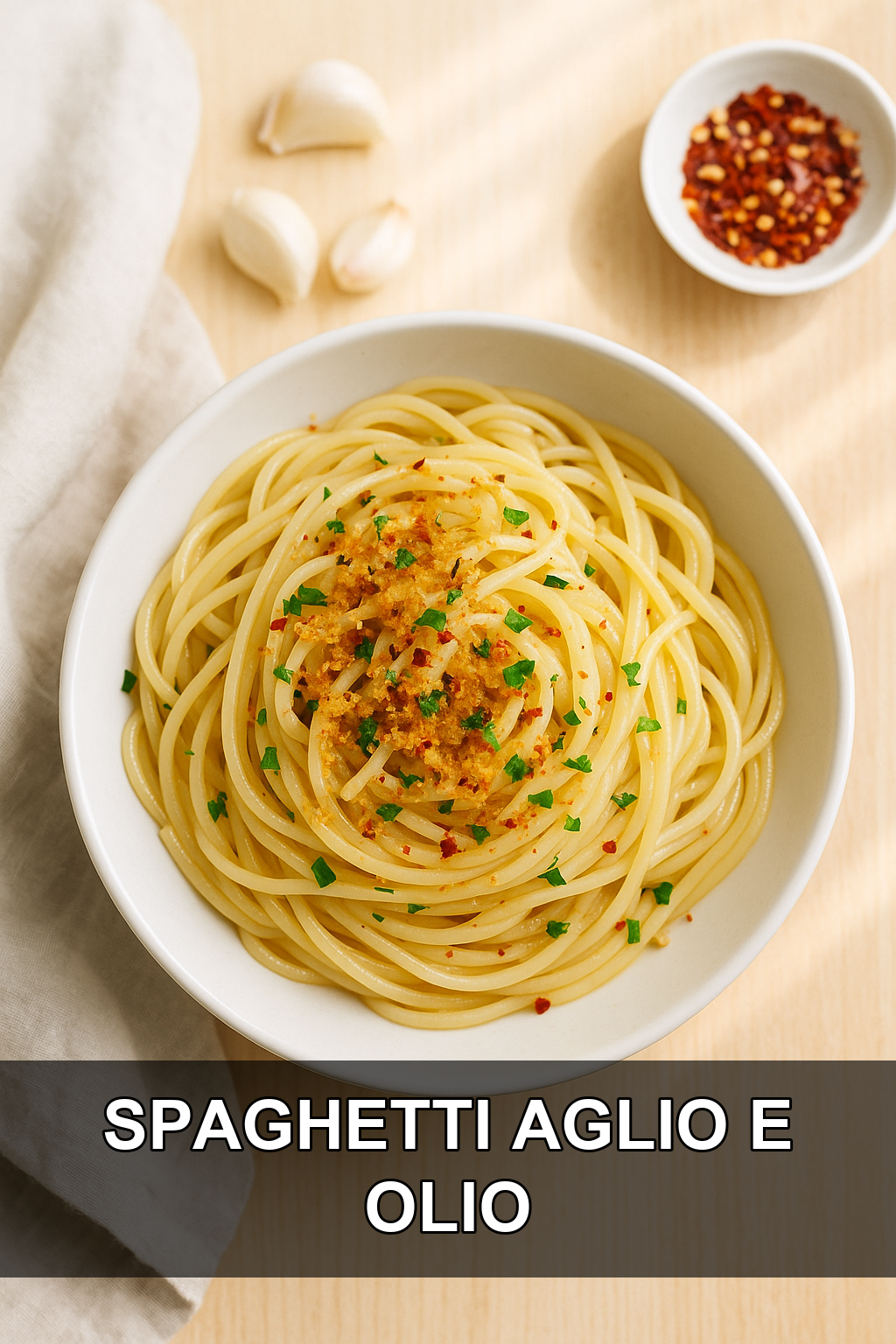
- What Is Spaghetti Aglio e Olio?
- Tips for Cooking and Prepping
- Recipe Variations and Substitutes
- What to Serve with Aglio e Olio
- Storing and Reheating Leftovers
- FAQs
- Classic Spaghetti Aglio e Olio with Toasted Breadcrumbs and Chili Flakes Recipe
Some nights call for a dinner that’s fast, cheap, and deeply satisfying, and that’s exactly where spaghetti aglio e olio shines. This version takes the classic Italian pantry pasta and adds a crunchy, buttery breadcrumb topping that makes every bite a little more exciting than the last.
What Is Spaghetti Aglio e Olio?
Spaghetti aglio e olio literally translates to “spaghetti with garlic and oil,” and it is exactly as simple as it sounds. Originating in Naples, this dish was born out of necessity during lean times, using little more than pasta, olive oil, garlic, and chili flakes to create something deeply flavorful without meat, dairy, or a long ingredient list.
Despite its humble roots, aglio e olio has become a beloved staple in Italian and Italian-American kitchens because it proves that simplicity, when done right, can be just as satisfying as an elaborate sauce. Our version stays true to tradition but adds toasted breadcrumbs for texture, turning a minimalist pasta into something with real contrast between silky noodles and crunchy topping.
Tips for Cooking and Prepping
#1: Slice the garlic thin, don’t mince it
Thin slices of garlic toast evenly in the oil and turn a light golden color, giving you sweet, nutty flavor throughout the dish instead of the harsh bitterness that minced garlic can develop when it browns too fast.
#2: Keep the heat low while infusing the oil
Garlic burns quickly, and burnt garlic will make the entire dish taste bitter, so cook it low and slow in the olive oil until it’s just pale gold before adding anything else.
#3: Reserve extra starchy pasta water
The cloudy water left behind from boiling spaghetti is essential for building a light, clingy sauce with just oil and garlic, so save at least a full cup before draining.
#4: Toast the breadcrumbs separately
Toasting breadcrumbs in a bit of butter or olive oil in their own pan (rather than in the same pan as the garlic) keeps them crisp and prevents them from turning soggy in the sauce.
#5: Add chili flakes in two stages
Bloom some chili flakes in the warm oil for background heat, then sprinkle a bit more on top just before serving for a fresher, more vibrant spice that hits the nose as well as the palate.
#6: Toss, don’t stir, the pasta at the end
Tossing the noodles vigorously in the pan with the oil and starchy water helps emulsify everything into a light, glossy coating rather than a pool of oil at the bottom of the bowl.
Recipe Variations and Substitutes
This dish is endlessly adaptable: add sautéed shrimp or grilled chicken for protein, toss in lemon zest and parsley for brightness, or stir in grated Pecorino Romano or Parmesan for a richer finish. Gluten-free spaghetti works well too, and panko can stand in for regular breadcrumbs if you want an extra-crispy topping.
What to Serve with Aglio e Olio
Keep things simple with a crisp green salad dressed in lemon vinaigrette, garlicky sautéed greens, or a side of roasted broccoli to balance the richness of the oil. A glass of crisp white wine and some crusty bread for mopping up the pan are never a bad idea either.
Storing and Reheating Leftovers
Store leftover pasta in an airtight container in the fridge for up to 3 days, keeping the breadcrumbs separate if possible so they stay crunchy. Reheat gently in a skillet with a splash of water or olive oil, then top with fresh breadcrumbs right before serving; this dish isn’t ideal for freezing since the texture of the noodles and breadcrumbs suffers once thawed.
FAQs
Why is my aglio e olio oily instead of saucy?
This usually means you didn’t use enough starchy pasta water or didn’t toss the pasta vigorously enough; the starch in that water is what emulsifies the oil into a light, cohesive sauce.
Can I make spaghetti aglio e olio ahead of time?
It’s best enjoyed fresh since the sauce is so light, but you can prep the toasted breadcrumbs and sliced garlic ahead of time to speed up cooking on a busy weeknight.
What type of pasta works best for this recipe?
Traditional spaghetti is classic, but linguine or bucatini also work beautifully since their shape holds onto the thin oil-based sauce nicely.
Is aglio e olio vegan?
Yes, as long as you skip the optional Parmesan or use a plant-based alternative, this dish is naturally vegan since it relies on olive oil, garlic, and pasta for its flavor and texture.
How do I keep the breadcrumbs crunchy?
Toast them separately in a dry or lightly oiled pan and add them on top of each individual serving rather than mixing them directly into the sauce, which can cause them to soften over time.
Classic Spaghetti Aglio e Olio with Toasted Breadcrumbs and Chili Flakes Recipe
Prep time: 10 min | Cook time: 15 min | Total time: 25 min | Servings: 4
Ingredients
For the Pasta
- 1 pound spaghetti
- Kosher salt, for the pasta water
- 1/2 cup extra-virgin olive oil
- 8 garlic cloves, thinly sliced
- 1 to 1 1/2 teaspoons red chili flakes, divided
- 1/2 cup reserved starchy pasta water
- 1/4 cup chopped fresh parsley
- Freshly grated Parmesan or Pecorino Romano, for serving (optional)
For the Toasted Breadcrumbs
- 1 cup plain or panko breadcrumbs
- 2 tablespoons olive oil or butter
- 1 garlic clove, minced
- Pinch of salt
Instructions
- Bring a large pot of generously salted water to a boil. Add the spaghetti and cook until just shy of al dente, about 1 minute less than the package directions, then reserve 1 cup of the pasta water before draining.
- While the pasta cooks, make the breadcrumbs: heat the olive oil or butter in a skillet over medium heat, add the minced garlic and breadcrumbs, and toast, stirring frequently, until golden brown and crisp, about 3 to 4 minutes. Season with a pinch of salt and set aside.
- In a large skillet, heat the 1/2 cup olive oil over low to medium-low heat. Add the sliced garlic and cook slowly, stirring often, until it turns pale golden and fragrant, about 3 to 5 minutes; do not let it brown too much or burn.
- Add half of the chili flakes to the warm oil and stir for about 30 seconds to bloom their flavor.
- Add the drained spaghetti directly to the skillet along with about 1/2 cup of the reserved pasta water. Toss vigorously over medium heat for 1 to 2 minutes, adding more pasta water as needed, until the noodles are glossy and lightly coated in sauce.
- Remove from the heat and stir in the chopped parsley. Taste and adjust salt as needed.
- Divide the pasta among bowls, then top generously with the toasted breadcrumbs, remaining chili flakes, and grated Parmesan if using. Serve immediately while warm.
For extra flavor, add a squeeze of fresh lemon juice right before serving, or stir in some anchovy fillets while cooking the garlic for a deeper, savory backbone.
Leave a Reply
You must be logged in to post a comment.