
- What Is Rice Pilaf?
- Tips for Cooking and Prepping
- Recipe Variations and Substitutes
- What to Serve with Rice Pilaf
- Storing, Make-Ahead, and Freezing Tips
- FAQs
- Classic Rice Pilaf Recipe
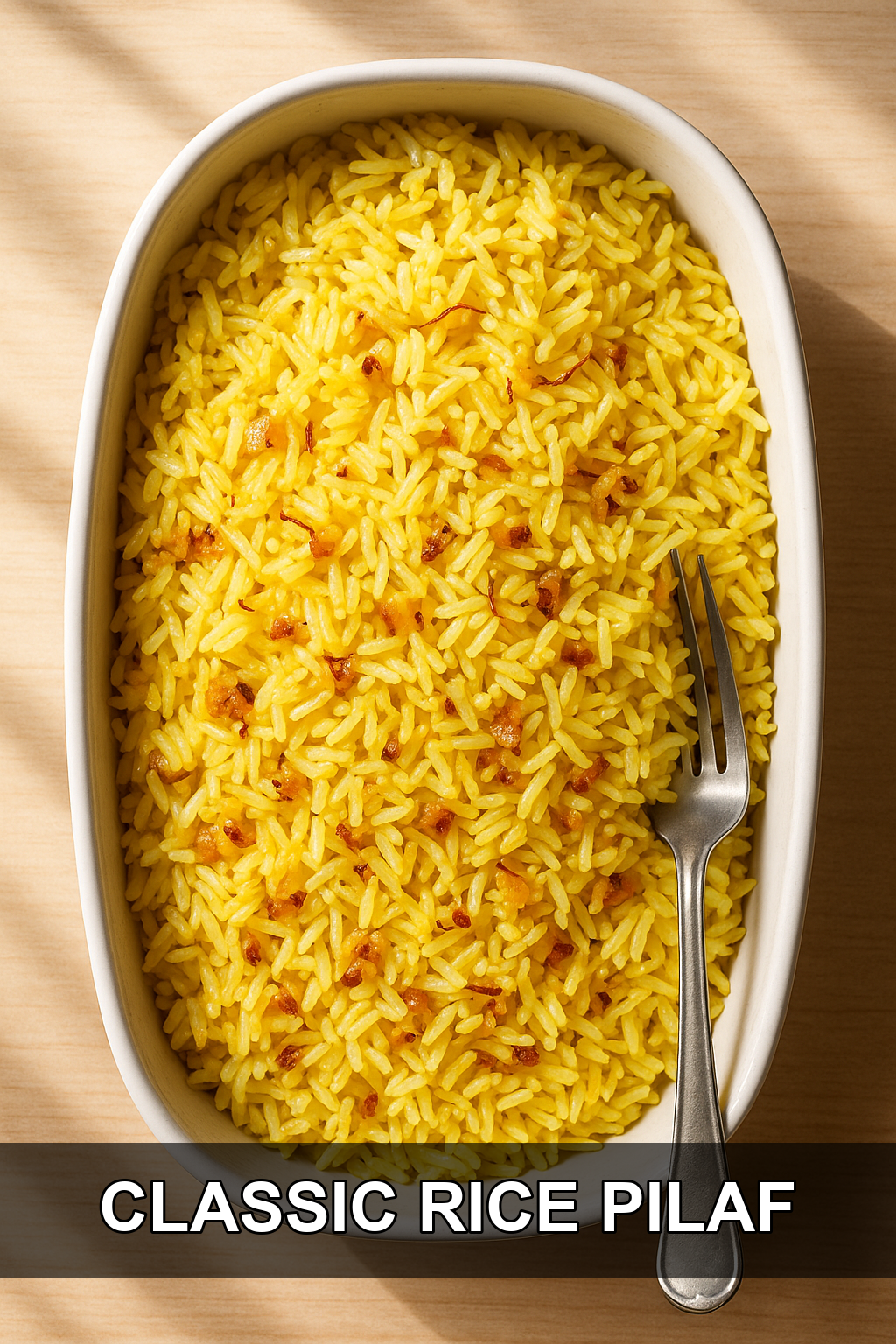
There’s something wonderfully comforting about a pot of golden, fragrant rice pilaf simmering away in the oven. This Classic Rice Pilaf takes the guesswork out of stovetop rice-making and delivers perfectly fluffy grains every single time, thanks to a touch of saffron, a hint of cayenne, and a rich chicken stock base.
What Is Rice Pilaf?
Rice pilaf (sometimes spelled “pilaf,” “pilau,” or “polo” depending on the region) is a rice dish where the grains are first sautéed or coated in fat, then cooked in a seasoned broth rather than plain water. This technique, which originated in Central Asia and the Middle East before spreading throughout the Mediterranean, South Asia, and beyond, gives the rice a deeper flavor and a lighter, fluffier texture than plain boiled rice.
This classic version leans into aromatic, golden flavors with butter, olive oil, sautéed onion, and a pinch of saffron for that signature warm color and floral note. A touch of cayenne adds subtle background heat, while baking the rice in the oven instead of on the stovetop ensures even, hands-off cooking with virtually no risk of scorching or mushy rice.
Tips for Cooking and Prepping
#1: Toast the rice in the fat and onions
Stirring the rice into the buttery, olive-oil-coated onions before baking helps each grain get lightly coated, which keeps the pilaf from clumping and gives it a subtle nutty flavor.
#2: Bloom the saffron in hot stock
Simmering the saffron directly in the chicken stock (rather than adding it dry to the rice) helps release its color and aroma fully, so you get that beautiful golden hue throughout the dish.
#3: Use a wide, shallow baking dish
Spreading the rice evenly in a 9×13-inch dish rather than a deep pot allows the stock to distribute evenly and the rice to cook uniformly without dense or undercooked pockets.
#4: Seal the foil tightly
A tight foil seal traps steam inside the dish, which is essential for fully cooking the rice through baking alone — any gaps can lead to dry edges or unevenly cooked grains.
#5: Don’t skip the resting time
Letting the pilaf rest, covered, for 10 minutes after baking allows the residual steam to finish the cooking process and makes the rice easier to fluff without turning gummy.
#6: Fluff, don’t stir
Use a fork rather than a spoon to fluff the finished rice — this separates the grains gently without mashing or compacting them.
Recipe Variations and Substitutes
This pilaf is easy to customize: swap chicken stock for vegetable stock to make it vegetarian, or use basmati rice for a slightly different texture and aroma. You can also stir in toasted almonds, pine nuts, dried currants, or fresh herbs like parsley or dill just before serving for extra flavor and texture. If saffron isn’t available, a pinch of turmeric will give a similar golden color, though the flavor will be milder.
What to Serve with Rice Pilaf
This versatile side pairs beautifully with roasted or grilled chicken, lamb kebabs, baked salmon, or a hearty vegetable stew. It’s also a wonderful base for bowls topped with roasted vegetables, chickpeas, or a dollop of yogurt sauce.
Storing, Make-Ahead, and Freezing Tips
Leftover pilaf keeps well in an airtight container in the refrigerator for up to 4 days. To reheat, sprinkle a little water or stock over the rice and warm it in a covered dish in the oven or microwave to restore moisture. For longer storage, freeze cooled rice in a freezer-safe bag or container for up to 2 months, then thaw overnight in the fridge before reheating.
FAQs
Can I make rice pilaf on the stovetop instead of the oven?
Yes, after combining the rice with the stock mixture, you can simmer it covered on low heat for about 18-20 minutes, then let it rest off heat for 10 minutes before fluffing, though the oven method gives more even results.
Why is my rice pilaf mushy?
Mushy pilaf is usually caused by too much liquid, an oven temperature that’s too low, or lifting the foil too early, which lets steam escape and disrupts even cooking. Stick to the 3:2 stock-to-rice ratio and keep the dish tightly covered for best results.
Can I use brown rice instead of white rice?
You can, but brown rice requires more liquid and a longer baking time (closer to 50-60 minutes), so plan to adjust the stock amount and check for doneness before removing it from the oven.
Is saffron necessary for this recipe?
Saffron adds a distinctive golden color and delicate floral flavor, but the pilaf will still taste great without it if you’d prefer to skip this pricier spice or don’t have it on hand.
Can I double this recipe for a crowd?
Yes, this recipe scales up easily; just use a larger baking dish so the rice layer stays roughly the same thickness, and you may need to add a few extra minutes to the covered baking time.
Classic Rice Pilaf Recipe
Prep time: 15 min | Cook time: 45 min | Total time: 60 min | Servings: 6
Ingredients
- 2 tablespoons butter
- 2 tablespoons olive oil
- 0.5 medium onion, chopped
- 2 cups long-grain white rice
- 3 cups chicken stock
- 1.5 teaspoons salt
- 0.25 teaspoon cayenne pepper
- 1 pinch saffron
Instructions
- Preheat the oven to 350 degrees F (175 degrees C).
- Melt butter and oil in a large saucepan over medium heat. Add onion; cook and stir until lightly browned, 7 to 8 minutes. Remove from the heat.
- Place rice into a 9×13-inch casserole dish. Add onion and stir until rice is thoroughly coated. Place the dish on a baking sheet.
- Combine chicken stock, salt, cayenne pepper, and saffron in a saucepan. Bring to a boil, then reduce the heat to low and simmer for 5 minutes.
- Pour stock mixture over rice in the baking dish and stir to combine. Spread mixture evenly along the bottom of the pan and cover tightly with heavy-duty aluminum foil.
- Bake in the preheated oven for 35 minutes. Remove from the oven and allow to rest, covered, for 10 minutes. Remove the foil and fluff rice with a fork.
For extra flavor, stir in a handful of toasted almonds or dried currants after fluffing the rice, and use vegetable stock in place of chicken stock for a vegetarian version.
Leave a Reply
You must be logged in to post a comment.