
- What Is Classic Italian Meatballs?
- Tips for Cooking and Prepping
- Recipe Variations and Substitutes
- Serving Suggestions
- Storing, Make-Ahead, and Freezing Tips
- FAQs
- Classic Italian Meatballs Recipe (Tender and Juicy)
There’s a reason Italian meatballs have earned a permanent spot at family dinner tables everywhere — they’re comforting, endlessly versatile, and secretly budget-friendly to make. This classic version uses a simple soaked-bread trick to guarantee tender, juicy results, and it’s built almost entirely on ingredients you probably already have in your kitchen.
What Is Classic Italian Meatballs?
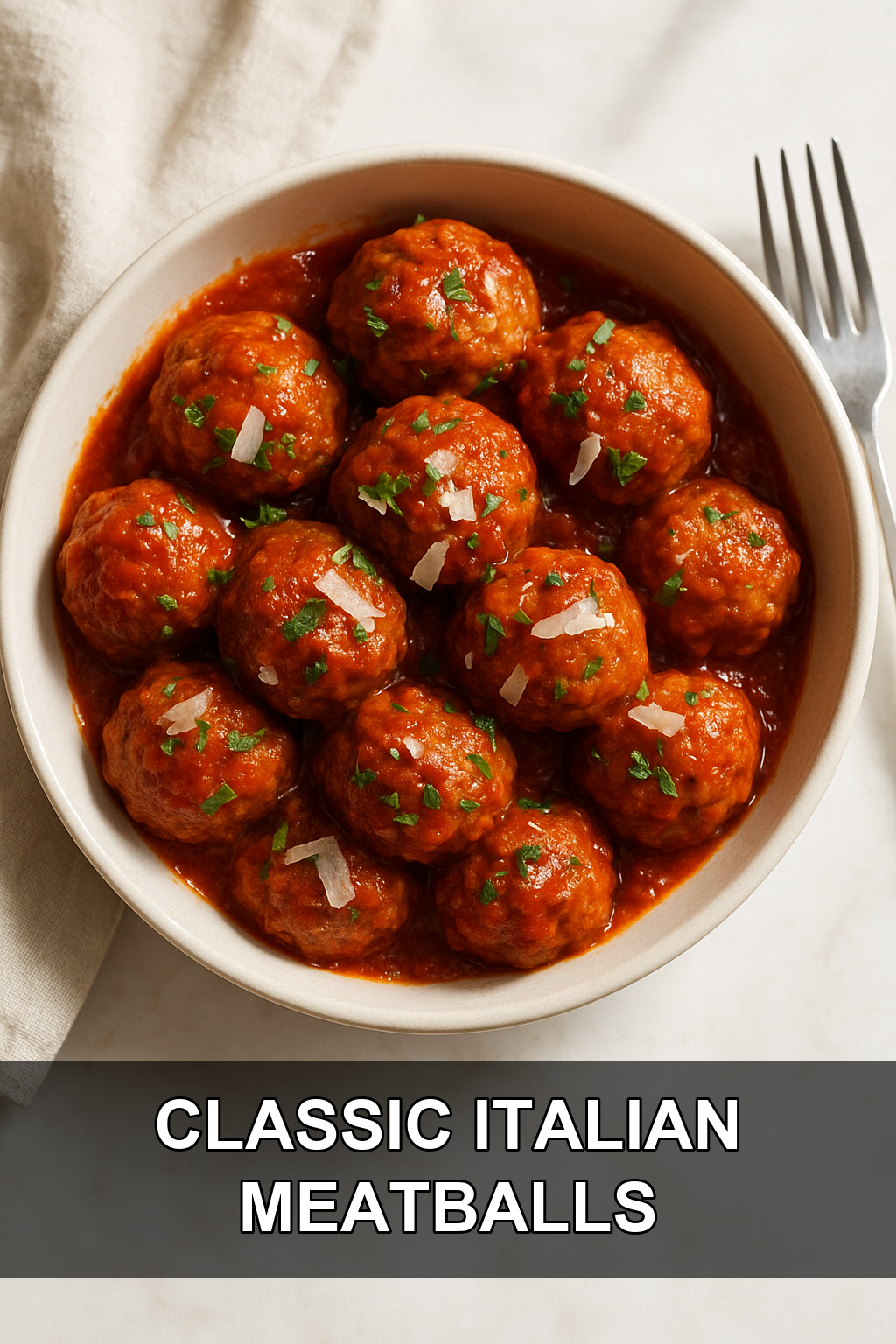
Classic Italian meatballs are a blend of ground meats — traditionally beef and pork or veal — mixed with cheese, garlic, herbs, and a soaked bread mixture called a panade, then browned and simmered until tender. The panade is the real secret here: soaking breadcrumbs in milk before mixing them into the meat keeps the meatballs soft and moist instead of dense or dry, which is a common problem with homemade meatballs.
This style of meatball is meant to be simmered in tomato sauce or served alongside pasta, but it’s flexible enough to show up in sandwiches, soups, and appetizer trays. It’s a dish rooted in Italian-American home cooking, built for feeding a crowd affordably using humble pantry staples and inexpensive cuts of ground meat.
Tips for Cooking and Prepping
#1: Don’t skip the milk-soaked breadcrumbs
Soaking fresh breadcrumbs in milk for a few minutes before mixing creates a soft paste that keeps the meatballs tender instead of tough or rubbery once cooked.
#2: Mix with a light hand
Overworking the meat mixture compacts the proteins and results in dense, chewy meatballs, so blend just until everything is combined and no further.
#3: Skip the veal to save money
Ground veal can be pricey and hard to find at a regular grocery store, so simply use ground pork instead — it delivers the same juicy texture for a fraction of the cost.
#4: Use a cookie scoop for even sizing
A ¼-cup scoop keeps every meatball the same size, so they cook through at the same rate instead of some being raw in the middle while others overcook.
#5: Let craggy shapes be craggy
Don’t stress over rolling perfectly smooth balls — a slightly rough, textured surface actually helps the meatballs hold onto more sauce.
#6: Finish in sauce for extra flavor and less cleanup
Browning the meatballs briefly then simmering them in marinara instead of frying them all the way through saves oil, adds flavor, and means one less pan to babysit.
Recipe Variations and Substitutes
This meatball recipe is easy to adapt based on what’s in your fridge or on sale that week. Swap the pork for ground turkey if you want a lighter version, use Parmesan in place of Pecorino Romano if that’s what you have on hand, or add a pinch of red pepper flakes for a little heat. Fresh basil is a lovely stand-in for parsley if you happen to have some growing on a windowsill.
Serving Suggestions
These meatballs are classic served over spaghetti with marinara sauce, but they’re just as good tucked into a toasted sub roll with melted mozzarella for a meatball sandwich. They also make a great party appetizer served on toothpicks with extra sauce for dipping, or spooned over creamy polenta for a comforting twist on the usual pasta pairing.
Storing, Make-Ahead, and Freezing Tips
The uncooked meatball mixture can be mixed and refrigerated up to 2 days ahead of shaping and cooking, which makes weeknight dinners much faster. Cooked meatballs keep well in the fridge for up to 4 days in an airtight container, and they freeze beautifully — either raw (shaped, on a tray until firm, then bagged) or fully cooked — for up to 3 months, making them a fantastic freezer-friendly staple for busy families.
FAQs
Can I bake these meatballs instead of frying them?
Yes — arrange them on an olive oil-coated baking sheet in a 425-degree oven, bake 10 minutes, flip, then bake another 10-12 minutes until browned and cooked through.
Why do you soak breadcrumbs in milk before adding them to meatballs?
Soaking the breadcrumbs creates a soft paste (called a panade) that keeps the meat mixture moist as it cooks, preventing the dry, dense texture that plain breadcrumbs alone can cause.
Can I use all ground beef instead of beef and pork?
You can, though the blend of beef and pork gives the meatballs extra juiciness and flavor; if using all beef, choose a chuck blend with a bit of fat to keep them tender.
How do I know when the meatballs are fully cooked?
Use an instant-read thermometer and cook until the center reaches 165 degrees Fahrenheit, which typically takes about 15 minutes total whether frying, baking, or simmering in sauce.
Can I make the meatball mixture ahead of time?
Absolutely — the raw meatball mixture can be mixed and stored in the refrigerator up to 2 days before you shape and cook it, which is great for meal prepping ahead of a busy week.
Classic Italian Meatballs Recipe (Tender and Juicy)
Prep time: 15 min | Cook time: 15 min | Total time: 30 min | Servings: 16
Ingredients
For the Bread Mixture (Panade)
- ½ cup fresh breadcrumbs (from 1-2 slices white bread, crust removed)
- ¼ cup milk
- 2 egg yolks
- ½ cup grated Pecorino Romano cheese (or Parmesan cheese)
- 2 garlic cloves, finely chopped or grated
- 1 teaspoon salt (or 2 teaspoons Diamond brand kosher salt)
- 1 teaspoon ground black pepper
For the Meatballs
- 1 pound ground beef chuck
- 1 pound ground pork (or veal)
- ¼ cup grated onion (optional)
- ⅓ cup chopped parsley (or basil)
- Olive oil, for frying
Instructions
- Put the breadcrumbs in a small bowl and pour the milk over them. Let soak for 5 minutes. Add the egg yolks, cheese, garlic, salt, and pepper to the bowl and mash together to form a coarse paste.
- Put the beef, pork, and onion (if using) in a large bowl and mix with a fork to blend. Add the bread mixture and parsley. Blend everything together well using your hands, a large wooden spoon, or a large fork — a stand mixer on low speed works too. The mixture can be covered and refrigerated up to 2 days ahead of shaping and cooking.
- Use a ¼-cup measuring cup or cookie scoop to portion the mixture, then roll lightly into balls. They don’t need to be perfectly smooth — craggy meatballs hold sauce better.
- Pour enough olive oil into a large skillet to coat the bottom and set over medium-high heat. Once hot, add as many meatballs as will fit without crowding the pan — they should sizzle immediately on contact.
- Brown the meatballs on all sides. Cover, lower the heat, and continue cooking until firm and cooked through (165°F on an instant-read thermometer), about 15 minutes total. Repeat with remaining meatballs, discarding and replacing the oil each batch. Alternatively, transfer the browned meatballs into a pot of simmering tomato sauce and simmer 10-12 minutes until cooked through.
- If baking instead: preheat the oven to 425°F.
- Arrange the meatballs on an olive oil-coated rimmed baking sheet. Bake 10 minutes, flip with a spatula or tongs, then continue baking another 10-12 minutes until browned and cooked through.
- Serve the warm meatballs with marinara sauce or your favorite prepared tomato sauce.
For an even more budget-friendly version, skip the pork entirely and use 2 pounds of ground beef chuck — the texture will be slightly firmer but still delicious. Fresh breadcrumbs can be made at home by pulsing stale white bread in a food processor.
Leave a Reply
You must be logged in to post a comment.