
- What Is Herb and Sausage Stuffing?
- Tips for Cooking and Prepping
- Recipe Variations and Substitutes
- Serving Suggestions
- Storing, Make-Ahead, and Freezing Tips
- FAQs
- Classic Herb and Sausage Thanksgiving Stuffing with Toasted Sourdough Recipe
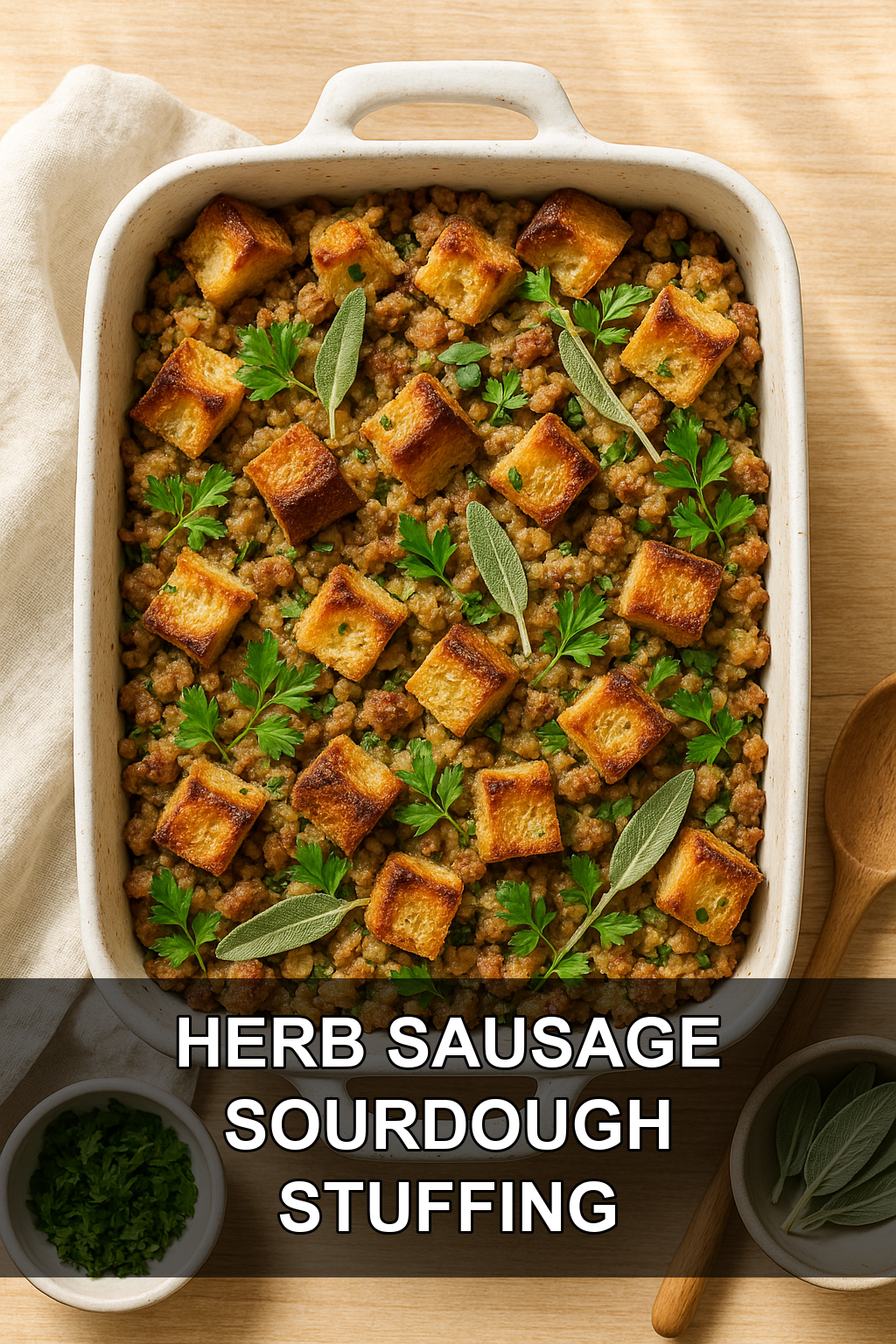
There’s a reason herb and sausage stuffing is the dish everyone fights over at Thanksgiving dinner. This version starts with cubes of toasted sourdough for the perfect chewy-crisp texture, then gets loaded up with savory sausage, sautéed vegetables, and a whole lot of fresh herbs. It’s the kind of stuffing that makes the whole house smell like the holidays.
What Is Herb and Sausage Stuffing?
Herb and sausage stuffing (sometimes called dressing, depending on where you grew up and whether it’s cooked inside the bird or in its own dish) is a bread-based Thanksgiving side made by combining toasted or stale bread cubes with a savory mixture of browned sausage, sautéed onions and celery, fresh herbs, and a rich broth. It’s baked until the top is golden and crisp while the inside stays moist and custardy, giving you the best of both textures in every bite.
Using sourdough instead of a plain white or French loaf adds a subtle tang and sturdier crumb that holds up beautifully to all that broth and butter without turning mushy. Combined with the deep savory flavor of Italian sausage and a classic herb blend of sage, thyme, and rosemary, this stuffing is a timeless centerpiece side that pairs with turkey, gravy, and cranberry sauce like it was born for the job (because it kind of was).
Tips for Cooking and Prepping
#1: Dry out your bread cubes first
Toasting or air-drying your sourdough cubes overnight is essential, since stale, dry bread absorbs the broth and egg mixture evenly without turning to mush. If you’re short on time, toast the cubes in a low oven for 20-25 minutes until firm and slightly crisp.
#2: Brown the sausage well before mixing
Let the sausage develop a deep golden crust in the pan rather than just cooking it through, since those browned bits add tremendous savory flavor to the entire stuffing. Break it into small, bite-sized crumbles as it cooks so it distributes evenly.
#3: Don’t skip sweating the vegetables
Cook the onion, celery, and garlic slowly in the sausage drippings and butter until they’re soft and translucent, not just warmed through, so they release their flavor fully into the base instead of staying raw and sharp in the finished dish.
#4: Add broth gradually and check texture as you go
Pour in broth a little at a time and toss the bread cubes gently, checking that each piece is moistened but not swimming in liquid. Sourdough is fairly absorbent, but you want a moist, cohesive mixture rather than soup.
#5: Cover, then uncover for the perfect top
Bake the stuffing covered with foil for most of the cooking time to keep the inside soft and custardy, then remove the foil for the last 15-20 minutes so the top turns deeply golden and crisp.
#6: Let it rest before serving
Give the stuffing 10 minutes to rest out of the oven so the eggs and broth fully set, which makes for cleaner scoops and better texture at the table.
Recipe Variations and Substitutes
Swap the sourdough for a hearty country loaf, ciabatta, or even cornbread if you want a different texture or a Southern-leaning twist. You can also use turkey or chicken sausage for a lighter version, add dried cranberries or chopped apple for a touch of sweetness, or stir in toasted pecans or walnuts for crunch. For a vegetarian take, skip the sausage, use vegetable broth, and add extra mushrooms and a splash of soy sauce for savory depth.
Serving Suggestions
This stuffing is the natural partner to roast turkey, giblet or mushroom gravy, and cranberry sauce, but it also shines alongside a simple roast chicken any night of the year. Round out the Thanksgiving table with mashed potatoes, green beans almondine, and a simple green salad to balance out all the rich, savory flavors.
Storing, Make-Ahead, and Freezing Tips
You can toast the bread cubes and cook the sausage-vegetable mixture up to 2 days ahead, storing them separately in the fridge, then combine with broth and eggs right before baking. Leftover baked stuffing keeps well in an airtight container in the fridge for up to 4 days and reheats beautifully covered in a 325°F oven; to freeze, cool completely, wrap tightly, and freeze for up to 2 months, thawing overnight in the fridge before reheating.
FAQs
Can I make stuffing ahead of time for Thanksgiving?
Yes, you can toast the bread and prepare the sausage and vegetable mixture up to 2 days in advance and refrigerate them separately. Assemble everything with the broth and eggs and bake it fresh the day of for the best texture.
What’s the difference between stuffing and dressing?
The recipe itself is essentially the same; the difference is simply whether it’s cooked inside the turkey cavity (stuffing) or baked separately in its own dish (dressing). This recipe is designed to be baked separately for food safety and easier make-ahead prep.
Why is my stuffing soggy or mushy?
Soggy stuffing usually happens when the bread isn’t dried out enough before mixing or too much broth is added at once. Make sure your bread cubes are firm and slightly crisp before combining, and add broth gradually until the mixture is moist but not saturated.
Can I use a different type of bread besides sourdough?
Absolutely, French bread, Italian loaf, or a hearty white sandwich bread all work well as substitutes. Just make sure whatever bread you choose is sturdy enough to hold up to toasting and soaking in broth without falling apart.
Do I need to add eggs to stuffing?
Eggs help bind the stuffing together and give it that classic custardy interior texture, so they’re recommended for the best results. If you prefer a looser, more crumbly texture or need an egg-free version, you can omit them, though the stuffing will be less cohesive.
Classic Herb and Sausage Thanksgiving Stuffing with Toasted Sourdough Recipe
Prep time: 30 min | Cook time: 60 min | Total time: 90 min | Servings: 10
Ingredients
For the Stuffing
- 1 large loaf sourdough bread, cut into 3/4-inch cubes (about 12 cups)
- 1 pound Italian sausage, casings removed
- 6 tablespoons unsalted butter, divided
- 1 large yellow onion, diced
- 3 celery stalks, diced
- 3 garlic cloves, minced
- 2 tablespoons chopped fresh sage
- 1 tablespoon chopped fresh thyme
- 1 tablespoon chopped fresh rosemary
- 1/4 cup chopped fresh parsley
- 2 large eggs, lightly beaten
- 2 to 2 1/2 cups low-sodium chicken broth
- 1 teaspoon kosher salt, plus more to taste
- 1/2 teaspoon black pepper
Instructions
- Preheat the oven to 300°F. Spread the sourdough cubes out on two baking sheets and toast for 20-25 minutes, tossing once, until dry and lightly golden. Set aside to cool, then increase the oven temperature to 350°F.
- In a large skillet over medium-high heat, cook the sausage, breaking it into small crumbles with a wooden spoon, until well browned, about 8-10 minutes. Use a slotted spoon to transfer the sausage to a large mixing bowl, leaving the drippings in the pan.
- Add 4 tablespoons of the butter to the same skillet. Once melted, add the onion and celery and cook, stirring occasionally, until softened, about 8 minutes. Add the garlic, sage, thyme, and rosemary, and cook for 1 more minute until fragrant.
- Pour the vegetable mixture over the sausage in the mixing bowl. Add the toasted bread cubes and fresh parsley, and toss gently to combine.
- In a small bowl, whisk together the eggs, 2 cups of the chicken broth, salt, and pepper. Pour over the bread mixture and toss gently, adding more broth a little at a time, until the bread is evenly moistened but not soggy.
- Grease a 9×13-inch baking dish with the remaining 2 tablespoons of butter. Transfer the stuffing mixture to the dish, spreading it into an even layer.
- Cover the dish tightly with foil and bake for 30 minutes. Remove the foil and bake for an additional 20-25 minutes, until the top is golden brown and crisp.
- Let the stuffing rest for 10 minutes before serving warm.
For a deeper flavor, use a mix of sweet and hot Italian sausage, or add a cup of sautéed mushrooms with the onions and celery. Leftover stuffing reheats best covered with foil in a 325°F oven to keep it from drying out.
Leave a Reply
You must be logged in to post a comment.