
- What Is Chicken Adobo?
- Tips for Cooking and Prepping
- Recipe Variations and Substitutes
- Serving Suggestions
- Storing, Make-Ahead, and Freezing Tips
- FAQs
- Classic Chicken Adobo Recipe with Jasmine Rice and Crispy Garlic
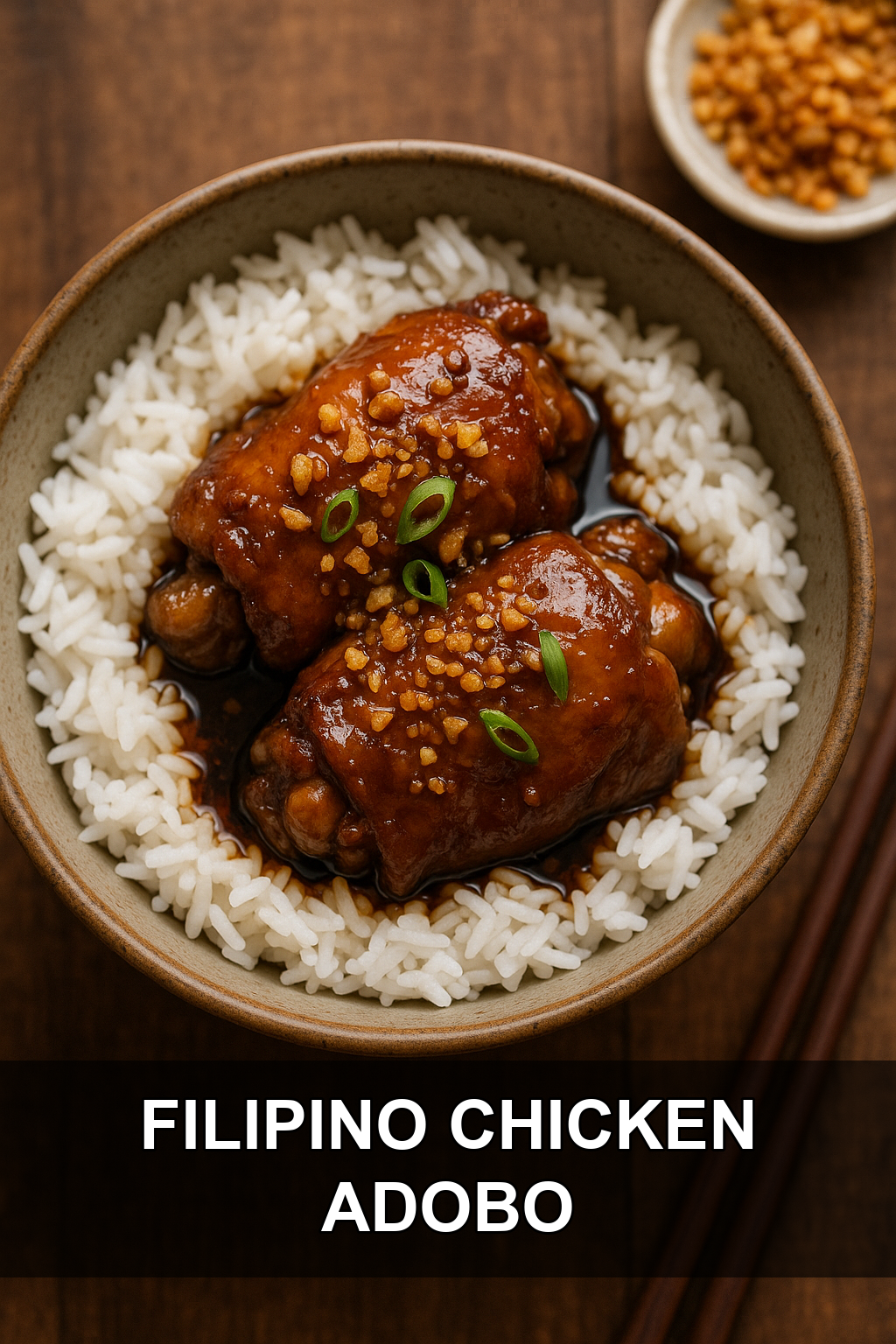
If you’ve never had real Filipino chicken adobo, get ready for your new favorite weeknight dinner. Tender chicken thighs simmer low and slow in a punchy soy-vinegar-garlic sauce until they’re falling-apart tender, then get piled over fluffy jasmine rice and showered with crispy fried garlic. It’s simple, it’s bold, and it tastes even better the next day.
What Is Chicken Adobo?
Adobo is widely considered the unofficial national dish of the Philippines, though there’s no single “correct” recipe—every region, and honestly every household, has its own version. At its core, adobo refers to a cooking method rather than one fixed dish: meat (often chicken or pork, sometimes both) braised in a mixture of vinegar, soy sauce, garlic, bay leaves, and black peppercorns until deeply flavorful and tender.
The combination of vinegar and soy sauce dates back to a preservation technique used long before refrigeration was common, and the name “adobo” actually comes from the Spanish word for marinade, even though the dish itself predates Spanish colonization. This version keeps things classic and straightforward, leaning into that irresistible sour-salty-garlicky flavor profile, and finishes it off with crispy garlic bits for texture and a fragrant bed of jasmine rice to soak up every drop of sauce.
Tips for Cooking and Prepping
#1: Don’t skip the sear
Browning the chicken skin-side down before braising renders excess fat and builds deep flavor into the sauce, so don’t rush this step even though it adds a few extra minutes.
#2: Use whole peppercorns, not ground
Whole black peppercorns infuse the braising liquid with warmth without turning the sauce gritty or overly spicy, which is what happens if you substitute ground pepper.
#3: Let the vinegar simmer uncovered first
Adding vinegar and letting it bubble uncovered for a few minutes before covering the pot mellows its sharp raw edge, so the final sauce tastes tangy but balanced rather than harsh.
#4: Fry the garlic separately
Slice garlic thin and fry it low and slow in neutral oil until just golden; it will continue to darken and crisp as it cools, so pull it from the oil a shade earlier than you think.
#5: Rinse your rice until the water runs clear
This removes excess starch so your jasmine rice steams up light and fluffy instead of gummy, which matters since it’s the base soaking up all that adobo sauce.
#6: Reduce the sauce at the end
Once the chicken is tender, remove the lid and simmer uncovered for the last several minutes to thicken the sauce into a glossy glaze instead of a thin broth.
Recipe Variations and Substitutes
Adobo is endlessly adaptable: swap chicken thighs for a mix of chicken and pork belly, add a can of coconut milk for a richer adobo sa gata, or toss in sliced potatoes or hard-boiled eggs to simmer in the sauce. If you’re out of cane vinegar, apple cider vinegar or rice vinegar work well, and coconut aminos can stand in for soy sauce for a gluten-free, slightly sweeter version.
Serving Suggestions
Adobo is meant to be eaten over rice so every bite catches that garlicky sauce, but it’s also wonderful alongside a simple cucumber and tomato salad or sautéed bok choy to cut the richness. For a full Filipino spread, add a side of atchara (pickled green papaya) and some crispy lumpia.
Storing, Make-Ahead, and Freezing Tips
Adobo is famously a next-day dish, since the flavors deepen and mellow beautifully after resting overnight in the fridge. Store cooled chicken and sauce in an airtight container for up to 5 days, or freeze for up to 3 months; just keep the crispy garlic bits separate and add them fresh right before serving so they stay crunchy.
FAQs
What’s the best cut of chicken to use for adobo?
Bone-in, skin-on chicken thighs are traditional and ideal because they stay juicy and flavorful through the long braise; drumsticks work well too, but breast meat tends to dry out.
Why does my adobo taste too sour or too salty?
This usually comes down to the vinegar-to-soy ratio and how long it simmers uncovered; letting the sauce reduce properly balances the flavors, and you can always add a small pinch of sugar to round out sharp acidity.
Can I make chicken adobo in a slow cooker or Instant Pot?
Yes—sear the chicken first for flavor, then transfer everything to a slow cooker for 4-6 hours on low, or pressure cook for about 12 minutes with a natural release, and finish by reducing the sauce on the stovetop afterward.
Is chicken adobo spicy?
Classic adobo isn’t spicy at all; the flavor is savory, tangy, and garlicky rather than hot, though some cooks add fresh chili or chili flakes for a kick if desired.
What can I use instead of bay leaves?
If you don’t have bay leaves, a small piece of dried kaffir lime leaf or even a strip of orange peel can add a similar background aromatic note, though the dish is still delicious without any substitute at all.
Classic Chicken Adobo Recipe with Jasmine Rice and Crispy Garlic
Prep time: 15 min | Cook time: 45 min | Total time: 60 min | Servings: 4
Ingredients
For the Adobo
- 2 lbs bone-in, skin-on chicken thighs
- 1/2 cup soy sauce
- 1/2 cup cane vinegar or apple cider vinegar
- 1 cup water or chicken broth
- 8 cloves garlic, smashed
- 1 small onion, sliced
- 3 bay leaves
- 1 tablespoon whole black peppercorns
- 1 tablespoon brown sugar
- 2 tablespoons neutral oil, for searing
For the Crispy Garlic Bits
- 8-10 cloves garlic, thinly sliced
- 1/2 cup neutral oil (such as vegetable or canola)
- Pinch of salt
For Serving
- 2 cups jasmine rice, rinsed
- 2 1/4 cups water
- Sliced green onions, optional
- Extra sauce from the pot, for spooning over
Instructions
- Pat the chicken thighs dry and season lightly with salt. Heat neutral oil in a large heavy-bottomed pot or Dutch oven over medium-high heat, then sear the chicken skin-side down until golden brown, about 5-6 minutes per side. Remove and set aside.
- In the same pot, add the smashed garlic and sliced onion, sautéing for 1-2 minutes until fragrant. Pour in the soy sauce, vinegar, water or broth, bay leaves, and peppercorns, stirring to combine.
- Return the chicken to the pot, bring to a boil, then let it bubble uncovered for 3-4 minutes to mellow the vinegar’s sharpness.
- Reduce heat to low, cover, and simmer for 30-35 minutes, turning the chicken occasionally, until fully cooked and tender.
- Uncover the pot, stir in the brown sugar, and simmer for another 8-10 minutes to reduce and thicken the sauce into a glossy glaze.
- While the adobo simmers, make the crispy garlic: heat the oil in a small saucepan over medium-low heat, add the sliced garlic, and cook slowly, stirring often, until golden and crisp, about 5-7 minutes. Immediately strain onto a paper towel-lined plate and sprinkle with a pinch of salt; the garlic will continue to crisp as it cools.
- Meanwhile, cook the rinsed jasmine rice with water in a rice cooker or covered pot until fluffy and tender.
- To serve, spoon steamed jasmine rice into bowls, top with chicken adobo and plenty of sauce, and finish with a generous sprinkle of crispy garlic bits and sliced green onions if using.
For deeper flavor, marinate the chicken in the soy sauce, vinegar, and garlic for 30 minutes to overnight before cooking. Leftover adobo tastes even better the next day, so don’t hesitate to make it ahead.
Leave a Reply
You must be logged in to post a comment.