
- What Is Chicken Adobo?
- Tips for Cooking and Prepping
- Recipe Variations and Substitutes
- Serving Suggestions
- Storing, Make-Ahead, and Freezing Tips
- FAQs
- Classic Filipino Chicken Adobo with Garlic Rice and Crispy Fried Shallots Recipe
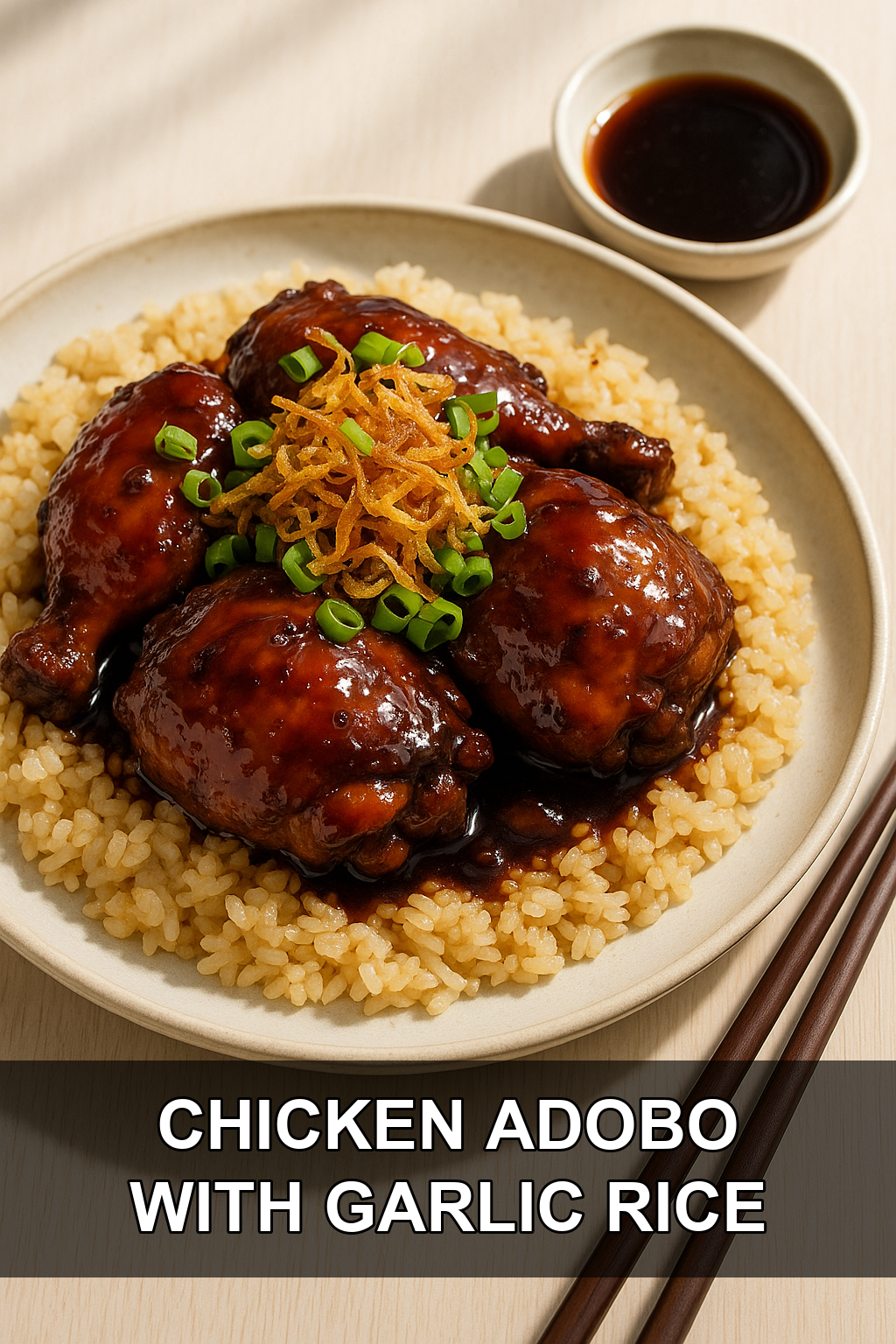
If you’ve never had real Filipino chicken adobo, get ready to fall in love. This is the dish that made me understand why Filipino cooking deserves way more attention: a punchy, garlicky braise of soy sauce and vinegar that turns tender chicken into something deeply savory and slightly sour in the best way. Serve it over garlic-fried rice with a handful of crispy shallots on top and you’ve got a meal that’s simple, cheap, and absolutely unforgettable.
What Is Chicken Adobo?
Chicken adobo is widely considered the unofficial national dish of the Philippines, though there’s no single “correct” version — every region, and honestly every family, has their own take. At its core, adobo is a method of braising meat (most commonly chicken or pork) in a mixture of vinegar, soy sauce, garlic, bay leaves, and black peppercorns until it’s fall-apart tender and the sauce reduces into something rich, glossy, and intensely flavorful.
The name “adobo” actually comes from the Spanish word for marinade or pickling sauce, but the technique predates Spanish colonization — Filipinos were already preserving meat with vinegar and salt long before that. What makes adobo so beloved is the balance it strikes: salty, sour, garlicky, and slightly sweet, all in one bite. Paired with garlic fried rice (sinangag) to soak up the sauce and a scattering of crispy fried shallots for crunch, it becomes an absolute showstopper of a weeknight dinner.
Tips for Cooking and Prepping
#1: Don’t skip the marinating step
Letting the chicken sit in the soy sauce, vinegar, and garlic for at least 30 minutes (or up to overnight) gives the flavors time to really penetrate the meat instead of just coating the surface.
#2: Add the vinegar without stirring right away
Filipino cooks swear by letting vinegar simmer uncovered for a few minutes before stirring it into the pot — this mellows its sharp raw edge so the final sauce tastes rounded instead of harsh.
#3: Use bone-in, skin-on chicken thighs
Thighs stay juicy through the long simmer and the bones add extra body to the sauce; boneless breast meat tends to dry out and gets lost in the braise.
#4: Reduce the sauce until it’s glossy, not watery
Once the chicken is tender, remove the lid and let the liquid bubble down for the last 10-15 minutes so it thickens into a clingy, spoonable sauce rather than a thin broth.
#5: Fry your shallots low and slow
Cook thinly sliced shallots in oil over medium-low heat, stirring often, and pull them out the moment they turn golden — they’ll continue to darken and crisp as they cool, and burnt shallots turn bitter fast.
#6: Make the garlic rice with day-old rice if possible
Cold, day-old rice fries up separate and slightly chewy, soaking up the garlic oil without turning mushy the way fresh-cooked rice can.
Recipe Variations and Substitutes
Adobo is endlessly adaptable: swap chicken thighs for pork shoulder or a mix of both for “adobong baboy at manok.” Some cooks add coconut milk for a creamier, richer sauce (adobo sa gata), while others toss in a whole hard-boiled egg or two to simmer in the sauce alongside the chicken. If you like heat, a sliced Thai chili or two thrown in with the garlic adds a nice kick without overwhelming the dish.
Serving Suggestions
Beyond the garlic rice and crispy shallots, adobo pairs beautifully with a simple side of sautéed greens like bok choy or string beans to cut the richness. A soft-boiled or fried egg on top turns it into a hearty breakfast plate (a popular combo called “adobo silog”), and pickled vegetables like atchara on the side add a bright, crunchy contrast.
Storing, Make-Ahead, and Freezing Tips
Adobo is famously a next-day dish — the flavors deepen and improve after resting in the fridge overnight, so don’t hesitate to make it a day ahead. Store leftovers in an airtight container in the fridge for up to 4 days, or freeze the chicken and sauce (without the rice or shallots) for up to 3 months; thaw overnight in the fridge and reheat gently on the stovetop.
FAQs
What’s the ratio of soy sauce to vinegar in adobo?
A classic starting point is roughly equal parts soy sauce and vinegar, but many cooks lean slightly more toward vinegar for extra tang. Taste and adjust as the sauce reduces, since it will concentrate as it cooks.
Why does my adobo taste too sour or too salty?
This usually happens if the sauce wasn’t simmered long enough to mellow, or the ratios were off. Letting the vinegar cook uncovered before stirring, and simmering the whole pot until reduced, helps balance the flavors — you can also add a small pinch of sugar to round things out.
Can I make chicken adobo in a slow cooker or Instant Pot?
Yes — for a slow cooker, cook on low for 5-6 hours, then transfer the sauce to a pan to reduce on the stovetop at the end. For an Instant Pot, pressure cook on high for 12-15 minutes, then use sauté mode to thicken the sauce afterward.
What type of vinegar is best for adobo?
Filipino cane vinegar (sukang maasim) is traditional and has a milder, slightly sweet acidity, but white distilled vinegar or apple cider vinegar both work well as substitutes if that’s what you have on hand.
Is chicken adobo spicy?
Traditional adobo isn’t spicy at all — it’s savory, tangy, and garlicky rather than hot. If you want heat, simply add sliced fresh chilies or a dash of chili flakes when cooking the garlic.
Classic Filipino Chicken Adobo with Garlic Rice and Crispy Fried Shallots Recipe
Prep time: 20 min | Cook time: 50 min | Total time: 70 min | Servings: 4
Ingredients
For the Chicken Adobo
- 2 lbs bone-in, skin-on chicken thighs
- 1/2 cup soy sauce
- 1/2 cup white or cane vinegar
- 1 head garlic, peeled and smashed (about 10-12 cloves)
- 3 bay leaves
- 1 tsp whole black peppercorns, lightly crushed
- 2 tbsp brown sugar
- 1 cup water or chicken broth
- 1 tbsp neutral oil
- 2 green onions, sliced, for garnish (optional)
For the Garlic Rice
- 3 cups cooked, day-old white rice
- 1/4 cup minced garlic (about 8-10 cloves)
- 2 tbsp butter or neutral oil
- 1/2 tsp salt
For the Crispy Fried Shallots
- 3 large shallots, thinly sliced into rings
- 1/2 cup neutral oil
- Pinch of salt
Instructions
- In a large bowl, combine the chicken thighs with soy sauce, vinegar, smashed garlic, bay leaves, and peppercorns. Cover and marinate in the fridge for at least 30 minutes, or up to overnight for deeper flavor.
- Remove the chicken from the marinade, reserving the liquid and aromatics. Pat the chicken dry with paper towels.
- Heat oil in a large heavy-bottomed pot or Dutch oven over medium-high heat. Sear the chicken thighs skin-side down until golden brown, about 4-5 minutes per side. Remove and set aside.
- Pour the reserved marinade (including garlic, bay leaves, and peppercorns) into the same pot and bring to a simmer uncovered for 3-4 minutes to mellow the vinegar’s sharpness.
- Return the chicken to the pot, add the brown sugar and water or broth, and stir to combine. Bring to a boil, then reduce heat to low, cover, and simmer for 30-35 minutes, turning the chicken occasionally.
- Uncover the pot and let the sauce simmer for another 10-15 minutes until it reduces and thickens into a glossy glaze that coats the chicken.
- While the adobo simmers, make the fried shallots: heat oil in a small saucepan over medium-low heat, add the sliced shallots, and cook, stirring frequently, until golden brown, about 8-10 minutes. Remove with a slotted spoon onto a paper-towel-lined plate and season with a pinch of salt immediately.
- Reserve 2 tablespoons of the shallot frying oil for the garlic rice. Heat it in a large skillet over medium heat, add the minced garlic, and cook, stirring often, until fragrant and golden, about 2-3 minutes.
- Add the day-old rice to the skillet, breaking up any clumps, and stir-fry until heated through and evenly coated in the garlic oil, about 4-5 minutes. Season with salt to taste.
- To serve, plate the garlic rice alongside the chicken adobo, spoon extra sauce over the top, and finish with a generous handful of crispy fried shallots and sliced green onions.
For an extra glossy sauce, remove the chicken once tender and reduce the liquid separately over higher heat before pouring it back over the plated chicken. Leftover fried shallots keep well in an airtight container at room temperature for up to a week and are great on almost everything.
Leave a Reply
You must be logged in to post a comment.