
- What Is Japchae?
- Tips for Cooking and Prepping
- Recipe Variations and Substitutes
- Serving Suggestions
- Storing, Make-Ahead, and Freezing Tips
- FAQs
- Classic Beef Japchae Recipe
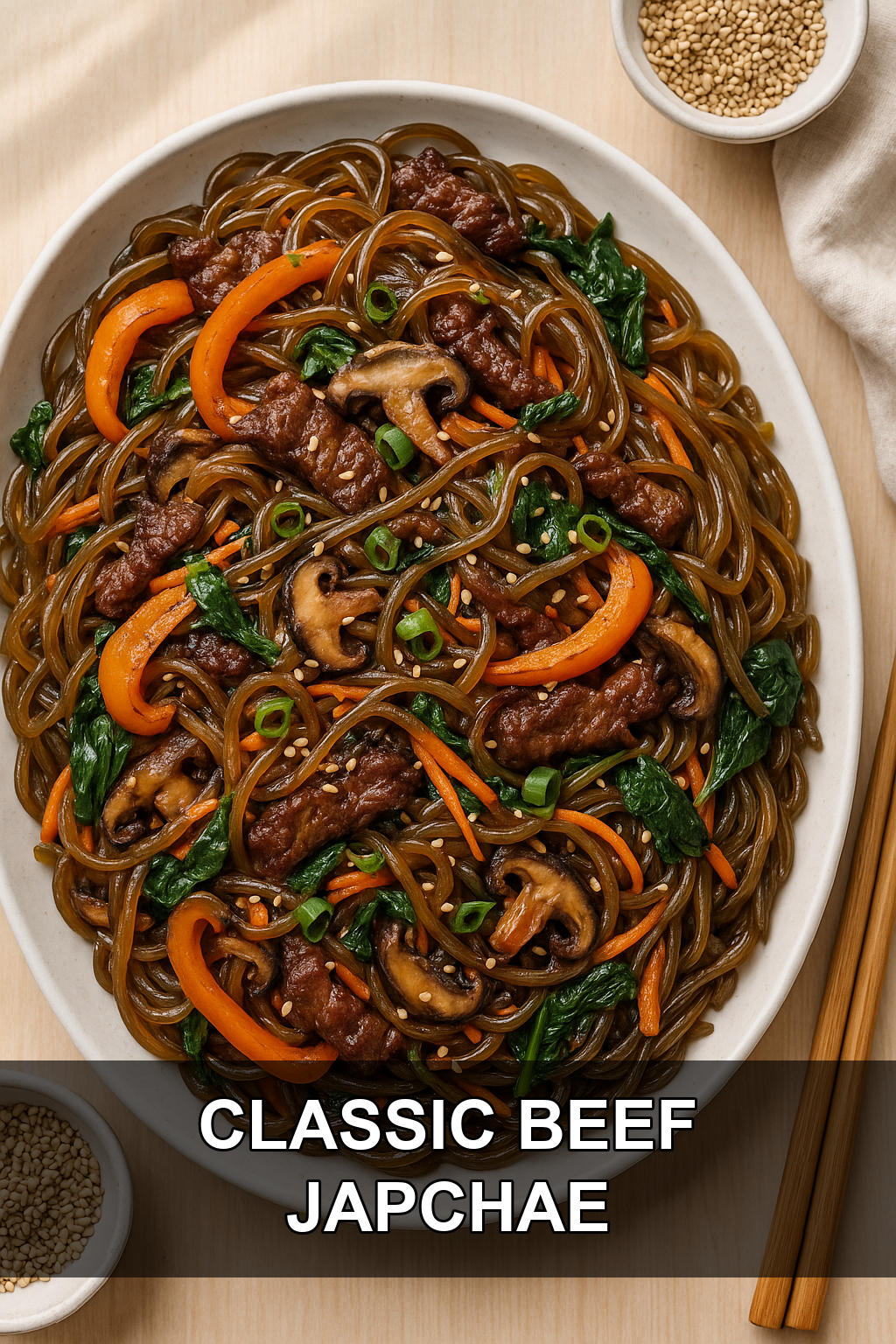
If you’ve never twirled a forkful of glossy, chewy sweet potato noodles tangled up with charred vegetables and savory beef, you’re in for a real treat. This classic beef japchae is one of those dishes that looks impressive on the table but is surprisingly forgiving to make at home, and it tastes even better the next day.
What Is Japchae?
Japchae (잡채) is a beloved Korean dish made from dangmyeon, chewy noodles made from sweet potato starch, tossed with an assortment of stir-fried or blanched vegetables and often thin strips of marinated beef. The name literally translates to ‘mixed vegetables,’ a nod to its origins as a royal court dish that was later adapted for everyday celebrations, holidays, and potlucks.
What makes japchae so special is the contrast of textures and the way each vegetable is cooked separately to preserve its individual flavor and color before everything is tossed together in a sweet and savory sesame-soy sauce. It’s naturally gluten-free (thanks to the sweet potato starch noodles), can easily be made vegetarian, and is just as delicious warm, at room temperature, or cold straight from the fridge.
Tips for Cooking and Prepping
#1: Soak the noodles before boiling
Sweet potato noodles (dangmyeon) hold their shape much better if you soak them in warm water for 20-30 minutes before boiling; this prevents them from turning gummy or breaking apart in the pot.
#2: Cook each vegetable separately
It’s tempting to throw everything into one pan, but stir-frying the carrots, onions, spinach, and mushrooms separately keeps their colors vibrant and prevents them from steaming into a mushy, watery mess.
#3: Char, don’t just sauté
Let the onions and peppers sit undisturbed in a hot, dry pan for a minute before stirring to get real char marks and smoky flavor, which adds depth that a quick stir-fry can’t replicate.
#4: Marinate the beef ahead of time
Thinly sliced beef (ribeye or sirloin works best) needs at least 20 minutes in a soy-garlic-sesame marinade to really absorb flavor, so prep it first while you’re chopping vegetables.
#5: Snip the noodles after boiling
Sweet potato noodles get extremely long and unwieldy; use kitchen scissors to snip them into more manageable lengths right after draining so they’re easier to toss and eat.
#6: Toss the sauce in while noodles are warm
Warm noodles absorb the sesame-soy sauce much better than cold ones, so dress them as soon as they’re drained and slightly cooled, not after everything sits.
Recipe Variations and Substitutes
Swap the beef for thinly sliced chicken thigh, pork shoulder, or shiitake mushrooms for a vegetarian version that’s just as satisfying. You can also mix in bell peppers, zucchini, or bean sprouts depending on what’s in your fridge, and a scattering of toasted sesame seeds or a drizzle of chili oil at the end adds a nice finishing touch.
Serving Suggestions
Japchae shines as a side dish alongside grilled meats like bulgogi or galbi, but it’s hearty enough to serve as a main course over a bowl of steamed rice. For a full Korean-inspired spread, pair it with kimchi, a simple cucumber salad, and a bowl of doenjang soup.
Storing, Make-Ahead, and Freezing Tips
Japchae keeps beautifully in an airtight container in the fridge for up to 4 days, and many people think the flavor actually improves after a day of the noodles soaking up the sauce. It doesn’t freeze particularly well since the noodles can turn overly chewy or clump together, so this is best enjoyed fresh or as planned leftovers.
FAQs
What are sweet potato noodles made of?
Sweet potato noodles, also called dangmyeon or glass noodles, are made from sweet potato starch and water, which gives them their signature chewy, translucent texture once cooked. They’re naturally gluten-free and different from mung bean glass noodles used in other Asian dishes.
Can I make japchae vegetarian or vegan?
Yes, simply omit the beef or replace it with extra mushrooms, tofu, or tempeh, and make sure to use a vegan-friendly soy sauce and skip any fish-based seasonings. The dish is just as flavorful thanks to the sesame oil, garlic, and charred vegetables.
Why is my japchae watery or mushy?
This usually happens when vegetables are overcooked or cooked together in one crowded pan, releasing too much moisture. Cook each vegetable separately over high heat and drain the noodles well before tossing everything together.
Where can I find sweet potato starch noodles?
Look for dangmyeon in the noodle or Asian foods aisle of most grocery stores, or at any Korean or Asian market. They’re usually sold dried in a bundle and labeled as ‘sweet potato starch noodles’ or ‘Korean glass noodles.’
Is japchae served hot or cold?
Japchae can be served warm right after cooking, at room temperature, or chilled from the fridge, and all three ways are traditional. Many people actually prefer it cold or at room temperature since the noodles firm up slightly and the flavors meld together.
Classic Beef Japchae Recipe
Prep time: 30 min | Cook time: 25 min | Total time: 55 min | Servings: 4
Ingredients
For the Beef
- 8 oz ribeye or sirloin steak, thinly sliced against the grain
- 1 tbsp soy sauce
- 1 tsp sesame oil
- 1 clove garlic, minced
- 1/2 tsp sugar
- pinch of black pepper
For the Noodles and Sauce
- 8 oz Korean sweet potato starch noodles (dangmyeon)
- 1/4 cup soy sauce
- 2 tbsp sugar
- 2 tbsp sesame oil
- 1 tbsp toasted sesame seeds
- 2 cloves garlic, minced
For the Vegetables
- 1 large yellow onion, sliced
- 1 red bell pepper, sliced into thin strips
- 2 carrots, julienned
- 4 oz shiitake mushrooms, sliced
- 4 cups fresh spinach
- 3 tbsp vegetable oil, divided
- salt, to taste
For Garnish
- 2 green onions, sliced
- extra toasted sesame seeds
Instructions
- In a small bowl, combine the sliced beef with soy sauce, sesame oil, minced garlic, sugar, and black pepper. Toss well and let marinate for at least 20 minutes at room temperature.
- Bring a large pot of water to a boil and cook the sweet potato noodles according to package directions, usually 6-8 minutes, until tender but still chewy. Drain and rinse briefly under cool water, then snip into shorter lengths with kitchen scissors. Toss with a drizzle of sesame oil to prevent sticking.
- Bring a small pot of water to a boil and blanch the spinach for about 30 seconds until just wilted. Drain, squeeze out excess water, and season lightly with a pinch of salt and a few drops of sesame oil.
- Heat 1 tablespoon of vegetable oil in a large skillet or wok over high heat. Add the onions and let them sit undisturbed for a minute to char slightly, then stir-fry for 2-3 minutes until softened. Remove and set aside.
- In the same skillet, add another tablespoon of oil and stir-fry the bell pepper for 2 minutes until slightly charred at the edges. Remove and set aside with the onions.
- Add the carrots to the skillet and stir-fry for 2 minutes until just tender-crisp. Remove and set aside.
- Add the shiitake mushrooms and cook for 3-4 minutes until browned and any liquid has evaporated. Remove and set aside.
- Add the final tablespoon of oil to the skillet and cook the marinated beef over high heat for 2-3 minutes, until browned and just cooked through. Remove from heat.
- In a large mixing bowl, combine the drained noodles, soy sauce, sugar, sesame oil, garlic, and sesame seeds. Toss well to coat evenly.
- Add the cooked beef, all the charred vegetables, and the blanched spinach to the bowl with the noodles. Toss everything together until well combined, adjusting seasoning with extra soy sauce or salt if needed.
- Transfer to a serving platter and garnish with sliced green onions and extra toasted sesame seeds. Serve warm or at room temperature.
For best texture, dress the noodles with sauce while they’re still warm, and let the finished dish rest for 10-15 minutes before serving so the flavors can meld together.
Leave a Reply
You must be logged in to post a comment.