
- What Is Chinese Fried Rice?
- Tips for Cooking and Prepping
- Recipe Variations and Substitutes
- Serving Suggestions
- Storing, Make-Ahead, and Freezing Tips
- FAQs
- Chinese Fried Rice with Wok Hei Recipe
There’s a reason takeout fried rice never quite tastes like the version you make at home—it’s all about that elusive smoky flavor called wok hei. Once you understand a few key techniques, you can recreate that restaurant-style char in your own kitchen with simple pantry staples and leftover rice. This recipe walks you through exactly how it’s done, step by smoky step.
What Is Chinese Fried Rice?
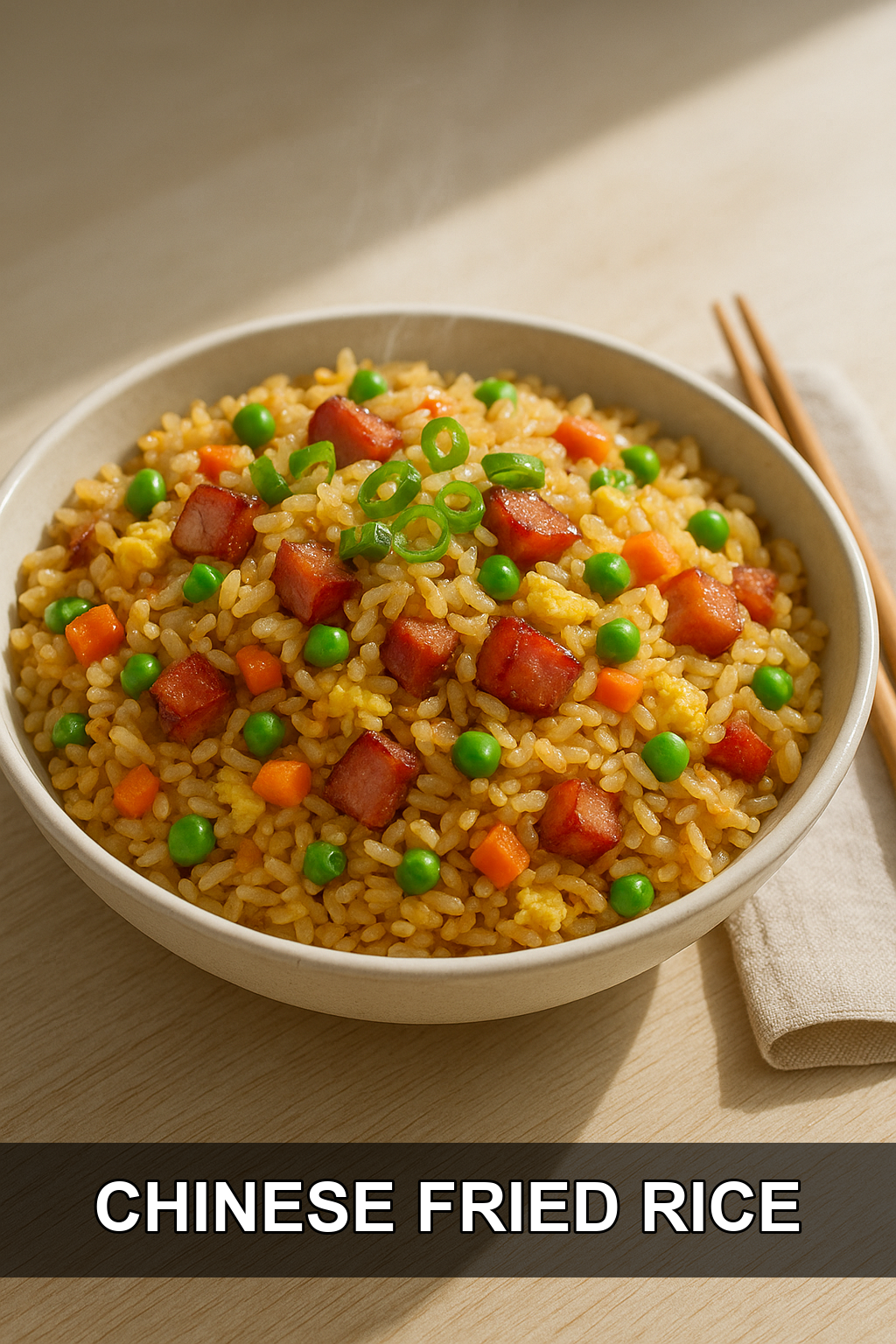
Chinese fried rice (蛋炒饭 or 炒饭) is a staple of Chinese home cooking and restaurant menus alike, built on the simple idea of transforming leftover rice into something greater than the sum of its parts. Cooked rice is stir-fried over intense heat with eggs, aromatics, vegetables, and often a diced protein like char siu pork or ham, then finished with soy sauce, oyster sauce, and a touch of sesame oil.
What separates truly great fried rice from the merely good is wok hei—literally “breath of the wok”—the smoky, slightly charred aroma and flavor that develops when ingredients hit a screaming-hot wok in quick succession. It’s not an ingredient you can buy in a bottle; it’s a technique born from high heat, constant motion, and confidence at the stove.
Tips for Cooking and Prepping
#1: Use rice that’s actually cold and day-old
Freshly cooked rice is too moist and sticky to fry properly, resulting in mushy clumps instead of separate, chewy grains. Chilled, day-old jasmine rice has had time to dry out slightly, which is exactly what you want for good texture.
#2: Get your wok smoking hot before adding anything
Wok hei depends on searing ingredients almost instantly, so don’t rush the preheating step. If your wok isn’t smoking before the oil goes in, your fried rice will steam instead of fry.
#3: Cook the eggs separately first
Scrambling the eggs into soft curds and removing them before the rest of the cooking keeps them tender instead of overcooked and rubbery by the time everything else is done.
#4: Press the rice, don’t just stir it
Pressing the rice grains firmly against the hot wok surface for a few minutes is what creates that slightly chewy, lightly charred texture that separates great fried rice from bland, soft rice dishes.
#5: Add sauces to an empty spot in the wok
Pushing the ingredients aside and letting the soy sauce and oyster sauce hit the hot metal directly for a second before mixing helps caramelize the sauces and deepen the overall flavor.
#6: Work in batches if your rice is a large amount
Adding all 4 cups of rice at once can overcrowd the wok and drop the temperature too quickly, so adding it in two batches keeps the heat high and the frying efficient.
Recipe Variations and Substitutes
This fried rice is endlessly adaptable: swap the char siu for diced Chinese sausage (lap cheong), shrimp, shredded chicken, or leave it vegetarian and add extra vegetables like corn or diced bell pepper. You can also use leftover long-grain white rice or even brown rice in place of jasmine, though texture and flavor will vary slightly.
Serving Suggestions
Serve this fried rice as a hearty main dish on its own, or alongside other Chinese takeout favorites like orange chicken, broccoli beef, or hot and sour soup. It also makes a fantastic side to grilled meats or a quick fried egg on top for an extra-satisfying breakfast-for-dinner twist.
Storing, Make-Ahead, and Freezing Tips
Leftover fried rice keeps well in an airtight container in the fridge for up to 4 days and reheats beautifully in a hot skillet or wok with a splash of water to loosen the grains. For make-ahead convenience, cook and chill your rice a day or two in advance, and you can also freeze finished fried rice in a sealed container for up to 2 months.
FAQs
Why is my fried rice mushy instead of fluffy?
Mushy fried rice is almost always caused by using freshly cooked, warm rice instead of chilled, day-old rice, or by not having your wok hot enough before frying.
Can I make Chinese fried rice without a wok?
Yes, a large, heavy skillet or cast iron pan can work, though you may get slightly less smoky flavor since woks are designed to reach and hold higher heat with better airflow around the ingredients.
What is MSG doing in this recipe, and can I skip it?
MSG enhances the savory umami flavor typical of restaurant-style fried rice, but it’s entirely optional and the dish will still taste great without it, especially with the soy sauce and oyster sauce doing much of the flavor work.
Can I use freshly cooked rice if I don’t have leftovers?
If you must use fresh rice, cook it slightly firmer than usual, spread it on a baking sheet, and refrigerate it uncovered for at least 30-60 minutes to dry out the grains before frying.
What can I use instead of char siu pork?
Diced ham, Chinese sausage, cooked shrimp, or shredded rotisserie chicken all work well as substitutes and keep the dish just as flavorful.
Chinese Fried Rice with Wok Hei Recipe
Prep time: 20 min | Cook time: 15 min | Total time: 35 min | Servings: 4
Ingredients
For the Fried Rice
- 4 cups day-old cooked jasmine rice, chilled and grains separated
- 3 large eggs, beaten with ¼ teaspoon kosher salt
- 1 cup diced yellow onion (¼-inch dice)
- ¾ cup frozen peas and carrots, thawed and patted dry
- ½ cup diced Chinese barbecue pork (char siu) or ham (¼-inch dice)
- 4 green onions, white parts minced, green parts sliced diagonally
- 3 tablespoons neutral oil (peanut or vegetable), divided
For the Sauce
- 2 tablespoons light soy sauce
- 1 tablespoon oyster sauce
- 1 teaspoon toasted sesame oil
- ½ teaspoon white pepper
- ¼ teaspoon MSG (optional but recommended)
- Kosher salt, to taste
Instructions
- Heat your wok over high heat until it’s smoking. Add 1 tablespoon of oil along with the beaten eggs, cooking for 45-60 seconds until soft curds form. Remove the eggs to a bowl and set aside.
- Return the wok to high heat and add the remaining oil. Sauté the diced onion for 2-3 minutes until caramelized. Add the char siu and cook for 60-90 seconds, then stir in the white parts of the green onions and cook for another 30 seconds.
- Add the peas and carrots and cook for 1 minute. Push all the ingredients to the side of the wok, add the soy sauce, oyster sauce, and sesame oil to the empty space, then sprinkle in the white pepper and MSG. Combine everything together.
- Add the chilled rice in two batches, pressing the grains firmly against the surface of the wok for 3-4 minutes until the grains separate and develop a slight chewy texture.
- Return the scrambled eggs to the wok, breaking them into smaller pieces as you toss. Add the sliced green onion tops and toss everything together for 60-90 seconds. Season with additional salt if needed, and serve immediately.
For the best wok hei flavor, avoid overcrowding the wok and keep the heat as high as your stove will allow throughout the cooking process. A carbon steel wok on a high-BTU burner will get you closest to restaurant results, but a well-preheated cast iron skillet is a solid substitute.
Leave a Reply
You must be logged in to post a comment.