
- What Is Chinese Fried Rice?
- Tips for Cooking and Prepping
- Recipe Variations and Substitutes
- Serving Suggestions
- Storing, Make-Ahead, and Freezing Tips
- FAQs
- Authentic Chinese Fried Rice Recipe
There’s something magical about the smoky, savory aroma of fried rice sizzling in a hot wok. This Chinese fried rice recipe brings that beloved takeout flavor right into your own kitchen, using simple pantry staples and a few smart techniques. Once you master the basics, you’ll never need to order it out again.
What Is Chinese Fried Rice?
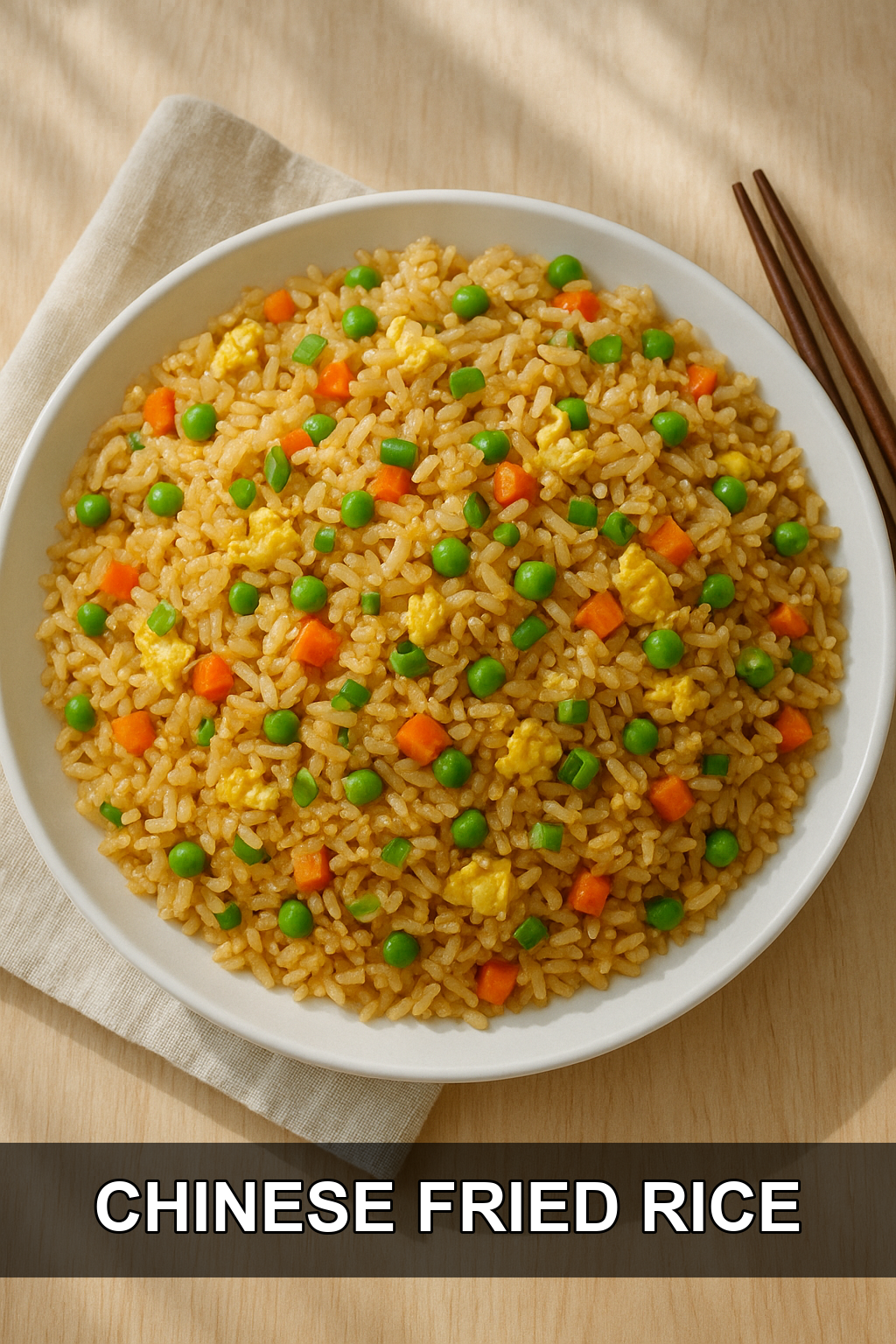
Chinese fried rice is a classic stir-fried dish made by tossing cooked rice with eggs, vegetables, and seasonings in a hot wok until everything is fragrant and slightly toasted. It originated as a resourceful way to use up leftover rice, and over centuries it evolved into a beloved staple found in home kitchens and restaurants across China and beyond.
What sets authentic fried rice apart from imitations is the technique: high heat, quick cooking, and day-old chilled rice that fries up light and separate instead of clumpy or mushy. The result is a dish where every grain is coated in savory soy sauce and sesame oil, punctuated by sweet peas, crisp carrots, and fluffy scrambled egg.
Tips for Cooking and Prepping
#1: Always use cold, day-old rice
Freshly cooked rice is too moist and sticky, causing your fried rice to turn out clumpy and soggy. Chilled rice has had time to dry out slightly, so the grains separate easily and fry up perfectly in the wok.
#2: Prep everything before you start cooking
Fried rice cooks fast once it hits the wok, so dice your onions, carrots, and garlic and have your eggs beaten and ready to go before you turn on the heat. There’s no time to chop mid-stir-fry.
#3: Cook the eggs separately first
Scrambling the eggs on their own and setting them aside keeps them light and fluffy instead of getting lost or overcooked once mixed with the rice and vegetables.
#4: Use high heat and keep things moving
A hot wok over medium-high to high heat is essential for that signature toasted, slightly charred flavor known as ‘wok hei.’ Keep the rice and vegetables moving so nothing burns or sticks.
#5: Break up rice clumps by hand
Before adding rice to the wok, use your fingers to gently break apart any clumps. This ensures even frying and prevents dense, gummy pockets in your finished dish.
#6: Season in stages, not all at once
Adding soy sauce and sesame oil toward the end, after the rice has already started toasting, keeps the flavor bright and prevents the dish from turning soggy or overly salty.
Recipe Variations and Substitutes
This fried rice recipe is endlessly adaptable. Swap in shrimp, diced chicken, char siu pork, or tofu for the optional protein, or add extra vegetables like corn, bell peppers, or bean sprouts for more color and crunch. If you prefer a deeper flavor, try substituting a splash of dark soy sauce or oyster sauce for part of the regular soy sauce.
Serving Suggestions
Chinese fried rice makes a satisfying meal on its own, but it also pairs beautifully alongside other Chinese takeout favorites like orange chicken, egg rolls, or hot and sour soup. For a lighter option, serve it with steamed bok choy or a simple cucumber salad to balance the richness.
Storing, Make-Ahead, and Freezing Tips
Leftover fried rice keeps well in an airtight container in the fridge for up to 4 days, making it a great make-ahead lunch option. It also freezes beautifully for up to 2 months; just reheat it in a hot skillet or wok with a splash of water to revive the texture rather than using the microwave alone.
FAQs
Why is my fried rice mushy?
Mushy fried rice is almost always caused by using freshly cooked, warm rice instead of chilled day-old rice. The excess moisture in fresh rice makes it clump and steam rather than fry.
Can I use fresh rice instead of leftover rice?
You can, but for best results, spread freshly cooked rice on a baking sheet and chill it in the fridge for at least 30 minutes to an hour to remove excess moisture before frying.
What type of rice works best for fried rice?
Long-grain white rice, such as jasmine rice, works best because it stays firm and separate when chilled and fried, unlike shorter-grain varieties that turn sticky.
Is Chinese fried rice gluten-free?
This recipe uses regular soy sauce, which contains gluten, but you can easily substitute tamari or a certified gluten-free soy sauce to make it gluten-free.
Can I make this dish vegetarian or vegan?
Yes, simply omit the optional meat protein and use a plant-based protein like tofu or edamame, and skip or substitute the eggs with a vegan egg alternative for a fully vegan version.
Authentic Chinese Fried Rice Recipe
Prep time: 10 min | Cook time: 10 min | Total time: 20 min | Servings: 4
Ingredients
- 3 cups cooked white rice, chilled
- 2 tbsp vegetable oil, divided
- 2 eggs, beaten
- ½ cup diced onion
- ½ cup diced carrots
- ½ cup frozen peas
- 2 cloves garlic, minced
- 2 tbsp soy sauce
- 1 tsp sesame oil
- ¼ tsp white pepper
- ½ cup cooked protein, optional (chicken, shrimp, or pork)
- 2 green onions, chopped
Instructions
- Prepare and separate the cold rice with your fingers, breaking up any clumps. Dice the onion and carrots, mince the garlic, and have all remaining ingredients measured and ready before you start cooking.
- Heat 1 tablespoon of vegetable oil in a wok over medium-high heat. Pour in the beaten eggs and scramble softly until just set. Remove the eggs and set them aside.
- Add the remaining tablespoon of oil to the wok along with the diced onion and carrots. Stir-fry for 2 to 3 minutes until softened, then add the garlic and frozen peas and cook for 1 more minute.
- Add the chilled rice to the wok and stir-fry for 3 to 4 minutes, breaking up any remaining clumps, until the rice is heated through and slightly toasted.
- Return the scrambled eggs to the wok along with the soy sauce, sesame oil, and white pepper. Stir well to evenly coat the rice and combine all ingredients, adding the optional cooked protein if using.
- Add the chopped green onions, toss briefly, and remove the wok from the heat. Serve the fried rice immediately while hot.
For the most authentic flavor and texture, use rice that’s been refrigerated overnight, and don’t skip cooking the eggs separately — it’s a small step that makes a big difference in the final dish.
Leave a Reply
You must be logged in to post a comment.