
- What Is Chicken and Sausage Gumbo?
- Tips for Cooking and Prepping
- Recipe Variations and Substitutes
- Serving Suggestions
- Storing, Make-Ahead, and Freezing Tips
- FAQs
- Chicken and Sausage Gumbo Recipe
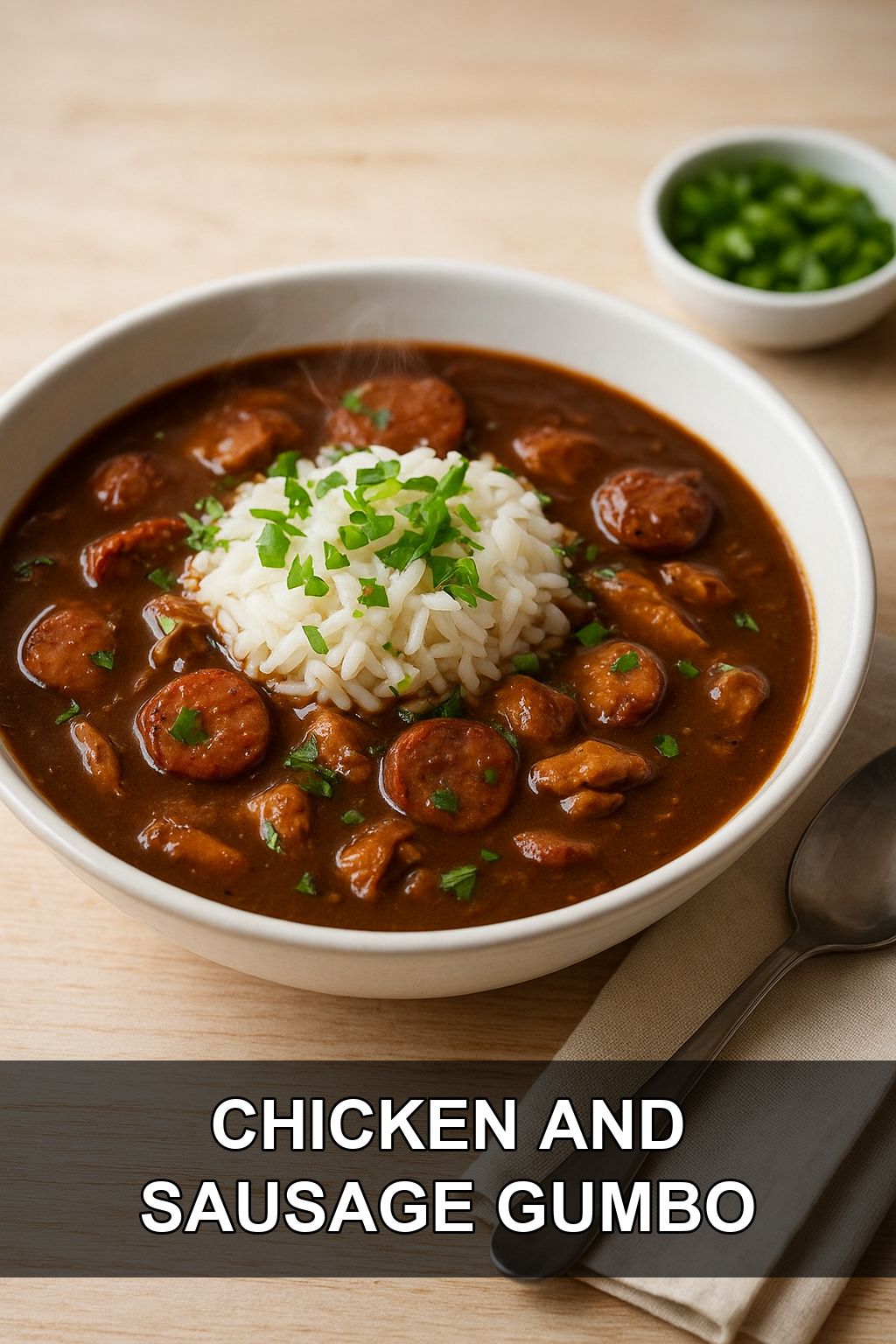
There’s nothing quite like a pot of real Louisiana gumbo simmering away on the stove, filling your kitchen with the smell of smoky sausage and toasted roux. This Chicken and Sausage Gumbo takes a little patience, but every stir of that roux is worth it once you’re spooning this rich, deeply flavored stew over a mound of fluffy rice. Let’s bring a little bit of the bayou to your kitchen tonight.
What Is Chicken and Sausage Gumbo?
Gumbo is a hearty, stew-like dish that’s a cornerstone of Louisiana Creole and Cajun cooking, built on a foundation of a dark roux, the “holy trinity” of onion, celery, and bell pepper, and a flavorful protein like chicken, sausage, or seafood. The dish traces its roots to a blend of French, Spanish, West African, and Native American culinary traditions that all converged in southern Louisiana, and no two family recipes are exactly alike.
Chicken and Sausage Gumbo specifically leans on smoky andouille sausage and tender bone-in chicken thighs, simmered low and slow in a broth thickened and deepened by a chocolate-colored roux. It’s the kind of dish that gets better the longer it sits, making it a favorite for gatherings, cold weather, and anytime you want serious comfort food.
Tips for Cooking and Prepping
#1: Don’t rush the roux
The roux is the soul of gumbo, and getting it to that deep chocolate-brown color takes about 45 minutes of near-constant whisking over medium-low heat. Rushing it with higher heat is the fastest way to burn it and ruin the whole pot, so stay put and keep stirring.
#2: Sear the sausage and chicken separately
Browning the andouille first builds a flavorful fond in the pot, and then browning the chicken in that same rendered fat layers even more smoky depth into the gumbo before the roux even starts.
#3: Warm your broth before adding it
Adding cold broth to a hot roux can cause it to seize or separate, so keep your 6 cups of chicken broth warm on the stove and add it gradually, about a half cup at a time, whisking constantly for a silky-smooth base.
#4: Debone the chicken after simmering, not before
Cooking the chicken on the bone during the initial simmer keeps the meat juicy and infuses the broth with extra flavor; simply pull it out, shred or chop it, and stir it back in once it’s cooled enough to handle.
#5: Skim the foam for a cleaner broth
As the gumbo simmers uncovered, fat and foam will rise to the surface. Skimming this off periodically keeps the final dish from tasting greasy and gives you a cleaner, richer-tasting broth.
Recipe Variations and Substitutes
Feel free to swap boneless, skinless chicken thighs for bone-in if you’re short on time, though you’ll lose a little depth of flavor in the broth. You can also use smoked sausage or kielbasa in place of andouille for a milder version, or add shrimp during the last 5-10 minutes of cooking for a chicken, sausage, and shrimp gumbo. For extra heat, increase the cayenne or stir in a few dashes of your favorite hot sauce right before serving.
Serving Suggestions
Gumbo is traditionally served ladled over a scoop of steamed white rice, which soaks up all that flavorful broth beautifully. Round out the meal with a side of Louisiana-style potato salad (a classic pairing, and even a common garnish spooned right into the bowl), some crusty French bread, or a simple green salad to balance the richness.
Storing, Make-Ahead, and Freezing Tips
Gumbo is one of those magical dishes that tastes even better the next day, as the flavors continue to meld in the fridge. Store leftovers in an airtight container for up to 4 days, or freeze in portioned containers for up to 3 months; thaw overnight in the fridge and reheat gently on the stovetop, adding a splash of broth if it has thickened too much.
FAQs
Why is my roux not getting dark enough?
Patience is key: the roux needs consistent medium-low heat and frequent stirring for the full cooking time, usually around 45 minutes, to slowly toast the flour to that deep chocolate color. If your heat is too low it will take much longer, and if it’s too high it will burn before it darkens properly.
Can I make gumbo ahead of time?
Yes, gumbo is actually a great make-ahead dish since the flavors deepen after a day in the fridge. Simply reheat it gently on the stove over low heat, thinning with a little extra broth if needed.
What’s the difference between gumbo and jambalaya?
Gumbo is a roux-based, soupier stew served over rice, while jambalaya is a rice dish where the rice cooks directly in the pot with the meat and vegetables, resulting in a thicker, less brothy meal.
Can I use a different sausage if I can’t find andouille?
Yes, smoked sausage, kielbasa, or another smoked, spicy sausage will work well as a substitute, though andouille’s smokiness and spice are what give traditional gumbo its signature flavor.
Is gumbo supposed to be thick or soupy?
Good gumbo should be somewhere in between a soup and a stew: thick enough to coat a spoon thanks to the roux, but still brothy enough to soak nicely into a bed of rice.
Chicken and Sausage Gumbo Recipe
Prep time: 15 min | Cook time: 105 min | Total time: 120 min | Servings: 8
Ingredients
For the Chicken Seasoning
- 2 teaspoons garlic powder
- 2 teaspoons onion powder
- 2 teaspoons paprika
- 1 teaspoon dried basil
- 1 teaspoon dried oregano
- 1 teaspoon dried thyme
- 1 teaspoon salt
- 1 teaspoon black pepper
- ½ teaspoon cayenne pepper
For the Gumbo
- 1 teaspoon extra virgin olive oil (or avocado oil)
- 1 pound andouille sausage
- 1 ¼ cups flour
- 1 cup vegetable oil (or avocado oil)
- 3 pounds bone-in chicken thighs
- 1 large yellow onion (about 2 ½ cups chopped)
- 1 small green bell pepper (about 1 cup chopped)
- 1 small red bell pepper (about 1 cup chopped)
- 4-5 celery stalks (about 1 cup chopped)
- 5 cloves garlic, minced
- 6 cups chicken broth, warmed
- 3 bay leaves
- ¼ cup finely chopped parsley, divided
- 3-5 green onions (about 1 cup chopped), divided
- Salt, black pepper, and cajun seasoning, to taste
For Serving
- Cooked rice
- Green onions, for garnish
- Parsley, for garnish
- Potato salad (optional)
Instructions
- PREP: Mix together the garlic powder, onion powder, paprika, basil, oregano, thyme, salt, black pepper, and cayenne to make the chicken seasoning; set aside. Chop the onion, bell peppers, celery, and green onions, and finely chop the parsley. Mince the garlic and slice the sausage into bite-sized pieces. Remove the skin from the chicken thighs, pat them dry, and season evenly with the chicken seasoning mix.
- SEAR: Heat a large Dutch oven over medium heat and add the olive oil. Sear the sausage until browned, about 10 minutes total, then remove and drain on paper towels.
- BROWN: In the same pot, sear the chicken thighs until browned on both sides, about 3-5 minutes per side, working in batches if needed for better browning. Remove the chicken and set aside. Drain the grease and wipe out any burned bits from the pot.
- ROUX: Reduce heat to medium-low and add the flour and vegetable oil to the pot. Whisk together until smooth, then cook while stirring frequently until the roux turns a rich chocolate color, about 45 minutes. Do not leave the roux unattended, as it can burn quickly.
- SAUTÉ: Once the roux reaches the right color, add the chopped onion, bell peppers, and celery, stirring to combine. Cook on medium-low, stirring, for about 5 minutes until the vegetables begin to wilt. Add the garlic and cook 1 more minute.
- SIMMER: Slowly add the warmed broth, about ½ cup at a time, stirring constantly into the roux and vegetable mixture until fully and smoothly incorporated. Drain any excess grease from the chicken and sausage, then add both back into the pot along with half the parsley, half the green onions, and the bay leaves. Bring to a boil, reduce to a simmer, and cook uncovered for 30 minutes, skimming off any foam or excess fat that rises to the top.
- DEBONE: Remove the chicken to a cutting board and let it cool enough to handle. Separate the meat from the bones, discarding bones and cartilage, then chop the chicken into bite-sized pieces and return it to the pot.
- FINISH: Stir in the remaining parsley and green onion, reserving a little for garnish. Taste and adjust seasoning with salt, black pepper, or cajun seasoning as needed.
- SERVE: Ladle the gumbo over cooked rice and garnish with extra green onions, parsley, and a scoop of potato salad, if desired.
For an even deeper flavor, make the gumbo a day ahead and reheat before serving; letting it rest in the fridge overnight allows the smoky, spicy flavors to fully meld together.
Leave a Reply
You must be logged in to post a comment.