
- What Is Bibimbap?
- Tips for Cooking and Prepping
- Recipe Variations and Substitutes
- Serving Suggestions
- Storing, Make-Ahead, and Freezing Tips
- FAQs
- Bibimbap Recipe (Korean Mixed Rice with Meat and Vegetables)
If you’ve never mixed a bowl of rice, veggies, meat, and a fried egg together with a spoonful of spicy-sweet gochujang sauce, you’re in for a real treat. Bibimbap looks like a lot of little components, but each one is simple to make, and the payoff is a warm, satisfying bowl that’s as beautiful as it is delicious. Let’s break down exactly how to make it at home.
What Is Bibimbap?
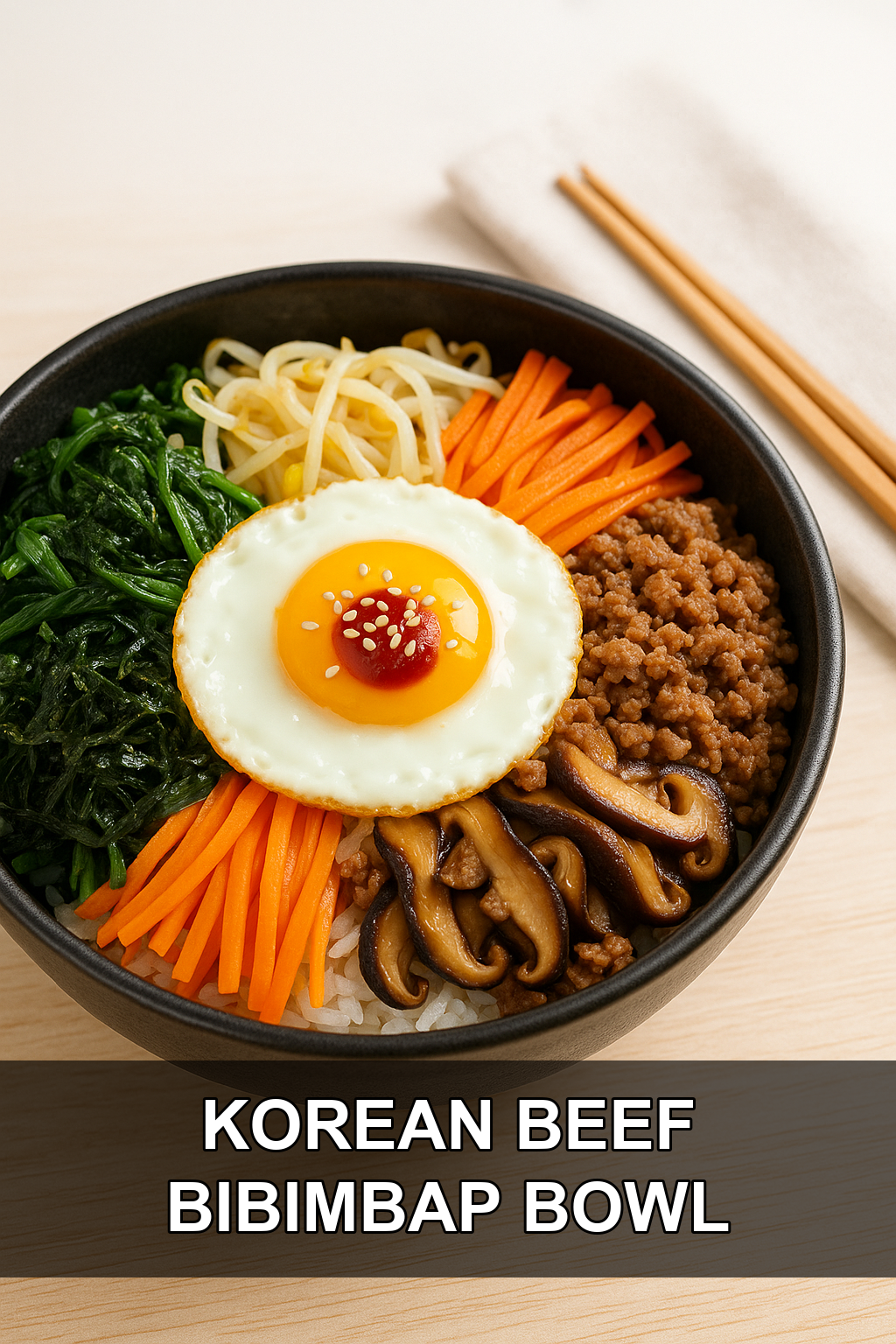
Bibimbap (literally “mixed rice”) is one of Korea’s most iconic dishes, traditionally served as a bowl of warm rice topped with an assortment of seasoned vegetables, meat, a fried or raw egg, and a dollop of gochujang (Korean chili paste) sauce. Each topping is cooked separately and seasoned in its own way, then arranged in colorful sections on top of the rice before everything gets mixed together right at the table.
The beauty of bibimbap lies in its balance: savory marinated beef, earthy shiitake mushrooms, crisp carrots, tender spinach, crunchy bean sprouts, and a rich egg yolk all come together with a spicy-sweet sauce that ties every bite together. It’s a dish that’s endlessly customizable depending on what vegetables you have on hand, which is part of why it’s remained a beloved staple both in Korea and around the world.
Tips for Cooking and Prepping
#1: Marinate the beef while you prep everything else
Give the beef mince at least 30 minutes in its soy sauce, sesame oil, sugar, and garlic marinade. Working on the vegetables while it marinates saves time and helps the flavor really soak in.
#2: Cook each vegetable separately
Cooking the carrots, mushrooms, spinach, and bean sprouts individually keeps each one seasoned just right and prevents everything from turning into a watery, muddled mix. It only takes a few extra minutes per vegetable.
#3: Use the same wok, but wipe it between batches
You can cook the meat, carrots, mushrooms, and eggs in the same wok to save on dishes, just give it a quick wipe between batches so flavors don’t bleed into each other.
#4: Julienne the carrots thinly and evenly
Thin, even carrot strips cook quickly and evenly in just 2 to 3 minutes, giving you that classic bibimbap texture and appearance without any raw crunch or mushy spots.
#5: Don’t skip the sesame oil in the sauce
The sesame oil in the bibimbap sauce adds a nutty depth that balances the heat of the gochujang and the tang of the vinegar, so measure it out rather than eyeballing it.
#6: Assemble in sections, then mix at the table
Arrange the toppings in distinct sections around the bowl rather than piling them together, it makes for a much prettier presentation and lets everyone mix their own bowl to taste.
Recipe Variations and Substitutes
Bibimbap is a wonderfully flexible dish, so feel free to swap the beef mince for thinly sliced bulgogi-style beef, ground pork, chicken, or even tofu for a vegetarian version. You can also rotate in other vegetables like zucchini, radish, or lettuce depending on the season, and top with a sunny-side-up or raw egg based on your preference.
Serving Suggestions
Bibimbap is a complete meal on its own, but it pairs beautifully with a side of kimchi, a light cucumber salad, or a simple miso-style soup to round things out. Set the gochujang sauce on the side so everyone can adjust the spice level to their own taste.
Storing, Make-Ahead, and Freezing Tips
For meal prep, cook and store the meat, vegetables, and sauce separately in airtight containers in the fridge for up to 3 days, then assemble fresh bowls with freshly cooked rice and egg when ready to eat. Freezing isn’t recommended once assembled, but the cooked beef and sauce can be frozen separately for up to 2 months.
FAQs
What does gochujang taste like and where can I find it?
Gochujang is a fermented Korean chili paste with a deep, savory, slightly sweet, and spicy flavor. You can find it at most Asian grocery stores and increasingly in the international aisle of larger supermarkets.
Can I make bibimbap vegetarian or vegan?
Yes, simply swap the beef mince for crumbled or diced tofu marinated in the same soy sauce mixture, and skip or swap the egg for a vegan version. All the vegetable components stay exactly the same.
Do I have to cook every vegetable separately?
It’s worth it for the best texture and flavor, since each vegetable has its own ideal cooking time and seasoning, but you can streamline the process by using the same pan for the carrots and mushrooms back to back.
What’s the best rice for bibimbap?
Short-grain white rice is traditional because it’s slightly sticky and holds up well when mixed with the sauce and toppings, but any steamed rice you have on hand will work.
Is bibimbap served hot or cold?
Bibimbap is typically served warm, with hot rice and warm cooked toppings, though the vegetables are often at room temperature by the time everything is mixed together, which is part of its charm.
Bibimbap Recipe (Korean Mixed Rice with Meat and Vegetables)
Prep time: 35 min | Cook time: 55 min | Total time: 90 min | Servings: 3
Ingredients
For the Meat
- 100 g beef mince (3.5 ounces, or other cuts)
- 1 Tbsp soy sauce
- 1 Tbsp sesame oil
- 1 tsp brown sugar
- 1/4 tsp minced garlic
For the Vegetables
- 250 g spinach (0.6 pounds)
- 350 g bean sprouts
- 100 g shiitake mushroom (3.5 ounces)
- 120 g carrots (4.2 ounces, 1 small)
- 1/2 tsp fine sea salt (1/4 tsp each for cooking shiitake mushroom and carrots)
For Assembly
- 3 cups steamed rice (3 to 4 serving portions)
- 3 eggs (3 or 4 depending on serving portion)
- Some cooking oil (to cook the meat, mushroom, carrots, and eggs; rice bran oil recommended)
- Some toasted seasoned seaweed, shredded (long thin cut)
For the Bibimbap Sauce
- 2 Tbsp gochujang
- 1 Tbsp sesame oil
- 1 Tbsp sugar (raw sugar recommended)
- 1 Tbsp water
- 1 Tbsp toasted sesame seeds
- 1 tsp vinegar (apple vinegar recommended)
- 1 tsp minced garlic
Instructions
- Mix the beef mince with the soy sauce, sesame oil, brown sugar, and minced garlic. Marinate for about 30 minutes while you prepare the other ingredients.
- Add some cooking oil to a wok and cook the marinated meat over medium-high to high heat for 3 to 5 minutes, until thoroughly cooked. Set aside.
- Mix all the bibimbap sauce ingredients together in a bowl and set aside.
- Cook the spinach and bean sprouts according to your preferred method (blanched and seasoned lightly is traditional).
- Rinse, peel, and julienne the carrots. Add some cooking oil and 1/4 tsp fine sea salt to a wok and cook the carrots over medium-high to high heat for 2 to 3 minutes.
- Clean and thinly slice the shiitake mushrooms. Add some cooking oil and 1/4 tsp fine sea salt to a wok and cook the mushrooms over medium-high to high heat for 2 to 3 minutes, until fully cooked.
- Fry the eggs to your preference (sunny side up is classic for bibimbap).
- Put the steamed rice into a bowl. Arrange the cooked meat, spinach, bean sprouts, carrots, mushrooms, and seasoned seaweed on top, then add the fried egg and a spoonful of bibimbap sauce.
- To eat, mix everything together in the bowl until well combined, and enjoy!
Feel free to adjust the amount of gochujang sauce to your spice preference, and add extra vegetables like zucchini or radish if you’d like an even more colorful bowl.
Leave a Reply
You must be logged in to post a comment.