
- What Is Paella?
- Tips for Cooking and Prepping
- Recipe Variations and Substitutes
- Serving Suggestions
- Storing, Make-Ahead, and Freezing Tips
- FAQs
- Best Paella Recipe: Cook Up a Spanish Feast!
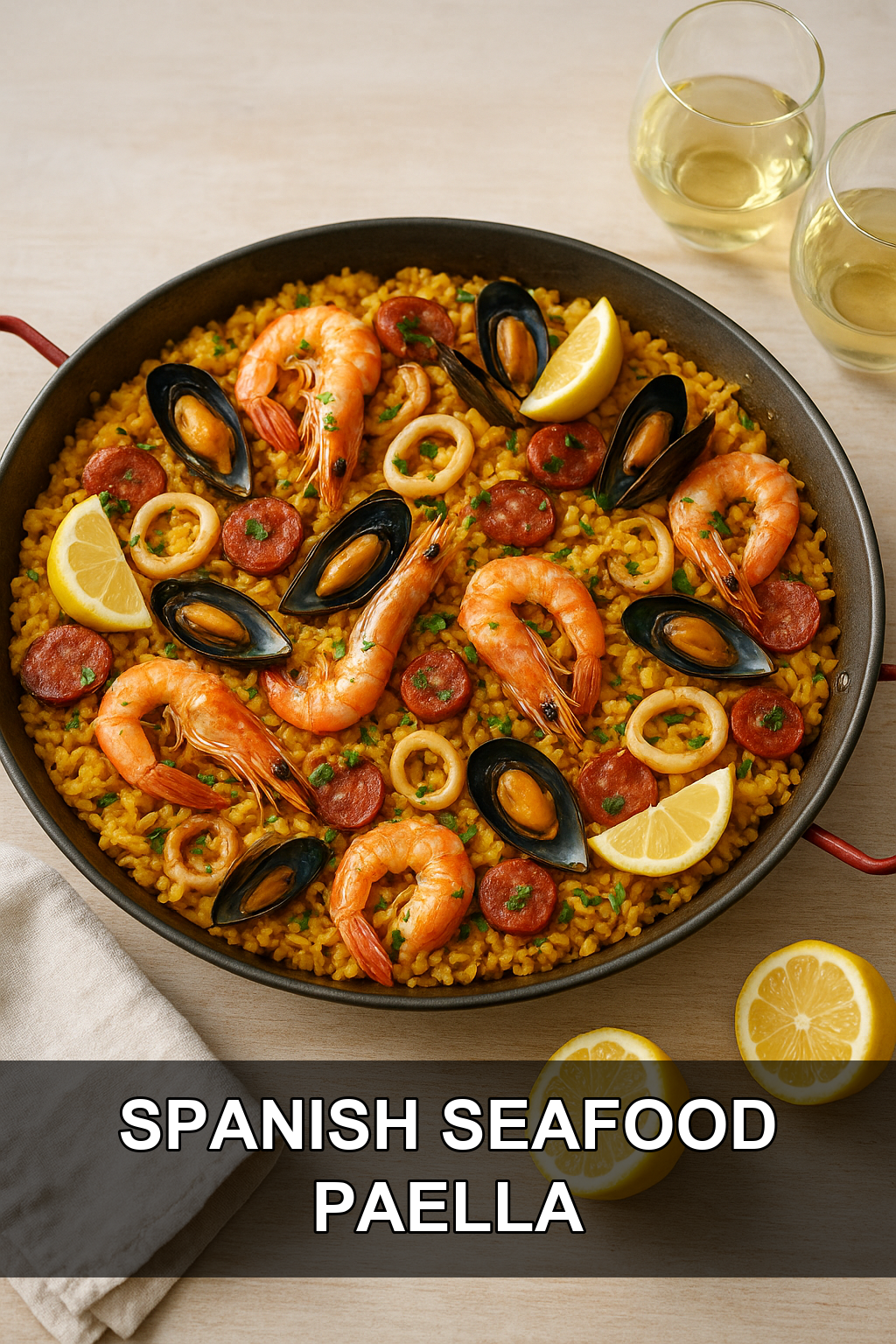
There’s nothing quite like setting a giant pan of golden, saffron-scented paella in the middle of the table and letting everyone dig in. Packed with smoky chorizo, tender chicken, plump prawns, and briny mussels, this Spanish classic looks impressive but is surprisingly manageable in your own kitchen. Grab a big skillet and a glass of something crisp — we’re cooking up a feast.
What Is Paella?
Paella is a rice dish that originated in Valencia, Spain, traditionally cooked in a wide, shallow pan over an open flame so the rice cooks evenly and develops a coveted crispy bottom layer called “socarrat.” While the original Valencian version featured rabbit, chicken, and beans, the seafood-and-meat “mixta” style has become the most popular internationally, combining land and sea in one glorious pan.
What makes paella special isn’t just the ingredients, it’s the technique: short-grain rice slowly absorbing a rich, saffron-infused broth until every grain is plump and flavorful, but never mushy. It’s a dish meant for sharing, usually served straight from the pan with lemon wedges and a scattering of fresh parsley.
Tips for Cooking and Prepping
#1: Use the right rice
Short-grain Spanish rice like Bomba, Valencia, or Calasparra is essential because it absorbs a huge amount of liquid without turning gluey. Regular long-grain or risotto rice won’t give you the same texture.
#2: Resist the urge to stir
Once the broth goes in, leave the rice alone. Stirring releases starch and disrupts the socarrat, so just shake the pan gently if you’re worried about even cooking.
#3: Layer your proteins for perfect timing
Cook the chorizo and squid first and set them aside so they don’t overcook, then add the delicate prawns and mussels later so they finish just as the rice does.
#4: Bloom the saffron for maximum flavor
Saffron threads release their color and aroma best when stirred directly into the warm broth, so add them right along with the stock rather than sprinkling them dry over the rice.
#5: Let it rest before serving
Covering the pan and resting the paella for 5 minutes off the heat allows the rice to soak up any remaining liquid and finish cooking gently without becoming stodgy.
Recipe Variations and Substitutes
You can easily swap in different proteins depending on what you love or have on hand — try scallops instead of squid, rabbit or pork instead of chicken, or keep it purely seafood-based for a paella de marisco. Vegetarians can skip the meat and seafood entirely and load up on artichokes, green beans, and roasted red peppers instead, using vegetable broth in place of chicken stock.
Serving Suggestions
Serve paella straight from the pan at the table with extra lemon wedges, a simple green salad, and crusty bread to mop up the flavorful broth. A pitcher of sangria or a chilled glass of Spanish white wine like Albariño makes the perfect pairing for a true Spanish feast.
Storing, Make-Ahead, and Freezing Tips
Leftover paella keeps well in an airtight container in the fridge for up to 3 days; reheat gently in a covered skillet with a splash of broth to loosen the rice. You can freeze it for up to 2 months, though the seafood texture is best enjoyed fresh, so consider making a chicken-and-chorizo-only batch if freezing is the plan.
FAQs
What is the best rice to use for paella?
Short-grain Spanish rice such as Bomba, Valencia, or Calasparra is ideal because it absorbs the broth without becoming mushy. If you can’t find these, Arborio rice is the closest substitute, though it will be slightly creamier.
Can I make paella without a paella pan?
Yes, a large, wide skillet or shallow sauté pan works just fine. The key is having enough surface area for the rice to cook in a thin, even layer rather than a deep pile.
Why is my paella rice mushy or undercooked?
Mushy rice usually means too much liquid or too much stirring, while undercooked rice means it needs more time or a splash of hot water and a few extra minutes covered. Always taste-test the rice before removing it from the heat.
Do I have to use saffron?
Saffron gives paella its signature color, aroma, and subtle earthy flavor, so it’s worth using if possible, but a pinch of turmeric with smoked paprika can mimic the color in a pinch, though the flavor will be different.
How do I get the crispy socarrat layer?
Toward the end of cooking, let the paella cook undisturbed over slightly higher heat for the last minute or two so the bottom layer of rice crisps and caramelizes without burning.
Best Paella Recipe: Cook Up a Spanish Feast!
Prep time: 15 min | Cook time: 30 min | Total time: 45 min | Servings: 5
Ingredients
For the Meat and Seafood
- 1 – 2 tbsp olive oil
- 7 oz / 200g chorizo (2 pieces), sliced 1/2 cm / 1/5″ thick
- 200g / 6 oz squid (calamari), cut into 7mm / 1/4″ thick rings
- 300g / 10 oz chicken thigh fillets, cut into 1.5″ / 3.5cm pieces
- 12 – 16 medium/large prawns, whole (shell on)
- 12 large mussels, cleaned and checked for freshness
For the Rice Base
- 1 onion, diced (brown, white, or yellow)
- 3 garlic cloves, minced
- 1 red capsicum / bell pepper, diced
- 1 1/2 cups paella rice (“Bomba”, “Valencia”, or “Calasparra” rice)
- 2 juicy ripe tomatoes, peeled and diced (or 3/4 cup canned crushed tomato)
- 3 1/2 cups chicken broth/stock (not low sodium), or homemade seafood broth
- 1 tsp saffron threads (or 1/4 tsp ground saffron)
To Finish
- 1 cup frozen peas
- Fresh parsley, chopped
- 2 lemons, cut into wedges
Instructions
- Chorizo: Heat 1 tbsp olive oil in a 30cm / 10″ paella pan or large skillet over high heat. Add chorizo and cook until browned on each side, about 3 minutes. Remove with a slotted spoon and set aside.
- Squid: Add the squid to the pan and cook for 45 seconds on each side, then remove and set aside with the chorizo.
- Garlic, onion, capsicum: Add remaining oil if needed. Add garlic and onion and cook for 2 minutes, then add the diced capsicum and cook for 1 more minute.
- Chicken: Add the chicken pieces and cook for 2 minutes until lightly browned on the outside but still raw inside.
- Add rice: Stir in the rice, mixing until every grain is coated in oil.
- Cooking broth: Add most of the chorizo (reserving about 1/4 for garnish), the chicken stock, fresh or crushed tomato, and saffron. Stir to combine.
- Simmer 1: Bring to a simmer, then adjust the heat so it’s simmering gently, not rapidly boiling. Simmer for 10 minutes without stirring — some rice should peek through the surface, but plenty of liquid should remain.
- Add peas, prawns and mussels: Scatter the peas over the rice, then nestle the prawns and mussels into the rice, partially submerging them.
- Simmer 2: Cook for another 8 minutes, turning the prawns halfway if needed, until the prawns are opaque, the mussels have opened, and most of the liquid is absorbed but the rice is still a little juicy. Discard any mussels that haven’t opened. Remove the pan from the heat.
- Check rice: Taste the rice — it should be firm but fully cooked. If it’s too firm, add a small splash of hot water and cook a little longer.
- Rest: Scatter the squid and reserved chorizo over the top (the residual heat will warm them through), cover with a lid, and let rest for 5 minutes so the rice absorbs the remaining liquid. It should end up tender and juicy, not thick or stodgy.
- Garnish: Scatter with fresh parsley and lemon wedges, bring the pan to the table, then toss the rice together with the seafood right before serving.
For the best flavor and texture, use a wide, shallow pan so the rice cooks in a thin layer — this helps develop the crispy socarrat on the bottom. Feel free to swap in different seafood or proteins based on what’s fresh and available.
Leave a Reply
You must be logged in to post a comment.