
- What Is Paella?
- Tips for Cooking and Prepping
- Recipe Variations and Substitutes
- What to Serve with Paella
- Storing, Make-Ahead, and Freezing Tips
- FAQs
- Best Paella Recipe: Make It Tonight
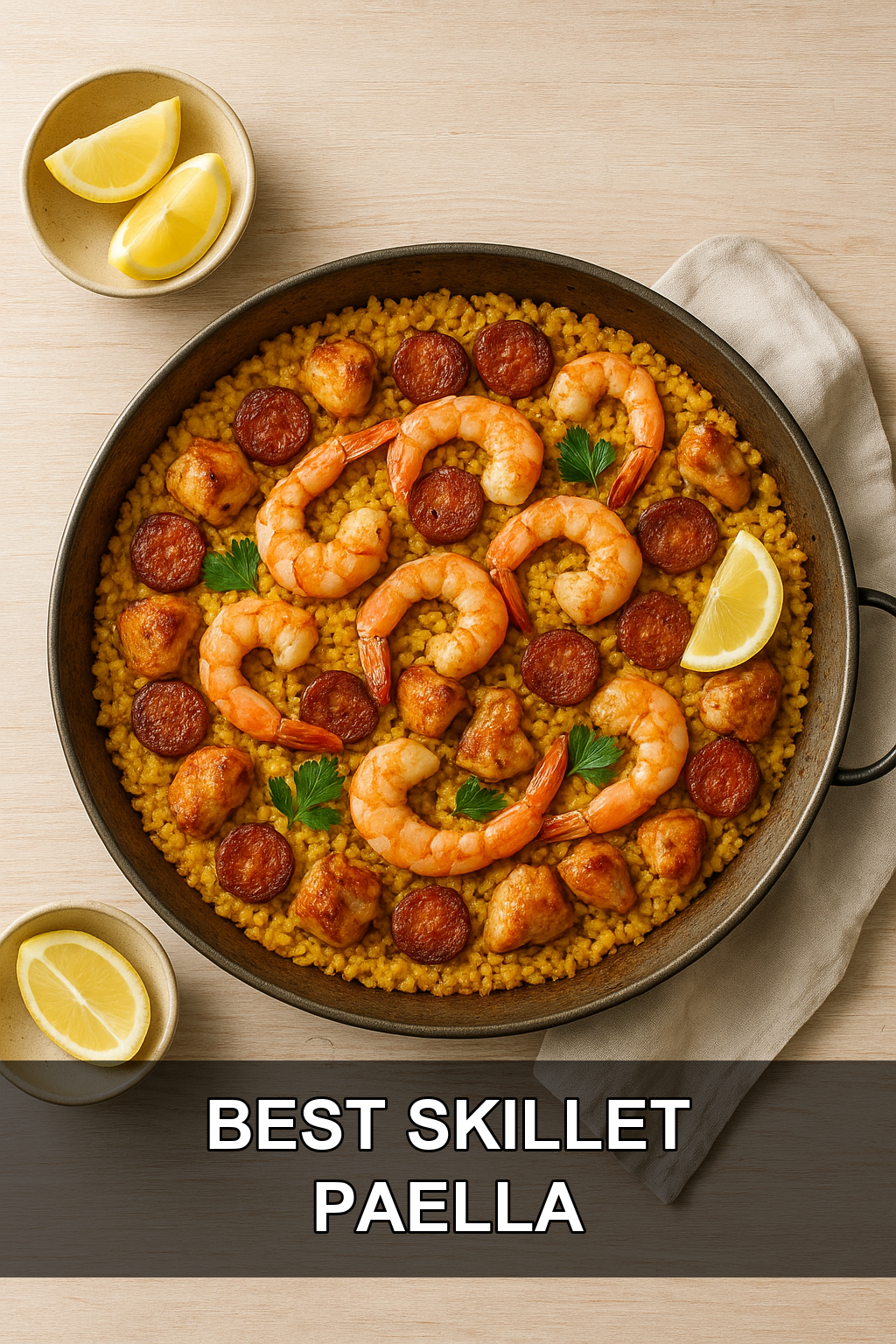
There’s something magical about setting a giant pan of golden, saffron-scented paella in the middle of the table and letting everyone dig in. This paella recipe layers smoky chorizo, tender chicken, and plump shrimp over crispy, golden bomba rice, and it’s easier to pull off on a weeknight than you’d think. Grab your biggest skillet — dinner is about an hour away.
What Is Paella?
Paella is a Spanish rice dish that originated in the Valencia region, traditionally cooked outdoors over an open flame in a wide, shallow pan (also called a paellera). While the original version was made with rabbit, chicken, and local vegetables, coastal variations evolved to include seafood, and today paella mixta — a mix of meat and seafood — is one of the most beloved versions worldwide.
What makes paella so special isn’t just the saffron-tinted rice or the medley of proteins, it’s the socarrat: that coveted layer of toasted, slightly crisp rice that forms on the bottom of the pan. Getting that crackly crust is the hallmark of a well-made paella, and it’s exactly what this recipe is designed to help you achieve.
Tips for Cooking and Prepping
#1: Use a wide, shallow pan
Paella is all about surface area, so the rice cooks in a thin, even layer that develops that prized crispy bottom. A 12-inch or larger shallow skillet works well if you don’t own a traditional paellera.
#2: Don’t skip the bomba rice
Bomba rice absorbs a ton of liquid without turning mushy, which is exactly what you want here. Regular long-grain rice or risotto rice won’t give you the same texture, so seek out bomba if you can.
#3: Resist the urge to stir once the rice goes in
Unlike risotto, paella rice should be left alone once it hits the broth. Stirring releases starch and prevents the socarrat from forming on the bottom of the pan.
#4: Bloom the saffron and paprika properly
Cooking the smoked paprika and saffron threads with the caramelized tomato and garlic for about a minute wakes up their flavor and color before the broth goes in.
#5: Listen for the crackle
Near the end of cooking, a subtle crackling sound means the bottom layer of rice is toasting into socarrat. Peek with a spoon in the center of the pan to check the color before pulling it off the heat.
Recipe Variations and Substitutes
This recipe already leans toward paella mixta with its combination of chorizo, chicken, and shrimp, but it’s easy to adapt. Swap in mussels or clams alongside or in place of the shrimp for a more seafood-forward version, or leave out the chorizo and chicken entirely for a vegetable paella loaded with bell peppers, artichokes, and green beans. If saffron is out of budget, a pinch of turmeric will give you a similar golden hue, though the flavor won’t be quite as deep and floral.
What to Serve with Paella
Keep the sides simple so the paella stays the star of the table. A crisp green salad with a sharp vinaigrette, crusty bread for soaking up extra broth, and a chilled glass of Spanish white wine or sangria all pair beautifully. Don’t forget extra lemon wedges for squeezing right over each serving.
Storing, Make-Ahead, and Freezing Tips
Paella is best enjoyed fresh, right when that socarrat is at its crispiest, but leftovers still reheat nicely. Store cooled paella in an airtight container in the fridge for up to 3 days, and reheat gently in a skillet with a splash of broth to loosen the rice. Freezing is possible for up to 2 months, though the shrimp and rice texture will soften slightly upon thawing, so it’s best suited for the meat-and-rice components if you’re planning ahead.
FAQs
Can I make paella without bomba rice?
Bomba rice is strongly recommended because it absorbs liquid without going mushy, but Calasparra rice is a good substitute. In a pinch, Arborio rice can work, though it will turn out creamier and less distinctly separated.
Why is my paella rice mushy instead of crispy?
Mushy rice usually means too much liquid, too much stirring, or too low a pan-to-rice ratio. Use a wide shallow pan, resist stirring once the broth and rice are combined, and let the final minutes of cooking run uncovered on a slightly higher heat to crisp the bottom.
What is socarrat and how do I know when I’ve achieved it?
Socarrat is the toasted, slightly crunchy layer of rice that forms on the bottom of the pan. You’ll know it’s ready when you hear a faint crackling sound and can see a deep golden-brown color when you gently lift the rice with a spoon.
Can I use a different protein instead of chicken thighs or chorizo?
Absolutely — rabbit, pork, or even duck are traditional swaps, and you can also use bone-in chicken pieces for extra flavor. Just make sure whatever you choose is cut into similarly sized pieces so everything cooks evenly.
Do I really need saffron, or can I skip it?
Saffron gives paella its signature golden color and distinct earthy-floral flavor, so it’s worth including if possible. If you can’t find it or want a budget-friendly swap, a pinch of turmeric will mimic the color, though the flavor will be milder.
Best Paella Recipe: Make It Tonight
Prep time: 30 min | Cook time: 45 min | Total time: 75 min | Servings: 5
Ingredients
- 1/2 c. extra-virgin olive oil
- 1 lb. Spanish chorizo, cut into 1″ pieces
- 1 lb. boneless, skinless chicken thighs, cut into 1″ pieces
- Kosher salt
- 2 plum tomatoes, grated on the large holes of a box grater, skins and core discarded
- 3 cloves garlic, crushed
- 1 tbsp. smoked paprika
- 2 tsp. saffron threads
- 6 c. low-sodium chicken broth
- 2 c. (400 g.) bomba rice
- 1 lb. large shrimp, peeled, deveined
- Lemon wedges, for serving
Instructions
- In a large, shallow skillet (at least 12″) on your largest burner, heat oil over medium-high heat until shimmering. Cook chorizo, stirring occasionally, until lightly browned, about 1 minute. Transfer to a plate.
- In the same skillet over medium-high heat, cook chicken, stirring occasionally, until golden brown, about 5 minutes; season with salt.
- Move chicken to one side of the pan; place tomatoes and garlic on the other side. Cook, stirring occasionally to combine and adjusting heat as needed, until tomatoes have caramelized, about 5 minutes. Add paprika and saffron and cook, stirring, until warmed through, about 1 minute.
- Add broth and return chorizo and any accumulated juices to the pan; season with salt. Bring to a boil, then add rice and mix until the rice is covered by liquid. At this point, do not touch or mix the rice again. Cook over high heat for 5 minutes, then reduce heat to medium and cook 5 minutes more. Reduce heat to low and cook, maintaining a gentle simmer, for 15 minutes.
- Season shrimp with salt and arrange over the rice. Keep the paella at a simmer for 10 more minutes, or until the rice is mostly absorbed and al dente. When it’s done, you should hear a crackling sound, meaning the rice is toasting. Poke through the middle of the rice with a knife or spoon to check that it’s browning properly. Once deep golden brown, remove from heat and let sit 5 minutes before serving with lemon wedges.
For an authentic socarrat, resist the urge to peek or stir too often during the final simmer — that crackling sound is your cue that the bottom is toasting perfectly.
Leave a Reply
You must be logged in to post a comment.