
- What Is Paella?
- Tips for Cooking and Prepping
- Recipe Variations and Substitutes
- What to Serve with Paella
- Storing, Make-Ahead, and Freezing Tips
- FAQs
- Best Paella Recipe: Get Authentic Taste at Home
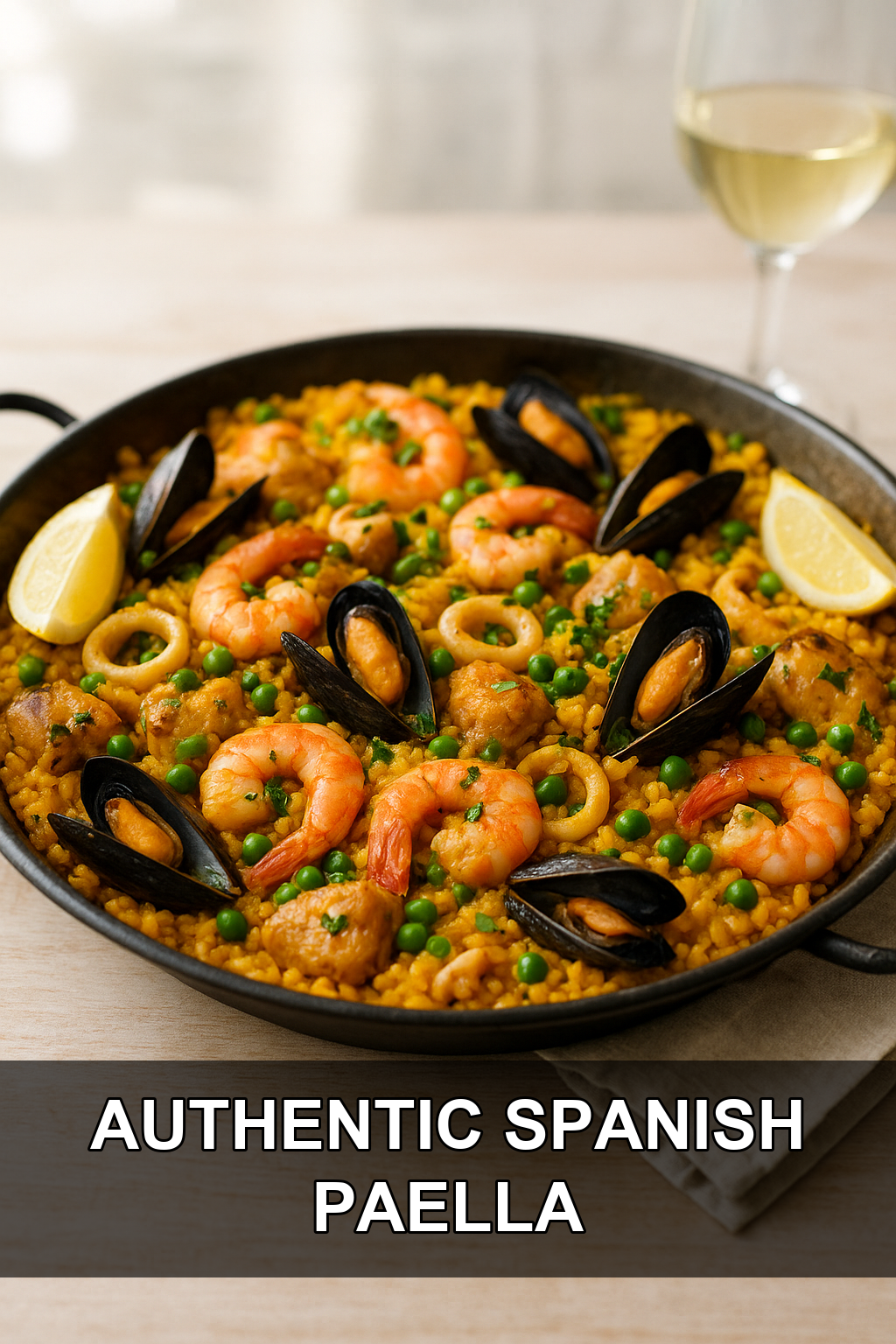
There’s nothing quite like a big, steaming pan of paella straight from the stove, packed with saffron-tinted rice, tender chicken, and plump seafood. This is my simplified take on the paella mixta I learned to make while living in Madrid, and I promise you don’t need any fancy equipment to pull it off. Grab a wide skillet and let’s bring a little taste of Spain into your kitchen tonight.
What Is Paella?
Paella is a Spanish rice dish that originated in the Valencia region, traditionally cooked over an open fire in a wide, shallow pan (also called a paellera). The rice is simmered slowly in a flavorful broth infused with saffron, paprika, and sofrito, then left undisturbed so a golden, slightly crispy crust called socarrat forms on the bottom — considered by many to be the best part of the dish.
While the original Valencian version often features rabbit, chicken, and beans, paella mixta (a mix of meat and seafood) has become one of the most popular variations both in Spain and abroad. This recipe combines juicy chicken thighs with shrimp, mussels, and calamari, all nestled into saffron rice, for a dish that feels like a celebration in every bite.
Tips for Cooking and Prepping
#1: Don’t skip the sofrito
Cooking the onion, pepper, garlic, and tomato low and slow builds the deep flavor base that makes paella taste authentic, so resist the urge to rush this step.
#2: Use a wide, shallow pan
You don’t need a traditional paellera, but a wide skillet helps the rice cook in a thin, even layer so it absorbs liquid evenly and develops that prized crispy bottom.
#3: Resist the urge to stir
Once the broth goes in, stop stirring completely. Constant stirring releases starch and prevents the socarrat crust from forming on the bottom of the pan.
#4: Add seafood at the right time
Nestle the shrimp, mussels, and calamari into the rice only during the last few minutes of cooking so they stay tender and don’t turn rubbery.
#5: Let it rest before serving
Covering the pan and letting it rest for 10 minutes off the heat allows the rice to finish absorbing liquid and lets the flavors settle before you dig in.
#6: Bloom your saffron
A small pinch of saffron threads goes a long way, and letting it steep in the warm sofrito helps release its color and aroma into every grain of rice.
Recipe Variations and Substitutes
Paella is incredibly forgiving, so feel free to make it your own. Swap the chicken thighs for rabbit or pork, use only seafood for a paella de marisco, or go vegetarian by skipping the meat and seafood and adding extra vegetables like artichokes and green beans. If you can’t find Spanish rice, a short-grain rice like Bomba or Arborio works well since it absorbs liquid without turning mushy.
What to Serve with Paella
Paella is a full meal on its own, but it pairs beautifully with a simple green salad, crusty bread, and a glass of chilled Spanish white wine or sangria. A light garlic aioli on the side is also a classic Spanish touch that many people love spooning over the rice.
Storing, Make-Ahead, and Freezing Tips
Leftover paella keeps well in an airtight container in the refrigerator for up to 3 days; reheat gently in a skillet with a splash of broth to revive the rice. You can freeze it for up to 2 months, though the texture of the seafood may soften slightly upon thawing, so it’s best enjoyed fresh or refrigerated. The sofrito base can also be made a day ahead to save time on busy nights.
FAQs
Do I need a special paella pan to make this recipe?
No, a traditional paellera is nice to have but not required. A wide, shallow skillet works just as well for developing the crispy socarrat crust on the bottom.
Can I make paella without seafood?
Absolutely. Simply omit the shrimp, mussels, and calamari and add more chicken or vegetables, keeping the rest of the recipe and cooking method the same.
Why is my paella rice mushy instead of fluffy?
Mushy rice usually means too much liquid or too much stirring. Stick to the measured broth, avoid stirring once it’s added, and let the rice cook undisturbed for the best texture.
What is socarrat and how do I get it?
Socarrat is the toasted, slightly crispy layer of rice that forms on the bottom of the pan. To achieve it, avoid stirring the rice after adding the broth and let it cook undisturbed over medium-low heat.
Can I substitute the saffron?
Saffron gives paella its signature color and flavor, but if it’s unavailable, a bit of turmeric can mimic the color, though the taste will be slightly different.
Best Paella Recipe: Get Authentic Taste at Home
Prep time: 20 min | Cook time: 40 min | Total time: 60 min | Servings: 6
Ingredients
For the Sofrito
- 1/4 cup extra virgin olive oil (Spanish EVOO if you have it)
- 1 onion, diced
- 1 bell pepper, diced (I like to use ½ red and ½ green)
- 4 cloves garlic
- 3 roma tomatoes, very finely diced (or 8 oz. tomato sauce)
- 1 bay leaf
- 1 teaspoon paprika, sweet or smoked
- 1 pinch saffron threads
- Salt and pepper, to taste
- ¼ cup white wine
For the Paella
- 4 boneless, skinless chicken thighs, cut into pieces
- ¼ cup fresh chopped parsley, divided
- 2 cups Spanish rice
- 5 cups chicken broth
- 1/2 cup frozen peas
- ½ lb jumbo shrimp or prawns, about 12, peeled, tail on
- 1/2 lb mussels, about 10-12, cleaned properly (beards off)
- 8 oz calamari rings
For Garnish
- Lemons, for garnish
Instructions
- This is a version of Paella Mixta learned while living in Madrid, Spain, simplified so anyone can make it without special pans or equipment. There are many variations of paella, so feel free to adapt it to your taste.
- Add olive oil to a large skillet over medium heat. Add the onion, bell peppers, and garlic and cook until the onion is translucent.
- Add the chopped tomato, bay leaf, paprika, saffron, salt, and pepper. Stir and cook for 5 minutes.
- Add the white wine and cook for 10 minutes. Taste and add more salt if needed.
- Add the chicken pieces, 2 tablespoons of chopped parsley, and the rice to the pan. Cook for 1 minute, stirring to coat.
- Pour the broth slowly all around the pan and gently jiggle the pan to spread the rice into an even layer. From this point on, do not stir the mixture.
- Bring the mixture to a boil, then reduce the heat to medium-low. Give the pan a gentle shake back and forth just once or twice during cooking (never stir) to allow a crispy crust, called socarrat, to form on the bottom.
- Cook uncovered for about 15-18 minutes, then nestle the shrimp, mussels, and calamari into the mixture and sprinkle the peas on top. Continue cooking without stirring for about 5 more minutes, watching for most of the liquid to be absorbed and the rice on top to be nearly tender. If the rice needs more time, add ¼ cup more water or broth and continue cooking.
- Remove the pan from the heat and cover with a lid or tinfoil. Place a kitchen towel over the lid and let the paella rest for 10 minutes.
- Garnish with the remaining fresh parsley and lemon slices, then serve immediately.
Every region and household in Spain makes paella a little differently, so don’t be afraid to adjust proteins, vegetables, or spice levels to suit your taste while keeping the classic technique intact.
Leave a Reply
You must be logged in to post a comment.