
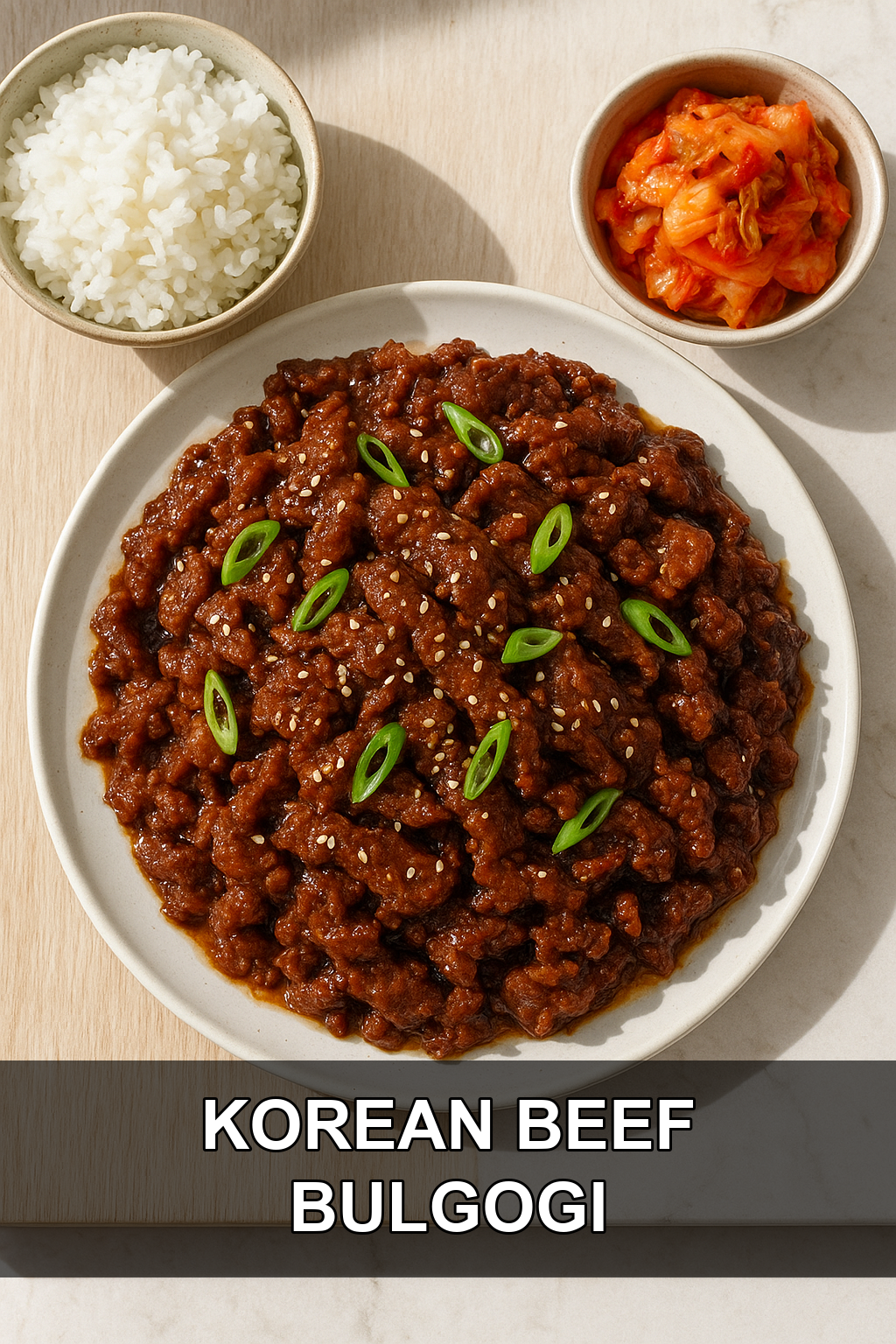
- What Is Bulgogi?
- Tips for Cooking and Prepping
- Recipe Variations and Substitutes
- Serving Suggestions
- Storing, Make-Ahead, and Freezing Tips
- FAQs
- Easy Homemade Beef Bulgogi Recipe
Korean cuisine is a beautiful balance of sweet, savory, spicy, and umami flavors that keeps food lovers coming back for more. From sizzling barbecue to fermented staples, there’s a whole world of must-try Korean dishes waiting to be discovered, and today we’re diving deep into one of the most beloved: bulgogi.
What Is Bulgogi?
Bulgogi, which translates to “fire meat,” is a classic Korean dish made from thin slices of beef marinated in a sweet and savory sauce, then grilled or pan-seared until caramelized and tender. It’s one of the most popular introductions to Korean food for newcomers because of its approachable flavor profile and simple cooking technique.
The marinade typically combines soy sauce, sugar, garlic, sesame oil, and Asian pear or apple, which helps tenderize the meat while adding natural sweetness. Traditionally cooked over an open flame or on a tabletop grill, bulgogi is a staple at Korean barbecue restaurants and home dinner tables alike, often served with rice, lettuce wraps, and an array of banchan (side dishes).
Tips for Cooking and Prepping
#1: Slice the beef paper-thin
Bulgogi relies on very thin slices of beef to cook quickly and soak up the marinade fully. Freeze the meat for 30-45 minutes before slicing to make it much easier to cut thin, even pieces.
#2: Use Asian pear or kiwi for tenderizing
Grated Asian pear, apple, or even a small amount of kiwi contains natural enzymes that break down the beef fibers, resulting in incredibly tender bulgogi. Just don’t over-marinate with kiwi, as it can make the texture mushy if left too long.
#3: Marinate for at least 30 minutes, but not more than overnight
A quick 30-minute marinade is enough for flavor, but letting it sit up to 12 hours in the fridge deepens the taste. Avoid going much longer than that, since the sugar and acid can start to overly soften the meat.
#4: Cook in batches over high heat
Crowding the pan causes the beef to steam instead of caramelize. Cook in small batches over high heat for that signature slightly charred, sticky-sweet exterior.
#5: Reserve some marinade for basting
Set aside a couple tablespoons of unused marinade before adding raw beef, then brush it onto the meat while cooking for an extra layer of glossy flavor.
Recipe Variations and Substitutes
While beef bulgogi is the most traditional version, you can easily swap in thinly sliced pork (dweji bulgogi) or chicken for a lighter take. For a vegetarian option, try marinating king oyster mushrooms or firm tofu in the same sauce for a smoky, umami-rich alternative. Gluten-free eaters can substitute tamari or coconut aminos for the soy sauce without sacrificing flavor.
Serving Suggestions
Bulgogi is traditionally served with steamed short-grain rice, crisp lettuce leaves for wrapping, and a variety of banchan like kimchi, pickled radish, and seasoned spinach. For a fun twist, pile it onto rice bowls, stuff it into tacos, or use it as a topping for a Korean-style baked potato.
Storing, Make-Ahead, and Freezing Tips
Bulgogi marinade can be made up to 3 days ahead and stored in the fridge, and the raw marinated beef freezes beautifully for up to 3 months. Cooked bulgogi keeps well in an airtight container in the refrigerator for 3-4 days and reheats nicely in a hot skillet or microwave.
FAQs
What cut of beef is best for bulgogi?
Ribeye, sirloin, or flank steak are the best choices because they have enough marbling to stay tender and flavorful when sliced thin and quickly seared.
Can I make bulgogi without a grill?
Absolutely, a cast iron skillet or heavy-bottomed pan on the stovetop works great for achieving that caramelized, slightly charred texture indoors.
Is bulgogi spicy?
Traditional bulgogi is sweet and savory rather than spicy, but you can add gochujang or red pepper flakes to the marinade if you want some heat.
What’s the difference between bulgogi and galbi?
Bulgogi is made with thin sliced beef, while galbi refers to marinated beef short ribs; both share a similar sweet soy-based marinade but differ in cut and texture.
Can I freeze marinated bulgogi before cooking?
Yes, freezing the raw beef in its marinade is a great make-ahead trick; just thaw it in the fridge overnight before cooking for the best texture.
Easy Homemade Beef Bulgogi Recipe
Prep time: 20 min | Cook time: 10 min | Total time: 30 min | Servings: 4
Ingredients
For the Marinade
- 1/2 cup soy sauce
- 3 tbsp brown sugar
- 2 tbsp sesame oil
- 1/2 Asian pear, grated (or 1/2 apple)
- 5 cloves garlic, minced
- 1 tbsp grated fresh ginger
- 2 tbsp mirin or rice wine
- 1/2 tsp black pepper
- 2 green onions, chopped
For the Beef
- 1.5 lbs ribeye or sirloin, thinly sliced
- 1 tbsp vegetable oil for cooking
- 1 tbsp toasted sesame seeds
- Extra sliced green onion for garnish
For Serving
- Steamed short-grain rice
- Lettuce leaves for wrapping
- Kimchi and assorted banchan
Instructions
- Freeze the beef for 30-45 minutes to firm it up, then slice it as thinly as possible against the grain.
- In a large bowl, whisk together soy sauce, brown sugar, sesame oil, grated Asian pear, garlic, ginger, mirin, black pepper, and green onions to make the marinade.
- Reserve 2 tablespoons of the marinade in a separate small bowl for basting later, then add the sliced beef to the remaining marinade and toss to coat evenly.
- Cover and refrigerate for at least 30 minutes, up to overnight, for maximum flavor.
- Heat vegetable oil in a large skillet or grill pan over high heat until shimmering.
- Working in batches to avoid overcrowding, cook the beef for 2-3 minutes per side until caramelized and slightly charred, brushing with the reserved marinade as it cooks.
- Transfer cooked bulgogi to a serving plate and sprinkle with toasted sesame seeds and extra green onion.
- Serve hot with steamed rice, lettuce leaves, and your favorite banchan.
For a spicier version, mix 1 tablespoon of gochujang into the marinade. Leftover bulgogi makes fantastic fried rice or a filling for rice bowls the next day.
Leave a Reply
You must be logged in to post a comment.