
- What Is Tteokbokki?
- Tips for Cooking and Prepping
- Recipe Variations and Substitutes
- Serving Suggestions
- Storing, Make-Ahead, and Freezing Tips
- FAQs
- Authentic Korean Tteokbokki Recipe
If you’ve ever wandered through a Korean street food stall, chances are you caught the irresistible smell of tteokbokki simmering away in a bright red, glossy sauce. This spicy-sweet rice cake dish is one of the most beloved comfort foods in Korea, and today we’re bringing that authentic flavor straight to your kitchen in under 30 minutes.
What Is Tteokbokki?
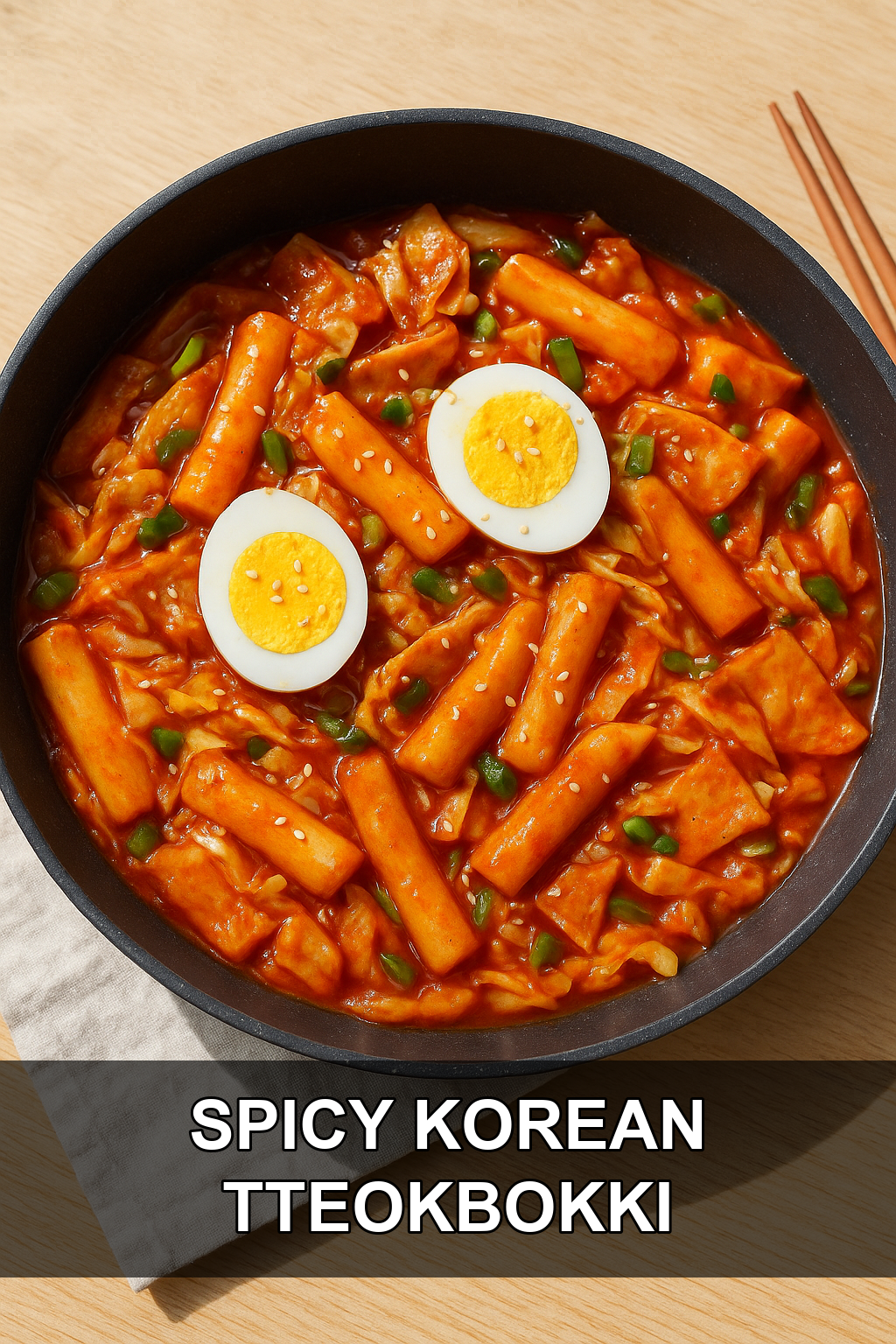
Tteokbokki is a classic Korean street food made from cylindrical rice cakes simmered in a bold, spicy-sweet sauce built on gochujang (Korean fermented chili paste) and gochugaru (Korean chili flakes). It’s chewy, saucy, savory, and just a little addictive, which is why you’ll find it sold from bustling pojangmacha (street food carts) to trendy Seoul cafes.
While the base recipe is simple, tteokbokki is endlessly customizable. Fish cakes, hard-boiled eggs, cabbage, and scallions are traditional add-ins that soak up the sauce and round out the dish into a full, satisfying meal rather than just a snack.
Tips for Cooking and Prepping
#1: Soak your rice cakes first
If your rice cakes are frozen or vacuum-packed, give them a 10-15 minute soak in cold water before cooking. This softens them and prevents cracking or uneven texture in the finished dish.
#2: Toast the paste before adding liquid
Cooking the gochujang, gochugaru, brown sugar, and soy sauce in the oil for about a minute deepens the flavor and mellows the raw chili taste, so don’t skip this step.
#3: Use real anchovy stock if you can
Anchovy stock (or dashima-anchovy broth) gives tteokbokki its signature savory depth. Instant packets or homemade versions both work well and make a noticeable difference over plain water.
#4: Don’t overcook the vegetables
Cabbage and scallions only need about 3 minutes in the sauce to wilt slightly while keeping some bite, so add them near the end of cooking rather than at the start.
#5: Watch the sauce, not the clock
The simmer time can vary depending on your rice cakes and pan size, so look for a thick, glossy sauce that coats the back of a spoon as your real cue to stop cooking.
Recipe Variations and Substitutes
You can easily adjust the heat level by using less gochugaru, or add more for extra spice if you like it fiery. Some cooks swap in ramen noodles or boiled eggs for extra heartiness, and cheese lovers often top the finished dish with a handful of shredded mozzarella for a cheesy tteokbokki twist. If Korean rice cakes aren’t available, thick rice noodles can work in a pinch, though the texture won’t be quite the same.
Serving Suggestions
Tteokbokki is traditionally served hot, straight from the skillet, often alongside crispy Korean fried chicken (tongdak) or savory pancakes (jeon) for a full spread. It also pairs beautifully with a cold glass of barley tea or a light lager to balance the spice.
Storing, Make-Ahead, and Freezing Tips
Leftover tteokbokki keeps well in an airtight container in the fridge for up to 3 days; reheat gently on the stovetop with a splash of water or stock to loosen the sauce. Freezing is possible but the rice cakes can become slightly firmer once thawed, so it’s best enjoyed fresh or refrigerated rather than frozen for long-term storage.
FAQs
Where can I buy Korean rice cakes and fish cakes?
Most Korean or Asian grocery stores carry both fresh and frozen rice cakes and fish cakes, usually in the refrigerated or freezer section. Many well-stocked international grocery stores and online retailers also sell them if you don’t have a Korean market nearby.
Is tteokbokki very spicy?
It has a noticeable kick from the gochujang and gochugaru, but the brown sugar balances it out, so it’s more of a bold sweet-and-spicy flavor than pure heat. You can easily reduce the gochugaru if you prefer a milder version.
Can I make this dish vegetarian?
Yes, simply swap the anchovy stock for a vegetable stock and check that your gochujang and fish cakes are vegetarian-friendly, or omit the fish cakes entirely and add extra vegetables like mushrooms or zucchini.
Why are my rice cakes still hard after cooking?
This usually means they weren’t soaked long enough beforehand or the sauce didn’t simmer long enough for them to fully soften. Give them a few extra minutes in the sauce, adding a splash more stock if it’s reducing too quickly.
What’s the difference between tteokbokki and rabokki?
Rabokki is simply tteokbokki with ramen noodles added into the sauce, creating a heartier, noodle-forward version of the same spicy base. Both share the same core gochujang sauce.
Authentic Korean Tteokbokki Recipe
Prep time: 10 min | Cook time: 15 min | Total time: 25 min | Servings: 4
Ingredients
For the Sauce
- 2 cups anchovy stock
- 1 tbsp vegetable oil
- 3 tbsp gochujang
- 1 tbsp gochugaru
- 2 tbsp brown sugar
- 1 tbsp soy sauce
- 1 tbsp minced garlic
For the Tteokbokki
- 1.1 lbs Korean rice cakes
- 4 oz Korean fish cakes
- 2 cups cabbage, chopped
- 3 stalks scallions, cut into 2-inch lengths
- 4 large eggs, hard-boiled and peeled
For Garnish
- 1 tsp toasted sesame seeds
Instructions
- If using frozen or vacuum-packed rice cakes, soak them in cold water for 10-15 minutes to prevent cracking, then drain well.
- Heat vegetable oil in a large non-stick skillet over medium heat. Stir in minced garlic until fragrant.
- Add gochujang, gochugaru, brown sugar, and soy sauce to the skillet. Stir for 1 minute to toast the paste.
- Pour in the anchovy stock and whisk until the sauce is smooth and begins to simmer.
- Add the soaked rice cakes and fish cakes to the sauce. Stir gently to coat.
- Bring to a boil, then reduce heat to medium-low. Simmer for about 10 minutes, stirring occasionally, until the sauce reduces into a thick, glossy glaze.
- Fold in the chopped cabbage and scallions during the last 3 minutes of cooking.
- Gently nestle the hard-boiled eggs into the sauce. Remove from heat once vegetables are wilted.
- Garnish with toasted sesame seeds before serving.
For extra heat, add an additional teaspoon of gochugaru or a drizzle of chili oil at the end. Leftover sauce also makes a fantastic dip for fried mandu (dumplings).
Leave a Reply
You must be logged in to post a comment.