
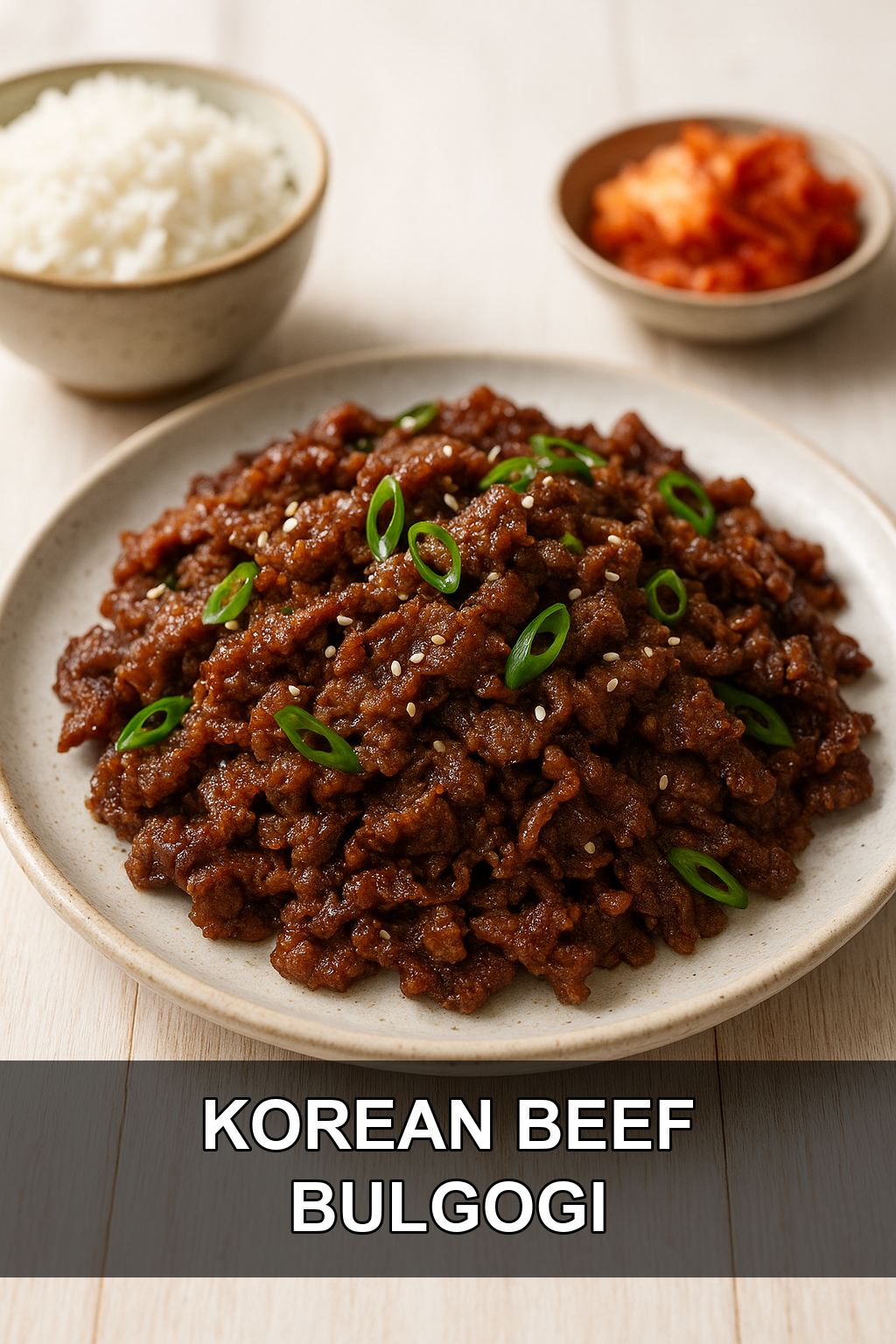
- What Is Bulgogi?
- Tips for Cooking and Prepping
- Recipe Variations and Substitutes
- Serving Suggestions
- Storing, Make-Ahead, and Freezing Tips
- FAQs
- Classic Korean Bulgogi Recipe
If you’ve ever wondered what all the fuss is about with Korean food, bulgogi is the perfect place to start. This sweet, savory, garlic-forward marinated beef is tender, smoky, and downright addictive, and it’s easier to make at home than you might think.
What Is Bulgogi?
Bulgogi, which literally translates to “fire meat,” is one of Korea’s most beloved dishes. Thin slices of beef (traditionally ribeye or sirloin) are marinated in a mixture of soy sauce, sugar, sesame oil, garlic, and pear or apple, then grilled or pan-seared until caramelized and slightly charred at the edges.
What makes bulgogi so special is the balance of flavors: it’s sweet, salty, savory, and just a little bit smoky, all at once. It’s a staple at Korean barbecue restaurants and home dinner tables alike, often served wrapped in lettuce leaves with rice, banchan (side dishes), and a spoonful of ssamjang (spicy dipping sauce).
Tips for Cooking and Prepping
#1: Slice the beef paper-thin
Bulgogi relies on thin, quick-cooking slices of beef, so partially freeze the meat for about 30 minutes before slicing to make it easier to cut evenly and thinly.
#2: Use fresh pear or apple in the marinade
Grated Korean pear (or a regular apple as a substitute) naturally tenderizes the beef and adds a subtle sweetness that sugar alone can’t replicate.
#3: Marinate for at least 30 minutes, but not too long
A quick 30-minute marinade is enough to infuse flavor, but marinating for more than 24 hours can make the beef mushy due to the fruit’s natural enzymes.
#4: Cook in batches over high heat
Crowding the pan traps moisture and prevents the caramelized edges that give bulgogi its signature flavor, so cook the beef in small batches over high heat.
#5: Don’t skip the sesame oil finish
A final drizzle of sesame oil right before serving adds a toasty aroma and richness that ties the whole dish together.
Recipe Variations and Substitutes
While beef is traditional, you can easily make pork bulgogi (dweji bulgogi) or chicken bulgogi using the same marinade. For a spicier version, add a spoonful of gochujang to the marinade for extra heat and depth.
Serving Suggestions
Serve bulgogi over steamed rice with a side of kimchi and sautéed vegetables, or wrap it in crisp lettuce leaves with a dab of ssamjang for a fun, hands-on meal. It also makes a fantastic filling for Korean-style tacos or rice bowls topped with a fried egg.
Storing, Make-Ahead, and Freezing Tips
Bulgogi marinade can be made up to 2 days ahead and stored in the fridge, and the marinated beef itself freezes beautifully for up to 3 months. Cooked leftovers keep well in the fridge for 3-4 days and reheat nicely in a hot skillet.
FAQs
What cut of beef is best for bulgogi?
Ribeye is the classic choice because of its marbling, but sirloin or flank steak also work well as long as they’re sliced thin against the grain.
Can I make bulgogi without a grill?
Yes, a hot cast-iron skillet or grill pan on the stovetop works great and gives you nice caramelization without needing an outdoor grill.
Is bulgogi spicy?
Traditional bulgogi is sweet and savory rather than spicy, though you can add gochujang or red pepper flakes if you prefer a kick of heat.
What can I use instead of Korean pear?
A regular apple, kiwi, or even a small amount of pineapple can substitute for Korean pear to help tenderize the meat and add natural sweetness.
Can I use frozen thinly sliced beef?
Absolutely, many Korean grocery stores sell pre-sliced frozen beef specifically for bulgogi, which saves time and slices perfectly evenly.
Classic Korean Bulgogi Recipe
Prep time: 40 min | Cook time: 15 min | Total time: 55 min | Servings: 4
Ingredients
For the Marinade
- 1/2 cup soy sauce
- 3 tablespoons brown sugar
- 2 tablespoons sesame oil
- 1/2 grated Korean pear or apple
- 5 cloves garlic, minced
- 1 tablespoon grated fresh ginger
- 2 tablespoons mirin or rice wine
- 1 tablespoon gochujang (optional)
- 1/4 teaspoon black pepper
For the Bulgogi
- 1.5 pounds ribeye or sirloin, thinly sliced
- 1/2 yellow onion, thinly sliced
- 2 green onions, cut into 2-inch pieces
- 1 tablespoon vegetable oil
- 1 tablespoon toasted sesame seeds
For Serving
- Steamed white rice
- Butter lettuce leaves
- Kimchi
- Ssamjang or extra gochujang
Instructions
- In a large bowl, whisk together soy sauce, brown sugar, sesame oil, grated pear, garlic, ginger, mirin, gochujang (if using), and black pepper.
- Add the thinly sliced beef to the marinade, tossing well to coat every piece. Cover and refrigerate for at least 30 minutes, up to 4 hours.
- Heat vegetable oil in a large skillet or grill pan over high heat until shimmering.
- Add the beef in batches, along with the sliced onion, and cook for 2-3 minutes per side until caramelized and cooked through. Avoid overcrowding the pan.
- Toss in the green onions during the last minute of cooking to soften slightly.
- Transfer the cooked bulgogi to a serving plate and sprinkle with toasted sesame seeds.
- Serve hot with steamed rice, lettuce leaves, kimchi, and ssamjang on the side.
For an extra smoky flavor, finish the beef over an open flame or under the broiler for 1-2 minutes after pan-searing.
Leave a Reply
You must be logged in to post a comment.