
- What Is Beef Stew?
- Tips for Cooking and Prepping
- Recipe Variations and Substitutes
- Serving Suggestions
- Storing, Make-Ahead, and Freezing Tips
- FAQs
- Classic Braised Beef Stew Recipe
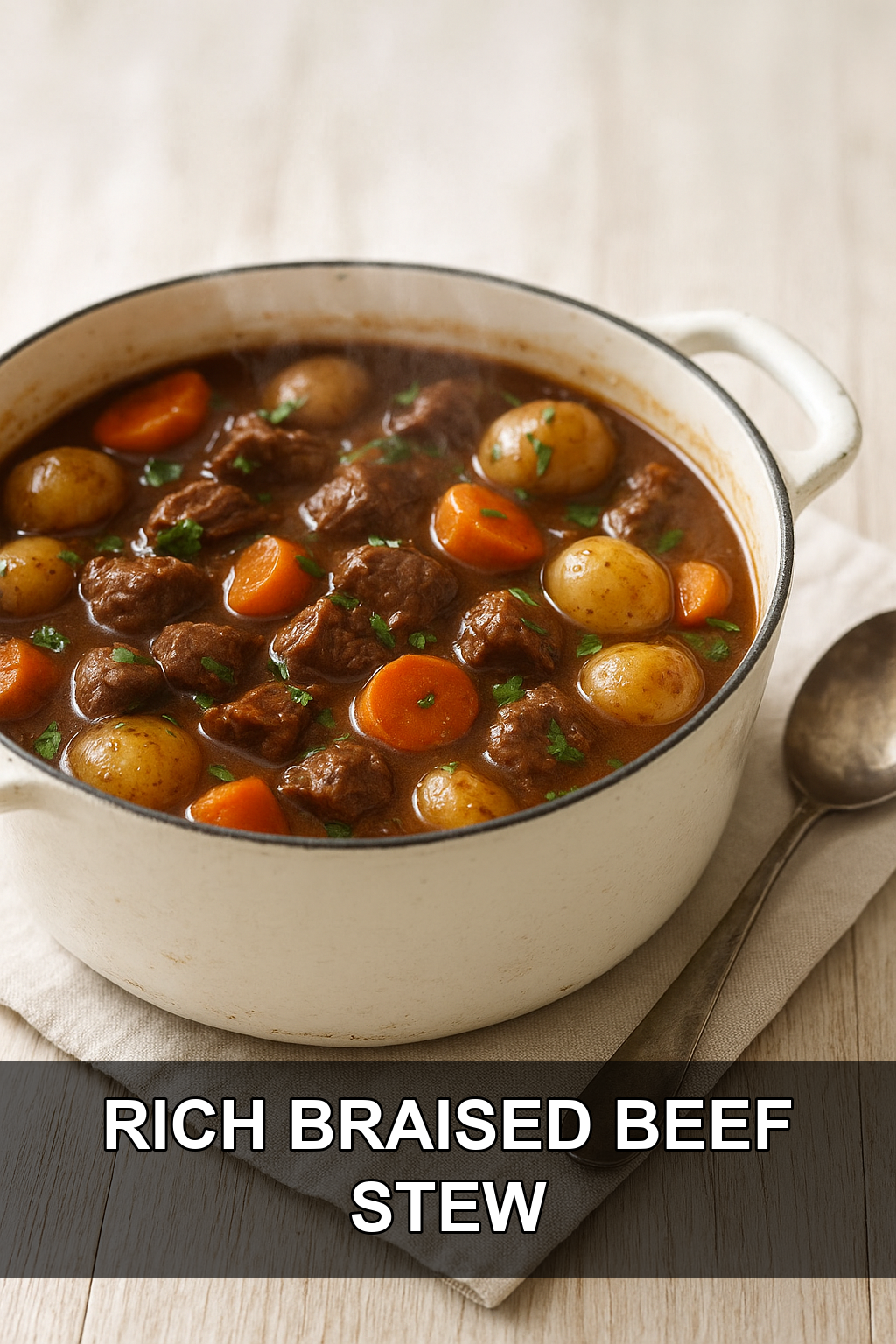
There’s something about a bubbling pot of beef stew that makes a house feel like home. This version braises well-marbled chuck low and slow in red wine and beef broth until it’s fall-apart tender, then finishes with carrots and potatoes for a one-pot dinner that only gets better the next day.
What Is Beef Stew?
Beef stew is a slow-braised dish built on humble ingredients: tough cuts of beef, root vegetables, and a flavorful liquid, all simmered together until the meat becomes tender and the broth thickens into something rich and velvety. It’s the kind of meal that’s been passed down in kitchens for generations, precisely because it transforms inexpensive ingredients into something deeply satisfying.
This particular recipe leans into classic French-inspired technique — searing the beef in batches, deglazing with balsamic vinegar and wine, and braising in the oven rather than on the stovetop. The oven’s steady, even heat means less babysitting and a more consistent result, so the beef turns tender and the sauce reduces to a glossy, deeply savory gravy.
Tips for Cooking and Prepping
#1: Don’t skip the batch-searing
Crowding the pot will steam the meat instead of browning it, and that browned crust is where a lot of the stew’s deep flavor comes from. Sear in three batches, adding a fresh tablespoon of oil each time, and resist the urge to move the pieces before they’ve developed a real crust.
#2: Scrape up every brown bit
After searing, the fond stuck to the bottom of the pot is packed with flavor. Use a wooden spoon to scrape it loose while the onions and balsamic vinegar cook, so nothing gets left behind or burns.
#3: Coat the beef in flour before adding liquid
Sprinkling flour over the browned beef and stirring it in before pouring in the wine and broth helps thicken the braising liquid naturally as it cooks, so you end up with a stew-like gravy rather than a thin soup.
#4: Add the vegetables later, not at the start
Carrots and potatoes go in only for the final hour of braising. Adding them too early would leave them mushy and falling apart by the time the beef is fully tender.
#5: Choose well-marbled chuck
Chuck roast cut into chunks is ideal here because the marbling and connective tissue break down during the long braise, basting the meat from the inside and keeping it moist and tender rather than dry.
#6: Make it a day ahead if you can
Like most braises, this stew tastes even better after resting overnight in the fridge, since the flavors have time to meld and deepen. Plan to make it the day before serving if your schedule allows.
Recipe Variations and Substitutes
This stew is easy to adapt to what’s on hand or in season. Swap the red wine for an extra cup of beef broth if you’d rather cook without alcohol, or add pearl onions, mushrooms, or parsnips alongside the carrots and potatoes for extra depth. Fresh thyme sprigs can replace dried thyme if you have some on hand — just double the amount and remove the stems before serving.
Serving Suggestions
Beef stew is a meal in itself, but it’s even better with something to soak up the sauce. Serve it over buttered egg noodles or creamy mashed potatoes, or with a thick slice of crusty bread for mopping up the last of the gravy. A simple green salad or roasted green beans on the side rounds things out nicely.
Storing, Make-Ahead, and Freezing Tips
Let the stew cool to room temperature before transferring it to an airtight container; it will keep in the refrigerator for up to 4 days and often tastes better on day two. To freeze, portion the cooled stew into freezer-safe containers and freeze for up to 3 months, then thaw overnight in the fridge before reheating gently on the stove.
FAQs
Can I make beef stew in a slow cooker instead of the oven?
Yes — after searing the beef and building the sauce on the stovetop as directed, transfer everything to a slow cooker and cook on low for 7 to 8 hours, adding the carrots and potatoes for the final 2 hours.
Why is my beef stew tough after cooking?
Tough meat usually means it needs more time, not less; chuck needs a long, slow braise to break down its connective tissue, so if it’s still chewy, cover and cook longer until it’s fork-tender.
Can I skip the wine in this recipe?
Yes, you can replace the 2 cups of red wine with an equal amount of additional beef broth; the stew will be slightly less complex but still rich and flavorful thanks to the browning and balsamic vinegar.
What’s the best cut of beef for stew?
Boneless beef chuck is ideal because its marbling and connective tissue melt during the long braise, resulting in tender, juicy meat rather than the dry texture you’d get from leaner cuts like round or sirloin.
Why does beef stew taste better the next day?
Resting overnight gives the flavors from the wine, herbs, and browned beef time to meld and deepen throughout the sauce, which is why many cooks intentionally make this stew a day ahead of serving.
Classic Braised Beef Stew Recipe
Prep time: 30 min | Cook time: 210 min | Total time: 240 min | Servings: 6
Ingredients
For the Beef and Braise
- 3 pounds boneless beef chuck, well-marbled, cut into 1½-inch pieces
- 2 teaspoons salt
- 1 teaspoon freshly ground black pepper
- 3 tablespoons olive oil
- 2 medium yellow onions, cut into 1-inch chunks
- 7 cloves garlic, peeled and smashed
- 2 tablespoons balsamic vinegar
- 1½ tablespoons tomato paste
- ¼ cup all-purpose flour
- 2 cups dry red wine
- 2 cups beef broth
- 2 cups water
- 1 bay leaf
- ½ teaspoon dried thyme
- 1½ teaspoons sugar
For the Vegetables
- 4 large carrots, peeled and cut into 1-inch chunks on a diagonal
- 1 pound small white boiling potatoes (baby yukons), cut in half
For Serving
- Fresh chopped parsley, optional
Instructions
- Preheat the oven to 325°F (165°C) and set a rack in the lower middle position.
- Pat the beef dry and season all over with the salt and pepper. In a large Dutch oven or heavy soup pot, heat 1 tablespoon of the olive oil over medium-high heat until hot and shimmering. Sear the beef in 3 batches, turning with tongs, about 5 minutes per batch, adding another tablespoon of oil with each new batch. Avoid crowding the pan so the meat browns properly. Transfer the seared beef to a plate and set aside.
- Add the onions, garlic, and balsamic vinegar to the pot. Cook, stirring with a wooden spoon and scraping up the browned bits from the bottom of the pan, for about 5 minutes. Stir in the tomato paste and cook 1 minute more.
- Return the beef and any accumulated juices to the pot and sprinkle with the flour. Stir with a wooden spoon until the flour is fully dissolved, 1 to 2 minutes.
- Add the red wine, beef broth, water, bay leaf, thyme, and sugar. Stir to loosen any remaining browned bits from the bottom of the pot and bring to a boil.
- Cover the pot, transfer to the preheated oven, and braise for 2 hours.
- Remove the pot from the oven and stir in the carrots and potatoes. Cover and return to the oven for about 1 hour more, until the vegetables are tender, the broth has thickened, and the beef is fork-tender.
- Remove and discard the bay leaf. Taste and adjust seasoning as needed. Serve warm, garnished with fresh chopped parsley if desired, or cool to room temperature and refrigerate overnight to serve the next day — reheat gently, covered, over medium heat.
This stew tastes even better made a day ahead, as the flavors continue to develop overnight in the fridge. For a thicker sauce, uncover during the last 20 minutes of braising.
Leave a Reply
You must be logged in to post a comment.