
- What Is Basmati Fried Rice?
- Tips for Cooking and Prepping
- Recipe Variations and Substitutes
- Serving Suggestions
- Storing, Make-Ahead, and Freezing Tips
- FAQs
- Basmati Fried Rice Recipe
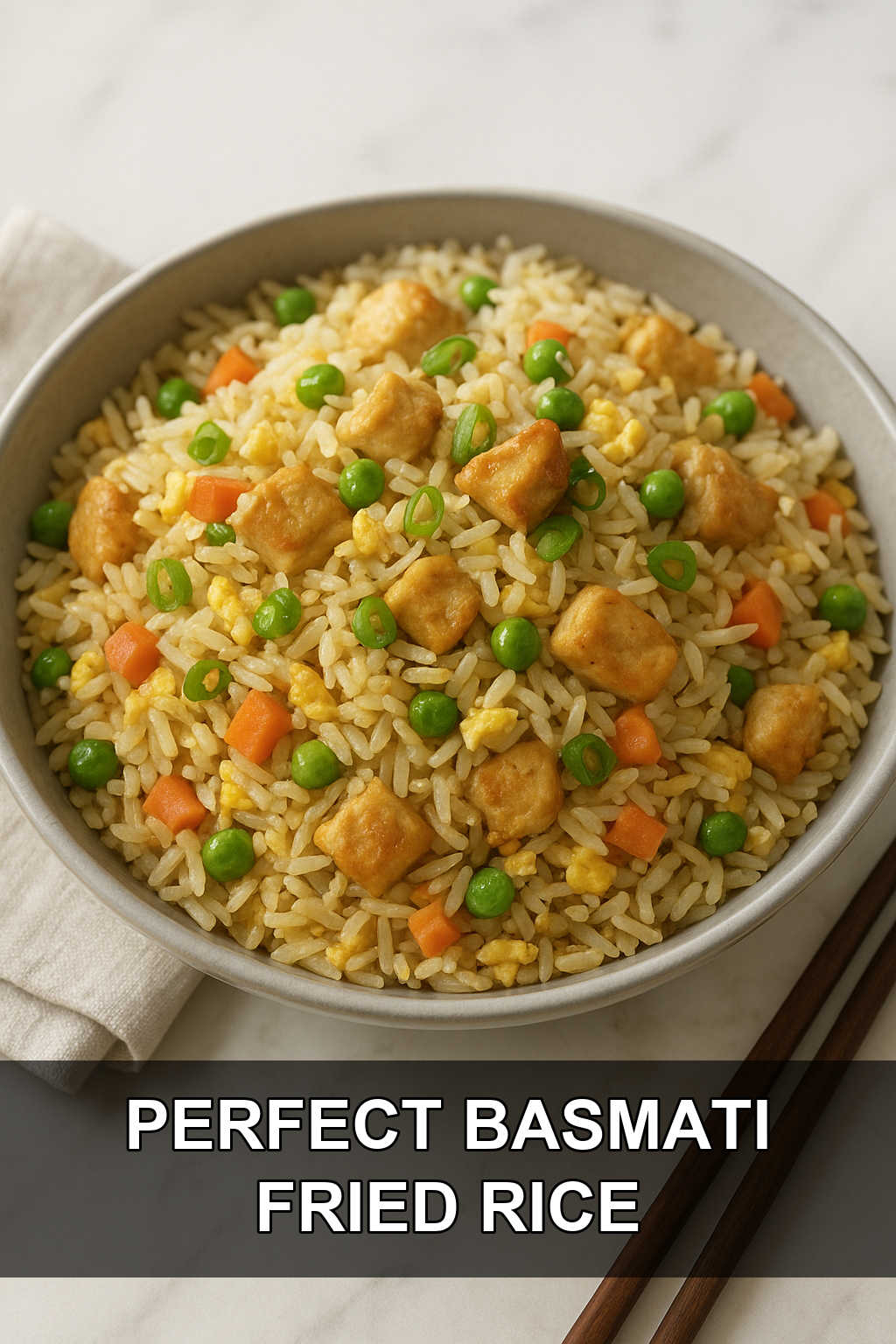
There’s nothing more disappointing than fried rice that turns into a mushy, clumpy mess in the skillet. This basmati fried rice recipe fixes that problem for good, using a few simple tricks to guarantee light, fluffy, individually separated grains in every bite. In about 25 minutes total, you’ll have a takeout-worthy dinner packed with tender chicken, scrambled eggs, and crisp veggies.
What Is Basmati Fried Rice?
Fried rice is a beloved dish found across Asian cuisines, typically made by stir-frying cooked rice with eggs, vegetables, proteins, and savory sauces in a hot wok or skillet. While jasmine rice is the traditional choice in many versions, basmati rice brings its own advantages to the dish thanks to its naturally long, slender grains and lower starch content.
Because basmati grains stay firm and separate rather than sticking together, it’s actually one of the best rice varieties for achieving that coveted “perfect texture” fried rice lovers chase after — light, fluffy, and never gluey. This recipe leans into basmati’s strengths with a cold-rice technique that locks in that texture from the very first bite to the last.
Tips for Cooking and Prepping
#1: Cook your rice with less water than usual
Basmati rice is already low in starch, but cutting back the water slightly (1 ¾ cups per cup of rice instead of 2) ensures the grains cook up drier and firmer, which is essential for frying instead of steaming in the pan.
#2: Never skip the chill time
Spreading the cooked rice on a baking sheet to cool, then refrigerating it uncovered for at least 12 hours, dries out the surface starch and firms up the grains so they fry beautifully instead of turning into a sticky clump.
#3: Use a screaming hot pan
A wok or skillet that’s properly preheated over medium-high heat is what gives fried rice its slightly crisp, toasted edges — a lukewarm pan will just steam the rice and soften it.
#4: Cook components separately, then combine
Scrambling the eggs and searing the chicken in batches before setting them aside keeps every element cooked properly and prevents overcrowding the pan, which is a common cause of soggy fried rice.
#5: Let the rice sit undisturbed before tossing
Spreading the cold rice across the hot pan and letting it cook for 2-3 minutes without stirring allows the bottom layer to develop a light crispiness before you start tossing it with the vegetables.
#6: Build flavor in a well, not all over the pan
Pushing the rice to the sides to create a center well for the soy sauce and oyster sauce lets the sauce caramelize slightly against the hot pan before it’s tossed through, deepening the overall flavor.
Recipe Variations and Substitutes
This basmati fried rice recipe is endlessly adaptable. Swap the chicken for shrimp, cubed tofu, or leftover pork, or skip the protein entirely for a simple vegetable fried rice. You can also mix up the vegetables with corn, diced bell pepper, shredded cabbage, or edamame depending on what’s in your fridge, and add a drizzle of chili crisp or sriracha for heat.
Serving Suggestions
Basmati fried rice is hearty enough to serve as a complete meal on its own, but it also pairs beautifully alongside egg rolls, potstickers, or a simple cucumber salad. For a heartier spread, serve it next to teriyaki chicken, orange chicken, or a quick miso soup.
Storing, Make-Ahead, and Freezing Tips
Leftover fried rice keeps well in an airtight container in the refrigerator for up to 4 days; reheat it in a hot skillet with a splash of water or oil to revive the texture. It also freezes well for up to 2 months — freeze in flat, portioned bags and reheat straight from frozen in a hot pan for best results.
FAQs
Why is my basmati fried rice mushy?
Mushy fried rice almost always comes down to using freshly cooked, warm rice that’s too moist and starchy. Cooking the rice with less water and chilling it uncovered for at least 12 hours before frying removes excess moisture so the grains stay separate and firm.
Can I make basmati fried rice without a wok?
Yes, a large non-stick or cast-iron skillet works just fine as long as it gets very hot and gives you enough surface area to spread the rice in a thin layer, which helps it crisp up rather than steam.
Can I use freshly cooked rice instead of day-old rice?
It’s not recommended, since freshly cooked rice holds too much moisture and will clump together in the pan; if you’re in a pinch, spread it on a baking sheet and freeze it for 20-30 minutes to dry it out quickly before frying.
Is basmati rice better than jasmine rice for fried rice?
Both work well, but basmati’s lower starch content and long grains make it especially good at staying light and separate, which some cooks find gives a slightly cleaner, less sticky texture than jasmine rice.
How do I make this recipe vegetarian or vegan?
Simply omit the chicken and eggs (or use a plant-based egg substitute), swap in cubed extra-firm tofu, and use a vegetarian oyster sauce alternative or additional soy sauce for umami flavor.
Basmati Fried Rice Recipe
Prep time: 15 min | Cook time: 10 min | Total time: 25 min | Servings: 4
Ingredients
For the Rice
- 4 cups cooked and chilled Basmati rice (from approx. 1.5 cups uncooked rice)
For the Fried Rice
- 2 tbsp avocado oil or another high-smoke-point oil, divided
- 2 large eggs, lightly beaten
- 8 oz boneless, skinless chicken breast or thighs, cut into ½-inch pieces (optional, can sub shrimp or tofu)
- 1 cup frozen peas and carrots, thawed
- 1 small yellow onion, finely chopped
- 3 cloves garlic, minced
- 1 tbsp ginger, freshly grated
- 3 tbsp low-sodium soy sauce
- 1 tbsp oyster sauce (optional, for umami depth)
- 1 tsp sesame oil
- 1/2 tsp white pepper
- 2 green onions, thinly sliced
Instructions
- Rinse 1.5 cups of uncooked Basmati rice until the water runs clear. Cook it with slightly less water than package directions suggest (e.g., use 1 ¾ cups water for every 1 cup rice instead of 2). Once cooked, fluff with a fork and spread it on a baking sheet to cool completely to room temperature. Do not cover it. Once cool, transfer to an airtight container and refrigerate for at least 12 hours, or up to 3 days.
- Heat a large wok or non-stick skillet over medium-high heat. Add 1/2 tablespoon of your oil. Pour in the beaten eggs and scramble for 30-60 seconds until just cooked. Remove from the skillet and set aside.
- Add another 1/2 tablespoon of oil to the hot skillet. Add the chicken pieces in a single layer and cook for 3-4 minutes, until golden brown and cooked through. Remove from the skillet and set aside with the eggs.
- Add the remaining 1 tablespoon of oil to the skillet. Add the chopped onion and cook for 2 minutes until softened. Add the minced garlic and grated ginger and cook for another 30 seconds until fragrant. Add the thawed peas and carrots and stir-fry for 1-2 minutes.
- Add the cold, day-old Basmati rice to the skillet. Use your spatula to break up any large clumps. Spread the rice across the surface of the pan and let it cook, undisturbed, for 2-3 minutes to get it slightly crispy. Then, begin to stir-fry, tossing it with the vegetables.
- Push the rice to the sides of the skillet to create a well in the center. Pour the soy sauce, oyster sauce (if using), and white pepper into the well. Let it bubble and sizzle for a few seconds to caramelize, then toss everything together to coat the rice evenly.
- Return the cooked egg and chicken to the skillet. Add the toasted sesame oil and sliced green onions. Toss everything together one last time to combine and heat through. Serve immediately.
For best results, plan ahead so the rice has a full 12 hours to chill in the fridge — this single step makes the biggest difference in achieving that perfect, non-mushy fried rice texture.
Leave a Reply
You must be logged in to post a comment.