
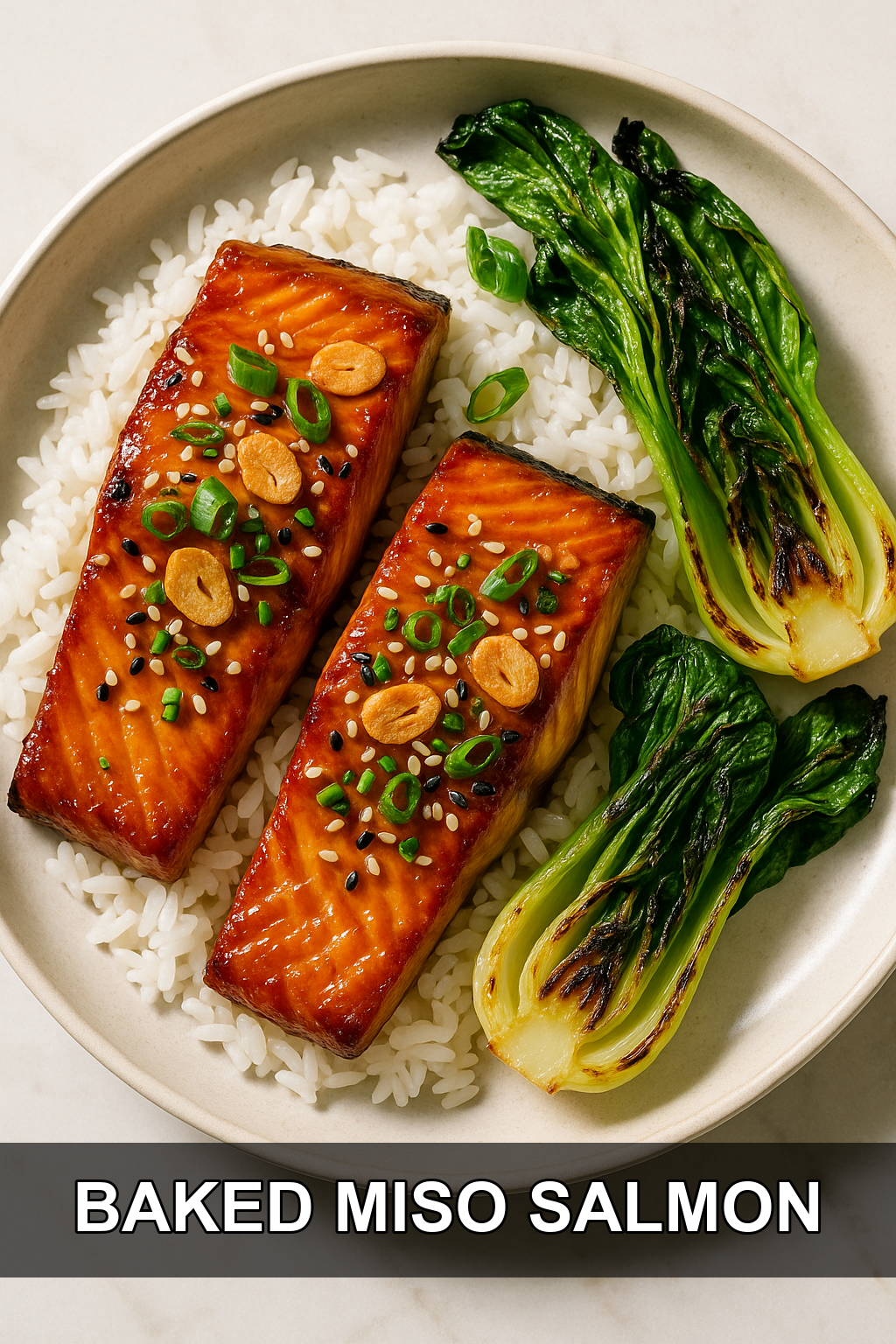
- What Is Baked Miso Salmon with Charred Bok Choy?
- Tips for Cooking and Prepping
- Recipe Variations and Substitutes
- Serving Suggestions
- Storing, Make-Ahead, and Freezing Tips
- FAQs
- Baked Miso Salmon with Charred Bok Choy and Crispy Garlic Chips Recipe
This baked miso salmon is one of those dinners that tastes like it took way more effort than it actually did. A sticky, umami-packed miso glaze caramelizes over tender salmon while charred bok choy and shatteringly crispy garlic chips round out the plate with texture and depth. It’s restaurant-worthy, but it comes together in under 40 minutes on a single sheet pan.
What Is Baked Miso Salmon with Charred Bok Choy?
Miso salmon is a Japanese-inspired preparation where salmon fillets are marinated or glazed in a mixture of miso paste, mirin, soy sauce, and sugar, then broiled or baked until the top turns deeply caramelized and lacquered. The miso does double duty here, tenderizing the fish while adding a salty, funky sweetness that plain salmon just can’t achieve on its own.
Pairing it with charred bok choy is a nod to classic izakaya-style side dishes, where quick-cooked greens pick up smoky, blistered edges from high heat while staying crisp-tender at the base. Topping the whole dish with crispy garlic chips adds a crunchy, savory finishing touch that ties the sweetness of the glaze and the char of the greens together into one balanced, craveable meal.
Tips for Cooking and Prepping
#1: Pat the salmon completely dry before glazing
Excess moisture prevents the miso glaze from clinging and caramelizing properly, so blot the fillets with a paper towel before brushing on the marinade.
#2: Marinate briefly, not overnight
Miso is salty and slightly acidic, so 15-30 minutes is plenty; leaving salmon in the marinade too long can start to break down and toughen the texture.
#3: Broil for the final few minutes for that caramelized top
Bake the salmon most of the way through at a moderate temperature, then switch to broil for 2-3 minutes to get that deep golden, slightly sticky lacquered finish without overcooking the fish.
#4: Char the bok choy in a screaming hot dry pan
Cut bok choy in half lengthwise and sear cut-side down in a very hot, lightly oiled cast iron or carbon steel pan; resist moving it so it develops real char instead of steaming.
#5: Slice garlic paper-thin and fry low and slow
Use a mandoline or sharp knife to slice garlic as evenly and thinly as possible, then fry it in cold oil that gradually heats up so it turns golden and crisp instead of burning and turning bitter.
#6: Save the garlic-infused oil
The oil left over from frying the garlic chips is packed with flavor, so drizzle it over the finished salmon and bok choy instead of tossing it out.
Recipe Variations and Substitutes
Swap the salmon for black cod, arctic char, or even chicken thighs if you want a different protein, since the miso glaze works beautifully on all of them. No bok choy? Try baby bok choy, broccolini, or charred asparagus instead, and if white miso isn’t available, a milder yellow miso can be used with a touch less sugar.
Serving Suggestions
Serve this over steamed jasmine or short-grain rice to soak up the extra glaze, or spoon it over rice noodles for a heartier bowl. A sprinkle of toasted sesame seeds, sliced scallions, or a few drops of chili crisp on top adds even more flavor and color to the plate.
Storing, Make-Ahead, and Freezing Tips
Leftover salmon and bok choy keep well in an airtight container in the fridge for up to 3 days; reheat gently in a low oven or covered skillet so the fish doesn’t dry out. The miso marinade can be mixed up to 3 days ahead and stored in the fridge, and the garlic chips can be fried a day in advance and kept in an airtight container at room temperature; salmon is best fresh, so freezing after cooking isn’t recommended, but you can freeze the raw fillets in the marinade for up to 2 months.
FAQs
What kind of miso should I use for miso salmon?
White miso (shiro miso) is the classic choice because it’s mild and slightly sweet, but yellow miso also works well; red miso can be used in smaller amounts since it’s much saltier and more intense.
Can I grill the salmon instead of baking it?
Yes, miso salmon grills beautifully on medium heat with the skin side down first, though you’ll want to watch it closely since the sugar in the glaze can burn quickly over direct flame.
How do I know when the salmon is done?
The salmon is ready when it flakes easily with a fork and reaches an internal temperature of 125-130°F for medium, which usually takes 10-12 minutes of baking plus a couple minutes under the broiler.
Why is my garlic burning instead of crisping?
Garlic burns fast because of its sugar content, so start it in cold oil over low-medium heat and pull it from the pan the moment it turns light golden, since it will continue to darken as it cools.
Is this recipe gluten-free?
It can easily be made gluten-free by using tamari instead of regular soy sauce, since miso paste itself is typically gluten-free but always worth double-checking the label.
Baked Miso Salmon with Charred Bok Choy and Crispy Garlic Chips Recipe
Prep time: 20 min | Cook time: 20 min | Total time: 40 min | Servings: 4
Ingredients
For the Miso Salmon
- 4 salmon fillets (about 6 oz each), skin-on or skinless
- 1/4 cup white miso paste
- 2 tablespoons mirin
- 2 tablespoons soy sauce or tamari
- 1 tablespoon rice vinegar
- 1 tablespoon brown sugar
- 1 teaspoon grated fresh ginger
- 1 teaspoon toasted sesame oil
For the Charred Bok Choy
- 4 heads baby bok choy, halved lengthwise
- 1 tablespoon neutral oil (avocado or vegetable)
- 1 tablespoon soy sauce
- 1 teaspoon toasted sesame oil
- Pinch of salt
For the Crispy Garlic Chips
- 6 large garlic cloves, sliced paper-thin
- 1/3 cup neutral oil (for frying)
- Pinch of flaky salt
For Serving
- Steamed jasmine rice
- Toasted sesame seeds
- Sliced scallions
- Lime or lemon wedges (optional)
Instructions
- In a small bowl, whisk together the white miso, mirin, soy sauce, rice vinegar, brown sugar, grated ginger, and sesame oil until smooth. Pat the salmon fillets dry and coat them evenly in the miso mixture. Let marinate at room temperature for 15-30 minutes.
- Preheat the oven to 400°F and line a sheet pan with parchment or foil. Place the marinated salmon fillets on the pan and bake for 10-12 minutes, until nearly cooked through.
- Switch the oven to broil and cook the salmon for an additional 2-3 minutes, watching closely, until the top is deeply caramelized and slightly bubbly. Remove and tent loosely with foil to keep warm.
- While the salmon bakes, make the garlic chips: place the thinly sliced garlic in a small cold saucepan with the neutral oil. Turn the heat to low-medium and cook, stirring frequently, until the garlic turns light golden, 5-7 minutes. Immediately strain the garlic onto a paper towel-lined plate, reserving the garlic oil, and sprinkle with flaky salt.
- Heat a cast iron or heavy skillet over high heat until very hot. Add a thin layer of neutral oil, then place the bok choy cut-side down in a single layer. Sear undisturbed for 2-3 minutes until deeply charred, then flip and cook another 1-2 minutes until the base is just tender.
- Transfer the bok choy to a plate and drizzle with soy sauce and sesame oil, tossing lightly to coat.
- To serve, plate the miso salmon alongside the charred bok choy over steamed rice. Drizzle everything with a spoonful of the reserved garlic oil, then top with crispy garlic chips, sesame seeds, and sliced scallions.
For extra caramelization, brush the salmon with a second thin layer of miso glaze right before broiling. Leftover garlic oil is fantastic drizzled over rice, noodles, or eggs.
Leave a Reply
You must be logged in to post a comment.