
- What Is Nasi Goreng?
- Tips for Cooking and Prepping
- Recipe Variations and Substitutes
- Serving Suggestions
- Storing, Make-Ahead, and Freezing Tips
- FAQs
- Authentic Nasi Goreng Recipe
If you’ve ever wondered how restaurants get that smoky, savory-sweet flavor in their fried rice, this authentic Nasi Goreng recipe is your answer. Made with day-old rice, punchy aromatics, and a splash of sweet soy sauce, it comes together in about 30 minutes for a comforting bowl of Indonesian comfort food. Whether you’re using leftover chicken, shrimp, or veggies, this dish is endlessly adaptable and endlessly satisfying.
What Is Nasi Goreng?
Nasi Goreng, which literally translates to “fried rice” in Indonesian and Malay, is one of the most beloved dishes across Southeast Asia. It’s often considered the national dish of Indonesia, prized for its bold combination of sweet, salty, spicy, and savory flavors all in one skillet.
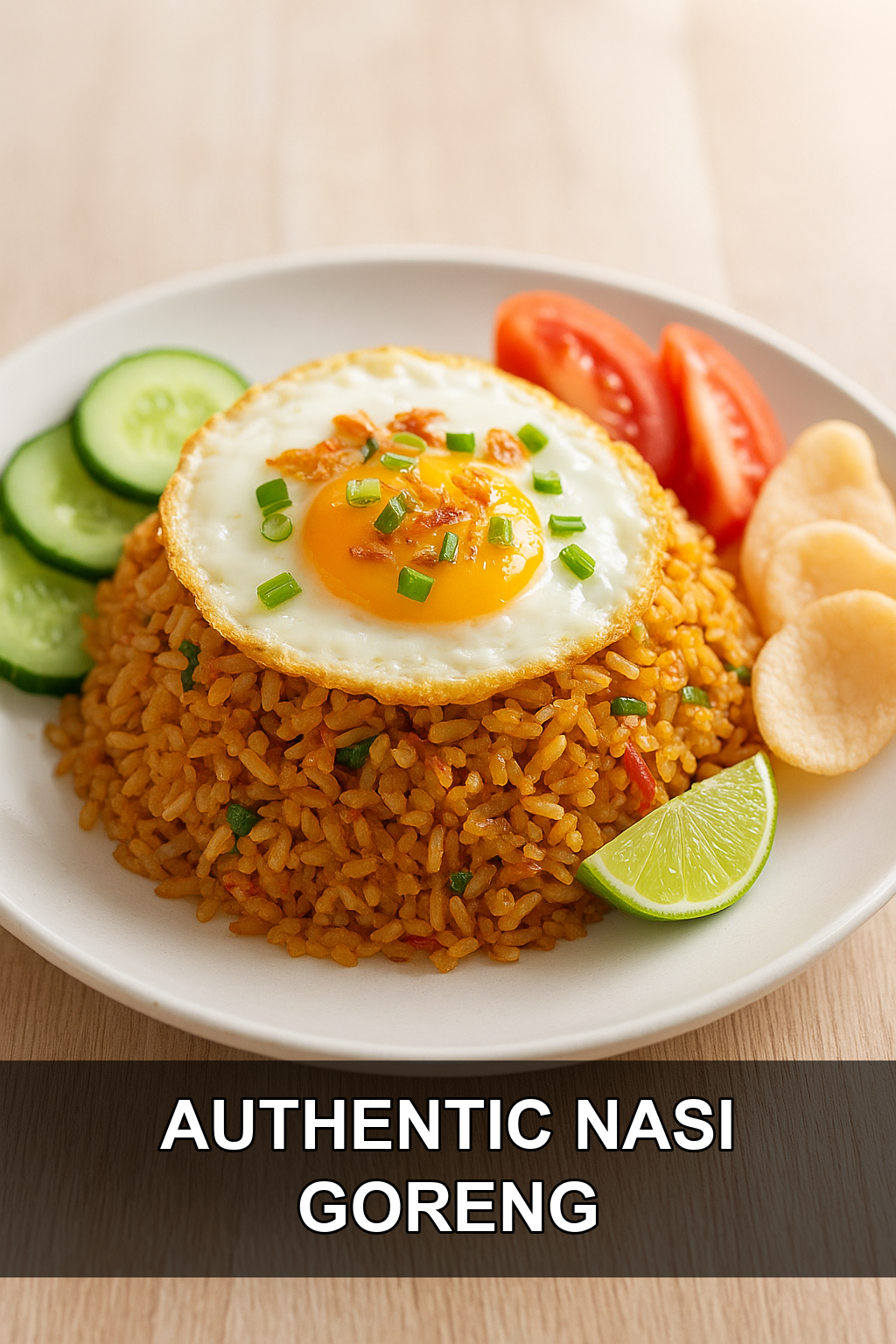
What sets Nasi Goreng apart from other fried rice dishes is kecap manis, a thick, molasses-like sweet soy sauce that gives the rice its signature dark color and caramelized depth. Traditionally served with a fried egg on top, sliced cucumber, and crunchy prawn crackers, it’s a dish that’s just as common for breakfast as it is for dinner.
Tips for Cooking and Prepping
#1: Always use cold, day-old rice
Freshly cooked rice is too moist and clumps together when fried. Day-old rice that’s been refrigerated dries out slightly, so each grain fries up separately and gets that signature slightly crispy texture.
#2: Fry the aromatics low and slow at first
Garlic, shallots, and chilies burn quickly, so stir them constantly and don’t rush this step. Fragrant, golden aromatics are the foundation of authentic Nasi Goreng flavor.
#3: Don’t skip the shrimp paste if you want authenticity
A small amount of shrimp paste (terasi) adds a deep umami note that’s hard to replicate with other ingredients. It’s optional, but it’s what gives street-vendor style Nasi Goreng its unmistakable savory backbone.
#4: Use high heat and keep the rice moving
A hot wok or skillet prevents the rice from steaming or turning mushy. Toss and stir frequently so the kecap manis coats every grain evenly without burning.
#5: Break up rice clumps before adding sauces
Use the back of your spatula to press and separate any sticky clumps as soon as the rice hits the pan. This ensures the seasoning distributes evenly instead of pooling in one spot.
Recipe Variations and Substitutes
Nasi Goreng is incredibly flexible, which is part of why it’s such a popular home-cooked meal across Indonesia. Swap the chicken or shrimp for tofu, tempeh, or extra vegetables for a vegetarian version, or add sliced Chinese sausage for a heartier, smokier bite. If you can’t find kecap manis, you can make a quick substitute by simmering soy sauce with brown sugar until slightly thickened.
Serving Suggestions
Nasi Goreng is traditionally served with a fried egg (sunny side up, so the yolk breaks over the rice), fresh cucumber slices, and tomato wedges to balance the richness. Crispy prawn crackers (krupuk) or fried shallots add crunch, and a squeeze of lime brightens every bite. It pairs beautifully with grilled saté skewers or a simple cucumber salad if you want to turn it into a full spread.
Storing, Make-Ahead, and Freezing Tips
Nasi Goreng keeps well in an airtight container in the refrigerator for up to 4 days, making it a great meal-prep option. To freeze, portion the cooled rice into freezer bags or containers and store for up to 2 months. Reheat in a hot skillet with a splash of water or oil to revive the texture, rather than microwaving straight from frozen, which can make the rice gummy.
FAQs
What makes Nasi Goreng different from regular fried rice?
The main difference is kecap manis, the sweet, thick soy sauce that gives Nasi Goreng its dark color and caramelized sweet-savory flavor, along with the traditional use of shrimp paste and shallots as a flavor base.
Can I use fresh rice instead of day-old rice?
You can, but it’s best to spread freshly cooked rice on a tray and let it cool and dry out for at least 30 minutes first, since warm, moist rice tends to clump and turn mushy when fried.
Is Nasi Goreng spicy?
Traditional Nasi Goreng has a mild to moderate heat from fresh chilies, but you can easily adjust the spice level by using fewer chilies or removing the seeds for a milder dish.
What protein works best in Nasi Goreng?
Chicken, shrimp, and tofu are the most common choices, but leftover cooked meats like beef or pork also work well, making this a great way to use up leftovers.
Can I make Nasi Goreng vegetarian or vegan?
Yes, simply skip the shrimp paste and oyster sauce, use tofu or extra vegetables as your protein, and double check that your soy sauce and kecap manis are vegan-friendly.
Authentic Nasi Goreng Recipe
Prep time: 15 min | Cook time: 15 min | Total time: 30 min | Servings: 30
Ingredients
For the Nasi Goreng
- 3 cups cooked and cooled day-old rice
- 2 tablespoons vegetable oil
- 2 cloves garlic, minced
- 2 shallots, finely chopped
- 1 to 2 red chilies, sliced (adjust to taste)
- 1 cup cooked chicken, shrimp, or mixed vegetables
- 2 eggs (one for mixing, one for topping if desired)
- 2 tablespoons kecap manis (Indonesian sweet soy sauce)
- 1 tablespoon soy sauce
- 1 teaspoon oyster sauce (optional)
- 1/2 teaspoon shrimp paste (optional, for authentic flavor)
- Salt to taste
- Black pepper to taste
- 1/2 cup shredded cabbage (optional)
- 1/2 cup diced carrots (optional)
- 2 green onions, sliced (optional)
- 1/2 cup peas (optional)
For Serving
- Fried egg
- Sliced cucumber
- Tomato wedges
- Prawn crackers or crispy shallots
- Lime wedges
Instructions
- Step 1: Prepare Ingredients. Use day-old rice for the best texture. Mince the garlic, chop the shallots, slice the chilies, and prepare any vegetables. Cut the cooked chicken, shrimp, or tofu into bite-sized pieces.
- Step 2: Cook Aromatics. Heat 2 tablespoons of vegetable oil in a large wok or skillet over medium-high heat. Add the garlic, shallots, and chilies, and stir fry for 1–2 minutes until fragrant.
- Step 3: Add Protein and Vegetables. Add your protein (chicken, shrimp, or tofu) and stir fry until cooked through. Add vegetables such as carrots, peas, or cabbage, and cook for 2–3 minutes until slightly tender.
- Step 4: Add the Rice. Add the cooked rice to the wok, breaking up any clumps. Stir well to combine with the aromatics, protein, and vegetables.
- Step 5: Season the Rice. Add the kecap manis, soy sauce, and optional oyster sauce. Season with salt and black pepper to taste, then stir fry for 3–5 minutes until the rice is evenly coated and slightly crispy.
- Step 6: Add Egg. Push the rice to the side of the pan and crack one egg into the empty space. Scramble gently and mix into the rice once cooked, or fry an egg separately to serve on top.
- Step 7: Serve and Garnish. Garnish with sliced green onions, crispy shallots, or a fried egg. Serve with cucumber slices, tomato wedges, prawn crackers, and lime wedges. Enjoy hot for the best flavor and texture.
For a smokier flavor, cook this dish in a well-seasoned wok over the highest heat your stove allows, and don’t overcrowd the pan so the rice fries rather than steams.
Leave a Reply
You must be logged in to post a comment.