
- What Is Nasi Goreng?
- Tips for Cooking and Prepping
- Recipe Variations and Substitutes
- Serving Suggestions
- Storing and Reheating Leftovers
- FAQs
- Authentic Nasi Goreng Recipe
If your idea of nasi goreng comes from a sad plastic tub of takeout fried rice, it’s time for a proper introduction. This is the real thing — fiery sambal, sticky-sweet kecap manis, and rice fried hard and fast in a screaming hot wok until it tastes like something you’d find at a roadside warung in Java. Give me ten minutes of prep and ten minutes of frying, and I’ll show you what all the fuss is about.
What Is Nasi Goreng?
Nasi goreng simply means “fried rice” in Indonesian and Malay, but calling it just “fried rice” undersells it badly. Unlike the soy-sauce-heavy versions common in Chinese-American takeout, authentic nasi goreng gets its signature flavor and deep reddish-brown color from sambal oelek (a fiery chili paste) and kecap manis (a thick, molasses-like sweet soy sauce found in nearly every Indonesian kitchen). It’s typically loaded up with fragrant shallots, garlic, and sometimes a whisper of shrimp paste, then finished with a crispy fried egg on top.
Tips for Cooking and Prepping
#1: Use cold, day-old rice — no exceptions
Freshly cooked rice is too soft and sticky and will turn to mush the moment it hits sauce. Rice that’s been refrigerated overnight dries out slightly, so the grains stay separate and fry up nice and firm.
#2: Mise en place is non-negotiable
This dish moves fast once the wok is hot — under 10 minutes start to finish. Have every ingredient chopped, measured, and sitting next to the stove before you turn on the heat.
#3: Get the wok properly smoking hot
That charred, slightly smoky flavor Indonesians call ‘wok hei’ or wok breath comes from pressing the rice against very hot metal, not from any single ingredient. Don’t be shy with the heat.
#4: Toast your terasi if you’re using it
Raw shrimp paste smells sharp and fishy, but toasting it briefly (or frying it in the oil) mellows it into a deep, savory backbone that’s hard to replicate without it.
#5: Cook proteins and eggs separately, then combine
Searing the chicken first and scrambling the egg on the side of the wok before adding the rice keeps every component perfectly cooked instead of overcrowding the pan and steaming everything.
Recipe Variations and Substitutes
Nasi goreng is endlessly adaptable, which is part of why it’s a staple across Indonesia and Malaysia. Swap the chicken thigh for prawns, diced beef, or leftover roast meat, or skip protein altogether and add extra vegetables for a vegetarian version. If you want a milder, sweeter result, use sambal goreng instead of sambal oelek, and adjust the ratio of kecap manis to soy sauce to taste.
Serving Suggestions
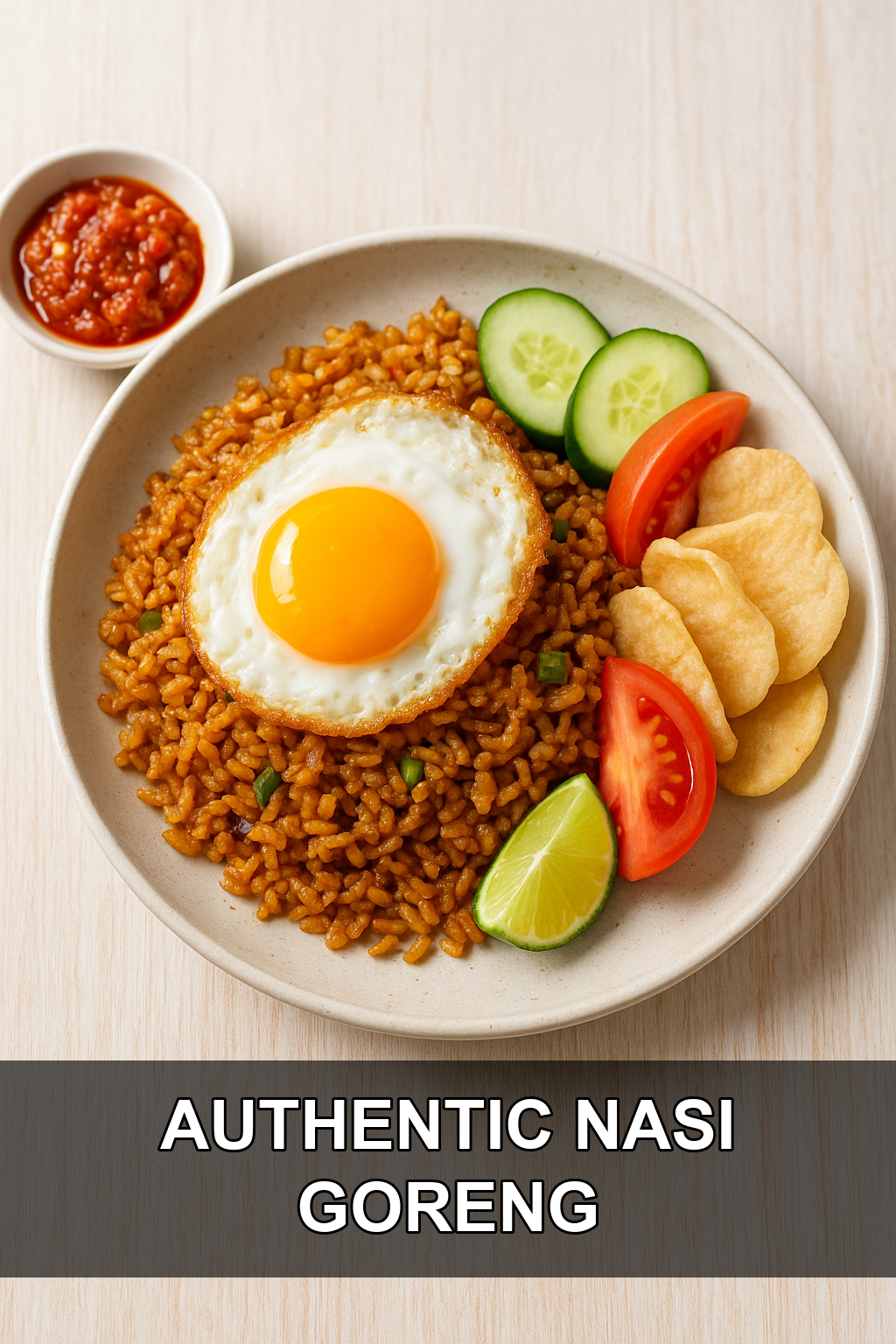
Serve nasi goreng the traditional way: piled high on a plate with a crispy fried egg on top, cucumber slices and tomato wedges on the side for freshness, and a shower of krupuk (prawn crackers) or fried shallots for crunch. A wedge of lime and a small dish of extra sambal let everyone adjust the heat and acidity to their own taste at the table.
Storing and Reheating Leftovers
Leftover nasi goreng keeps well in an airtight container in the fridge for up to 3 days. Reheat it in a hot wok or skillet with a splash of oil to bring back some of that crisp, fried texture rather than microwaving it, which tends to leave the rice soggy.
FAQs
Why does nasi goreng need day-old rice?
Freshly cooked rice holds too much moisture and clumps together, which leads to mushy, gluey fried rice. Cold, day-old rice has dried out slightly, so the grains separate easily and fry up firm and distinct.
What’s the difference between sambal oelek and kecap manis?
Sambal oelek is a simple, fiery chili paste that brings heat, while kecap manis is a thick, sweet Indonesian soy sauce that brings sweetness, color, and body. Authentic nasi goreng needs both working together for its signature sweet-spicy flavor.
Can I make nasi goreng without shrimp paste (terasi)?
Yes, terasi is labeled optional for a reason — the dish will still taste great without it, just slightly less complex. If you skip it, you can add a small splash of fish sauce for a similar savory depth, or leave it out entirely for a vegetarian-friendly version.
Is nasi goreng the same as Chinese fried rice?
No — while both are stir-fried rice dishes, nasi goreng gets its distinct flavor from sambal chili paste and sweet kecap manis, giving it a spicier, sweeter, and darker profile than the lighter, soy-sauce-based Chinese fried rice.
What protein works best in nasi goreng?
Diced chicken thigh is classic because it stays juicy and browns nicely, but prawns, shredded beef, or leftover roast chicken all work well too. For a vegetarian version, simply leave the protein out or add extra vegetables.
Authentic Nasi Goreng Recipe
Prep time: 10 min | Cook time: 10 min | Total time: 20 min | Servings: 2
Ingredients
For the Fried Rice
- 3 cups cooked jasmine rice, cold and day-old (essential)
- 2 tablespoons Spice Island Sambal Oelek (or sambal goreng for a milder, sweeter result)
- 2 tablespoons kecap manis (Indonesian sweet soy sauce)
- 1 tablespoon light soy sauce
- 3 shallots, finely sliced
- 3 cloves garlic, minced
- 1 teaspoon terasi/belacan (shrimp paste), toasted (optional but authentic)
- 150g (5 oz) chicken thigh, diced small (or prawns/shrimp, or leave out for vegetarian)
- 2 eggs (1 beaten for the rice, 1 fried to top each serving)
- 2 tablespoons neutral oil or coconut oil
- 1/2 teaspoon ground white pepper
For Serving
- Cucumber slices and tomato wedges
- Krupuk (prawn crackers) or fried shallots
- Extra sambal on the side
- Lime wedges
Instructions
- Break up the cold, day-old rice with wet hands so there are no clumps. Have all other ingredients chopped, measured, and within arm’s reach — the frying takes under 10 minutes and there is no time to chop once the wok is hot.
- Heat 1 tablespoon of oil in a wok or large frying pan over the highest heat until it just starts to smoke. Add the diced chicken and stir-fry for 2-3 minutes until cooked through and lightly browned. Remove and set aside.
- Add the remaining oil. Fry the shallots and garlic for 30-60 seconds until fragrant and just turning golden. Add the toasted terasi (if using) and sambal, and fry for another 30 seconds until the oil turns red and the paste smells cooked.
- Push everything to one side of the wok. Pour the beaten egg into the empty side and scramble it roughly with the spatula until just set.
- Add the rice and the chicken back to the wok. Toss and press the rice against the hot metal, then toss again — this contact is what builds the smoky ‘wok breath’ flavour. Fry for 2-3 minutes.
- Add the kecap manis, light soy sauce, and white pepper. Keep tossing for another 2 minutes until every grain is coated a glossy brown and the sauce has caramelised slightly on the rice.
- Taste and adjust — more kecap manis for sweetness, more sambal for heat, a splash of soy for salt. Divide between plates.
- Quickly fry the remaining egg in the same wok until the edges are crispy but the yolk is still runny. Slide it on top of the rice and serve with cucumber, tomato, krupuk, lime, and extra sambal.
For a milder dish, swap sambal oelek for sambal goreng, and feel free to double the recipe as long as your wok is large enough to keep the rice in a thin layer for proper frying rather than steaming.
Leave a Reply
You must be logged in to post a comment.