
- What Is Japchae?
- Tips for Cooking and Prepping
- Recipe Variations and Substitutes
- Serving Suggestions
- Storing, Make-Ahead, and Freezing Tips
- FAQs
- Authentic Japchae Recipe: Korean Glass Noodle Stir Fry
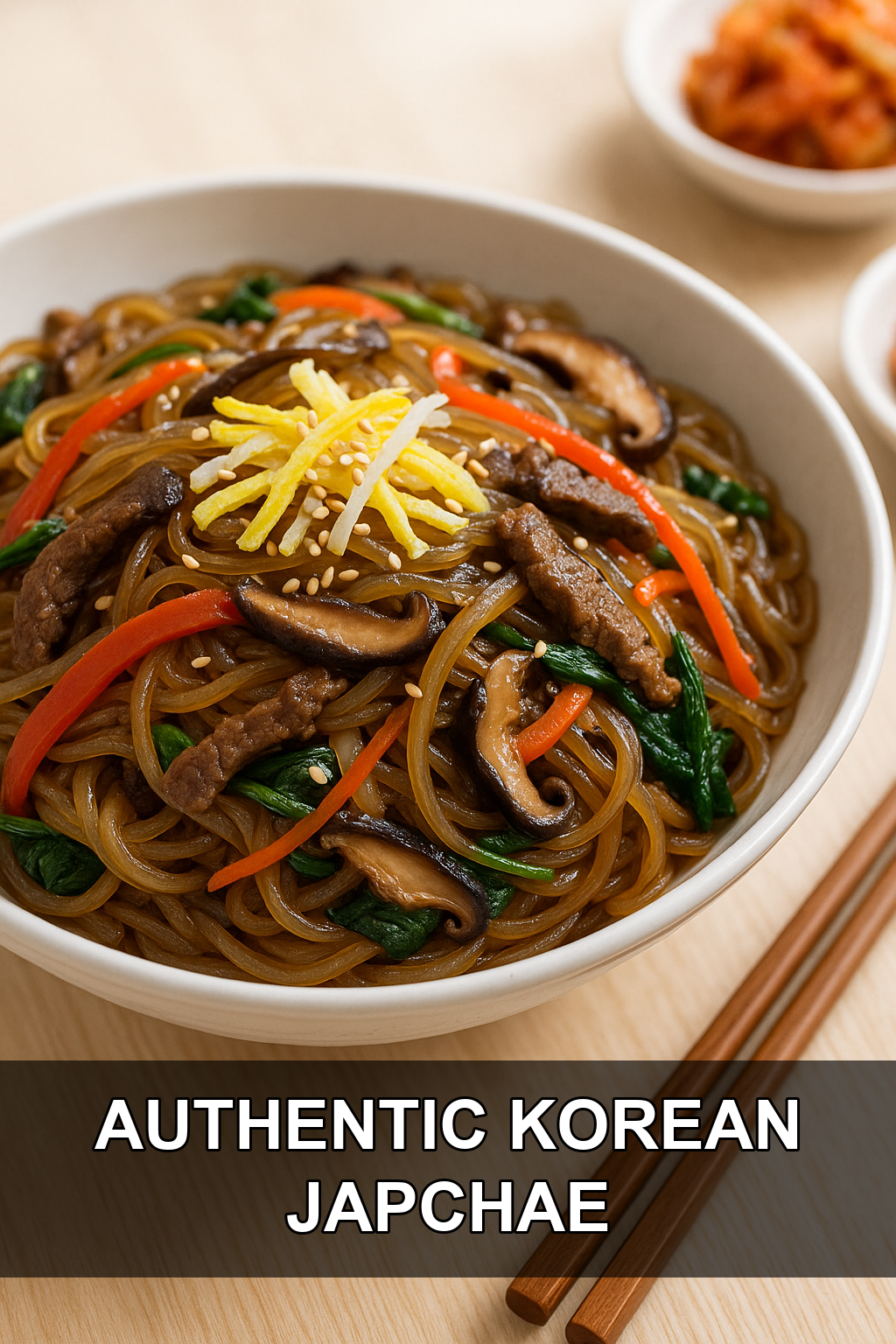
If you’ve ever had japchae at a Korean restaurant and wondered how those glossy, chewy noodles get so much flavor, you’re in the right place. This authentic japchae recipe walks you through every component—from marinated beef to silky sweet potato noodles—so you can recreate this Korean classic in your own kitchen.
What Is Japchae?
Japchae (잡채) is a beloved Korean dish made from dangmyeon, or sweet potato starch noodles, stir-fried with an array of colorful vegetables, thin strips of beef, and sometimes egg garnish, all brought together with a soy-sesame sauce that’s slightly sweet and deeply savory. The name literally translates to “mixed vegetables,” a nod to its origins as a royal court dish centuries ago that celebrated variety and balance in both color and texture.
What makes japchae so special is the noodle itself—chewy, translucent, and almost bouncy—paired with the contrast of crisp-tender vegetables and tender beef. It’s a dish typically served at celebrations, holidays, and family gatherings in Korea, but it’s simple enough to make as a weeknight dinner or a stunning side dish for entertaining.
Tips for Cooking and Prepping
#1: Cook each vegetable separately
Stir-frying the onion, carrot, capsicum, mushroom, beef, and noodles one at a time in the same pan keeps each ingredient’s color vibrant and its texture crisp-tender, rather than turning everything into a soggy, muddled mix.
#2: Follow the light-to-dark cooking order
Cooking lighter-colored ingredients first (egg, onion, carrot) before darker ones (mushroom, beef, noodles) prevents color transfer and means you can use just one non-stick pan without washing it between steps.
#3: Don’t skip cutting the noodles
Korean sweet potato noodles can be extremely long, making the dish awkward to eat. Snip them into 6 to 8 inch lengths with kitchen scissors after boiling for easier serving and eating.
#4: Squeeze the spinach thoroughly
After blanching, really wring out the spinach to remove excess water; otherwise it will water down the sauce and make the final dish soggy instead of glossy.
#5: Marinate the noodles right after boiling
Toss the freshly drained noodles with the noodle-mushroom marinade while they’re still warm so they absorb maximum flavor before they cool and firm up.
Recipe Variations and Substitutes
While rib eye is traditional, you can swap in thinly sliced sirloin, pork, or even omit meat entirely for a vegetarian version using extra mushrooms or tofu. Feel free to swap shiitake for other mushrooms like wood ear or oyster mushrooms, and use whatever colorful vegetables you have on hand—red bell pepper, zucchini, and spinach are classic, but julienned cucumber or bean sprouts work well too.
Serving Suggestions
Japchae shines as part of a Korean spread alongside steamed rice, kimchi, and other banchan (side dishes) like seasoned bean sprouts or pickled radish. It’s also delicious on its own as a light lunch, served warm or at room temperature, and makes a beautiful addition to a potluck or holiday table.
Storing, Make-Ahead, and Freezing Tips
Japchae keeps well in an airtight container in the refrigerator for up to 4 days, and many say the flavor deepens overnight, making it a great make-ahead dish. While you can freeze it for up to a month, the noodles’ texture will soften upon thawing, so it’s best enjoyed fresh or refrigerated rather than frozen.
FAQs
What are Korean glass noodles made of?
Korean glass noodles, called dangmyeon, are made from sweet potato starch, which gives them their signature chewy, springy texture and glossy, translucent appearance once cooked.
Can I make japchae ahead of time?
Yes, japchae is actually a great make-ahead dish since the flavors meld and deepen after sitting for a few hours or overnight in the fridge. Just bring it to room temperature or gently reheat before serving.
Why is my japchae mushy or clumped together?
Mushy japchae usually results from overcooking the noodles or not draining and rinsing them well after boiling. Be sure to boil just until tender, rinse in cold water immediately, and toss with sesame oil and sauce so the strands stay separate and glossy.
Is japchae served hot or cold?
Japchae can be enjoyed either warm right after cooking or at room temperature, which is how it’s often served at Korean gatherings and potlucks.
Can I make japchae vegetarian?
Absolutely—simply omit the beef and add extra mushrooms, tofu, or more vegetables, and make sure to use a soy-based marinade without any meat-derived ingredients.
Authentic Japchae Recipe: Korean Glass Noodle Stir Fry
Prep time: 35 min | Cook time: 20 min | Total time: 55 min | Servings: 6
Ingredients
Main Ingredients
- 250 g Korean sweet potato starch noodles (8.8 ounces, dangmyeon)
- 100 g rib eye fillet (3.5 ounces), cut into strips
- 1 carrot (120g / 4.2 ounces), rinsed, peeled & julienned
- 110 g baby spinach (3.9 ounces), rinsed
- 1/4 red capsicum (bell pepper, 50g), rinsed & julienned
- 1/2 yellow onion (105g), peeled, rinsed, & thinly sliced
- 100 g fresh shiitake mushroom, cleaned, stems removed & thinly sliced
- 1 egg (extra large, optional), rinsed, egg white and yolk separated
- Cooking oil (rice bran oil recommended)
- Fine sea salt, to taste
- Water, for boiling the spinach and noodles
Spinach Seasoning
- 1/4 tsp fine sea salt
- 1/2 tsp minced garlic
- 1 tsp toasted sesame oil
Beef Marinade
- 1 Tbsp soy sauce
- 1 tsp rice wine (mirin)
- 1/2 tsp minced garlic
- 1/4 tsp ground black pepper
- 1 tsp toasted sesame oil
Noodles & Mushroom Marinade
- 4 Tbsp soy sauce
- 1 Tbsp honey
- 1 Tbsp brown sugar
- 1 Tbsp toasted sesame oil
- 1/8 tsp ground black pepper
Finishing Touch
- 1 Tbsp toasted sesame seeds
- 1 Tbsp toasted sesame oil
Instructions
- Place the beef strips into a medium bowl, add the beef marinade, and gently mix so the sauce coats the meat evenly. Cover with food wrap and set aside while you prep the remaining ingredients.
- Prepare all the vegetables as listed. Put the sliced shiitake mushroom into a medium bowl with 1 Tbsp of the noodles & mushroom marinade, mix well, and set aside for about 20 minutes. Blanch the spinach in rolling boiling water for 5 to 10 seconds, then drain and rinse under cold water. Squeeze out excess water, transfer to a bowl, and mix gently with the spinach seasoning; set this into a large mixing bowl that will hold all the finished components. Bring a large pot of water to a boil, add the noodles, and boil for 6 to 7 minutes. Drain, rinse in cold water, and let drain for 1 to 2 minutes. Cut the noodles into 6 to 8 inch lengths with kitchen scissors, transfer to a mixing bowl, and toss with the remaining noodles & mushroom marinade. Set aside for about 10 minutes.
- Cook the prepped ingredients in a single non-stick pan, moving from lighter to darker colors to prevent color transfer and minimize cleanup. Beat the egg white and cook in a lightly oiled pan over low heat for 1 to 2 minutes per side, then set aside on a cutting board. Repeat with the beaten egg yolk. Next, cook the onion with a pinch of salt over low-medium heat until softened (1 to 2 minutes), then transfer to the large mixing bowl. Cook the carrots with a pinch of salt over medium heat until softened (1 to 2 minutes) and transfer. Cook the red capsicum with a pinch of salt over low-medium heat until softened (1 to 2 minutes) and transfer. Add the marinated mushroom, including any residual sauce, and stir-fry over low-medium heat until cooked (1 to 2 minutes), then transfer. Add the marinated beef and stir-fry over medium heat until cooked through (2 to 3 minutes), then transfer. Finally, stir-fry the marinated noodles until well coated and heated through (2 to 3 minutes), then transfer to the large bowl.
- Thinly slice the cooked egg white and egg yolk into matchsticks and add them to the large mixing bowl with the rest of the ingredients.
- Add the finishing touch ingredients—toasted sesame oil and sesame seeds—to the large bowl. Gently toss everything together by hand to evenly coat the noodles and vegetables, being careful as the mixture may still be warm. Use a salad server first if needed, switching to your hands once it cools slightly.
- Serve warm or at room temperature alongside a bowl of steamed Korean rice and an assortment of classic banchan for a truly authentic meal.
For a vegetarian version, simply omit the beef and add extra mushrooms or tofu. The dish tastes even better the next day once the flavors have had time to meld in the fridge.
Leave a Reply
You must be logged in to post a comment.