
- What Is Jambalaya?
- Tips for Cooking and Prepping
- Recipe Variations and Substitutes
- Serving Suggestions
- Storing, Make-Ahead, and Freezing Tips
- FAQs
- Authentic Jambalaya Recipe
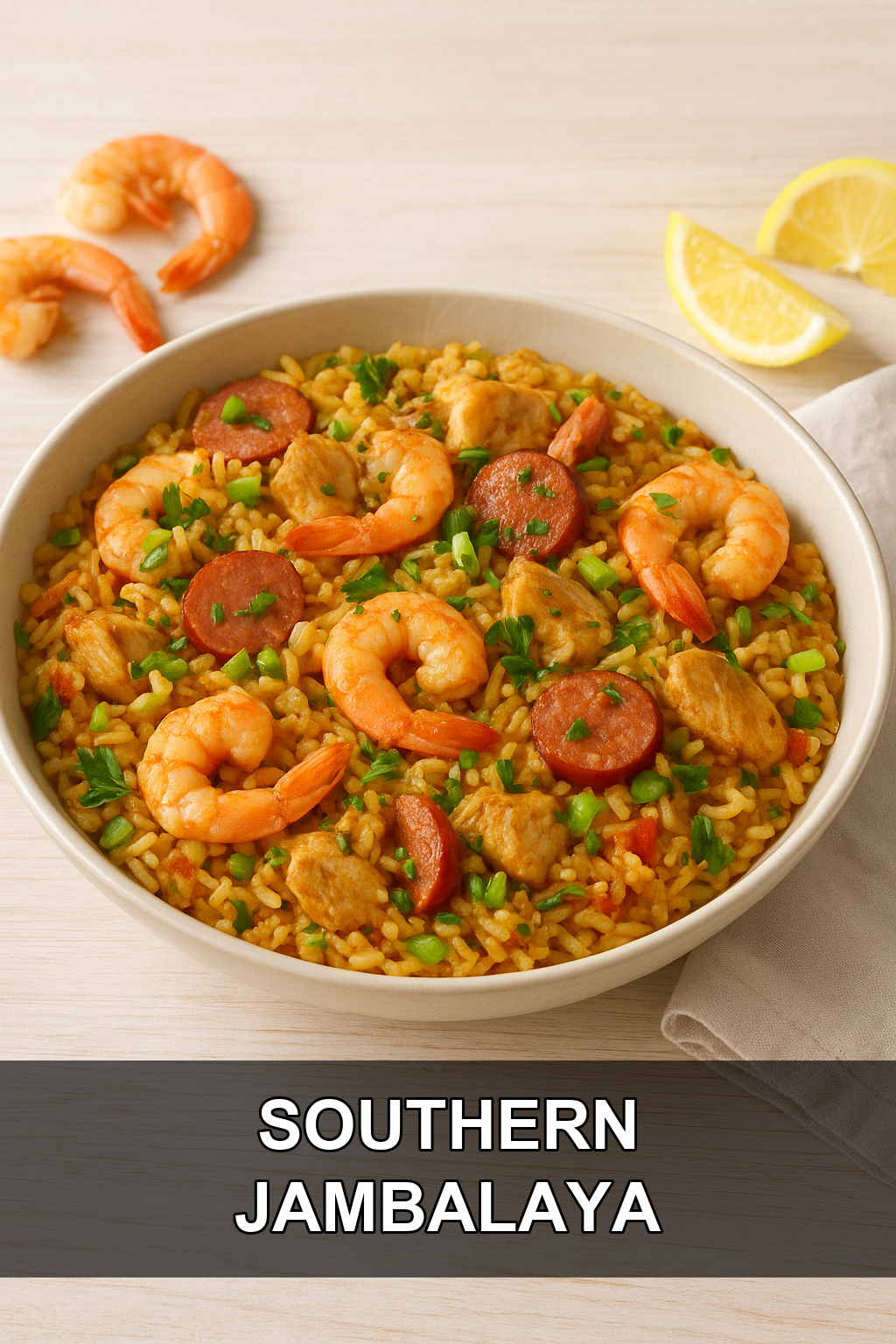
There’s nothing quite like a steaming pot of jambalaya to bring the warmth of Louisiana straight to your kitchen table. This one-pot classic layers smoky sausage, tender chicken, and plump shrimp into a pot of perfectly seasoned rice, and it’s every bit as satisfying to make as it is to eat. Grab your Dutch oven and let’s cook up some real Southern comfort tonight.
What Is Jambalaya?
Jambalaya is a beloved Louisiana rice dish with deep roots in Creole and Cajun cooking traditions. It blends Spanish, French, and West African culinary influences, resulting in a hearty one-pot meal built on the “holy trinity” of onion, bell pepper, and celery, along with a mix of proteins like sausage, chicken, and shrimp.
Unlike gumbo, which is more of a soup or stew served over rice, jambalaya cooks the rice directly in the flavorful broth alongside the meats, so every grain soaks up the smoky, spicy seasoning. It’s the kind of dish that feeds a crowd, warms you from the inside out, and tastes even better the next day.
Tips for Cooking and Prepping
#1: Brown the sausage and chicken separately
Cooking each protein on its own before combining them builds layers of flavor and gives the sausage a nice caramelized edge that boosts the whole pot.
#2: Use andouille sausage if you can find it
Andouille is the traditional smoked sausage used in jambalaya, and its bold, peppery flavor is hard to replicate with a milder substitute.
#3: Don’t skip the trinity
Onion, bell pepper, and celery are the backbone of Cajun and Creole cooking, so give them time to soften fully before adding garlic and spices.
#4: Add shrimp at the very end
Shrimp cook fast and turn rubbery if simmered too long, so stir them in only during the last five minutes so they stay tender and juicy.
#5: Let the rice rest before fluffing
Resting the pot for five minutes off the heat lets the rice finish absorbing moisture evenly, so fluff gently with a fork rather than stirring right away.
#6: Taste and adjust the heat
Cayenne pepper levels vary in intensity, so start on the lighter side and add more toward the end if you want extra kick.
Recipe Variations and Substitutes
Jambalaya is a flexible dish that welcomes swaps based on what you have on hand. Try turkey sausage or chicken sausage for a lighter version, use brown rice for more fiber (adjusting liquid and cook time), or leave out the shrimp entirely for an all-land version. Vegetarians can substitute the meats with hearty vegetables like okra, mushrooms, or plant-based sausage and use vegetable broth instead of chicken broth.
Serving Suggestions
Jambalaya is a complete meal on its own, but it pairs beautifully with a side of crusty French bread, a simple green salad, or cornbread to soak up any extra sauce. A splash of hot sauce or a wedge of lemon squeezed over the top right before eating brightens up all that smoky, savory flavor.
Storing, Make-Ahead, and Freezing Tips
Leftover jambalaya keeps well in an airtight container in the refrigerator for up to 4 days, and the flavors often deepen overnight. For longer storage, freeze cooled jambalaya in freezer-safe containers for up to 3 months, though shrimp can turn slightly tougher after thawing, so add fresh shrimp to reheated portions if desired. Reheat gently on the stovetop with a splash of broth to loosen the rice back up.
FAQs
What’s the difference between jambalaya and gumbo?
Jambalaya cooks rice directly in the pot with the meats and broth, while gumbo is a thicker stew or soup that’s typically served over a separate scoop of rice.
Can I make jambalaya without shrimp?
Yes, jambalaya is delicious with just chicken and sausage if you prefer to skip seafood or have allergies, simply omit the shrimp step entirely.
Why is my jambalaya rice mushy or too dry?
Mushy rice usually means too much liquid or overcooking, while dry rice means too little broth, so measure carefully and check the rice a few minutes before the suggested simmer time is up.
Can I make this recipe ahead of time?
Yes, jambalaya reheats well and actually tastes great the next day, so it’s a great make-ahead option for parties or meal prep, just add the shrimp fresh when reheating for best texture.
What type of rice works best for jambalaya?
Long grain white rice is traditional because it holds its shape and absorbs the seasoned broth without turning gummy.
Authentic Jambalaya Recipe
Prep time: 20 min | Cook time: 45 min | Total time: 65 min | Servings: 6
Ingredients
For the Proteins
- 1 lb chicken breast or thighs, cut into bite sized pieces
- 1 lb smoked sausage, such as andouille, sliced
- 1 lb shrimp, peeled and deveined
For the Vegetables
- 1 onion, finely chopped
- 1-2 bell peppers, chopped
- 2-3 celery stalks, chopped
- 4 garlic cloves, minced
- 1 can diced tomatoes, optional
For the Rice and Broth
- 2 cups long grain white rice
- 4 cups chicken broth
For the Seasoning
- 2 tablespoons olive oil
- 1 tablespoon paprika
- 1 teaspoon dried thyme
- 1 teaspoon dried oregano
- 1/2 teaspoon cayenne pepper, or to taste
- 2 bay leaves
- Salt, to taste
- Black pepper, to taste
For Garnish
- Green onions, chopped
- Fresh parsley, chopped, optional
Instructions
- Prep the ingredients: chop the onion, bell peppers, and celery. Slice the sausage and cut the chicken into bite sized pieces. Mince the garlic.
- Heat olive oil in a large pot or Dutch oven over medium heat. Brown the sausage, then remove and set aside. Cook the chicken until golden, then remove and set aside.
- In the same pot, sauté the onion, bell peppers, and celery until soft. Add the garlic and cook for 30 seconds more.
- Stir in the paprika, thyme, oregano, cayenne, black pepper, and bay leaves, coating the vegetables evenly.
- Mix in the rice and diced tomatoes, if using. Pour in the chicken broth and stir gently to combine.
- Return the cooked sausage and chicken to the pot. Bring to a gentle boil, then reduce the heat to low.
- Cover and simmer for 25-30 minutes, until the rice is tender and the liquid has been absorbed.
- Stir in the shrimp during the last 5 minutes of cooking. Cover and cook until the shrimp turn pink.
- Remove from heat and let rest for 5 minutes. Remove the bay leaves and fluff the rice gently with a fork.
- Garnish with chopped green onions and fresh parsley, and serve hot.
For extra depth of flavor, use the fat left in the pot from browning the sausage to sauté your vegetables. If the rice looks too dry before it’s fully tender, add a splash more warm broth and continue simmering.
Leave a Reply
You must be logged in to post a comment.