
- What Is Jambalaya?
- Tips for Cooking and Prepping
- Recipe Variations and Substitutes
- Serving Suggestions
- Storing, Make-Ahead, and Freezing Tips
- FAQs
- Authentic Jambalaya Recipe
There’s nothing quite like the smell of andouille sausage and the holy trinity of vegetables sizzling away in a big pot of jambalaya. This is the kind of one-pot meal that brings everyone to the kitchen before it even hits the table, and it’s built to feed a crowd without a fuss. Grab your biggest pot and let’s get cooking.
What Is Jambalaya?
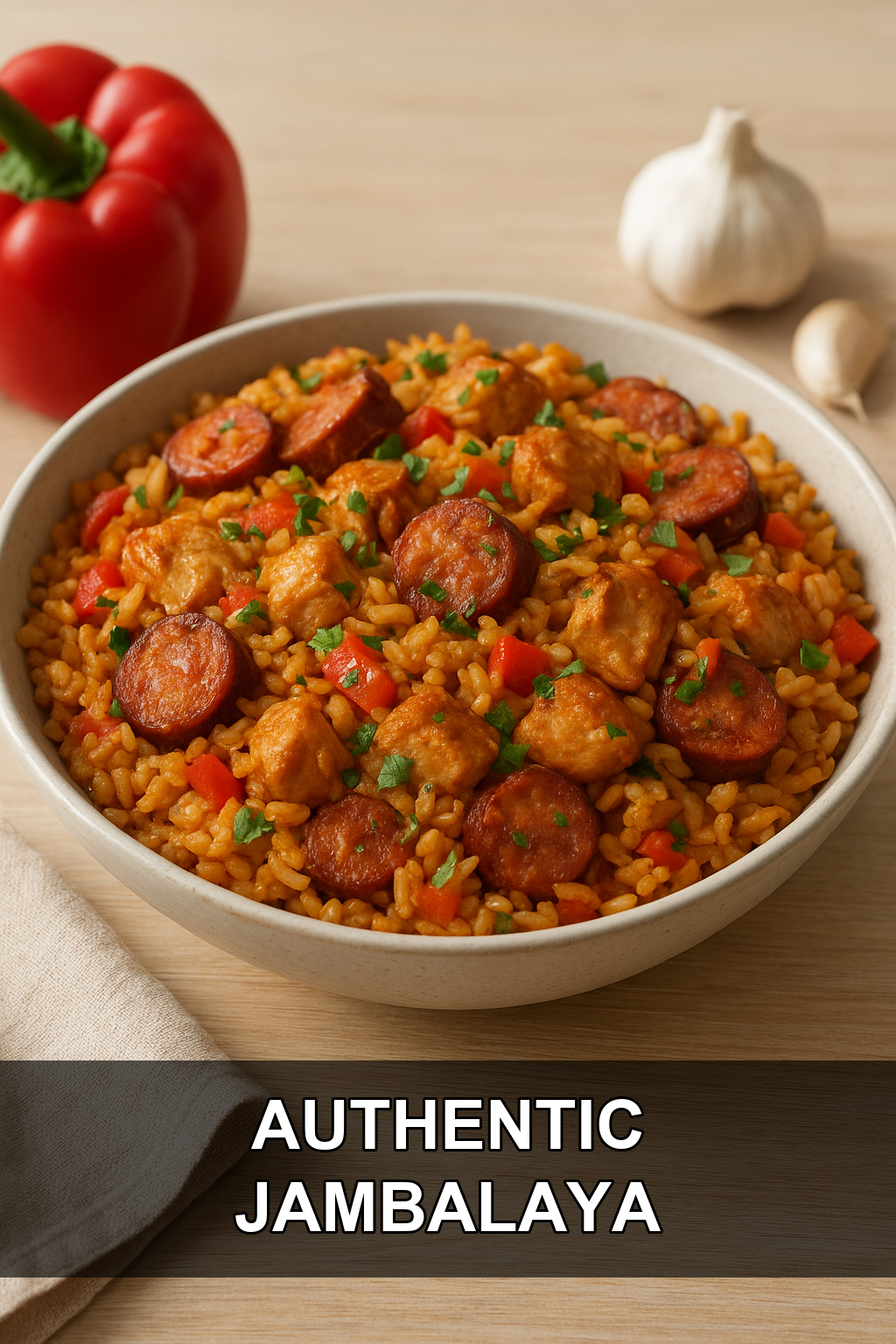
Jambalaya is a hearty, one-pot rice dish rooted in Louisiana Creole and Cajun cooking traditions, born from a mix of French, Spanish, African, and Caribbean culinary influences that all converged in and around New Orleans. At its core, it’s a savory combination of meat (often chicken and smoked sausage), the “holy trinity” of onions, celery, and bell peppers, and rice, all simmered together in a well-seasoned broth so the rice soaks up every bit of flavor as it cooks.
While there are two main styles — red Creole jambalaya made with tomatoes, and brown Cajun jambalaya made without — this version leans Creole with the addition of crushed tomatoes for a rich, slightly tangy depth. It’s a dish that was practically designed for feeding a big family or a party, since it scales up beautifully and only gets better as the flavors meld together.
Tips for Cooking and Prepping
#1: Do all your prep before you turn on the stove
Jambalaya moves fast once you start cooking, so cut your chicken into uniform 1-inch pieces, slice the sausage, and dice your onions, peppers, and celery ahead of time. Having everything ready keeps a large batch from getting chaotic on the stovetop.
#2: Don’t rush the browning
Let the andouille sausage and chicken sit undisturbed in the hot pot until a deep, dark crust forms on each side. That fond left behind is the backbone of jambalaya’s smoky, savory flavor, so resist the urge to stir too soon.
#3: Scrape up every bit of fond when you deglaze
As the onions, peppers, and celery cook down, use a wooden spoon to lift all those browned bits stuck to the pot. This step transfers concentrated flavor straight into the vegetable base instead of leaving it stuck to the bottom.
#4: Stir the rice minimally once it’s added
Stir the rice in just enough to submerge it, then leave it alone. Overworking rice at this stage releases excess starch and can turn your jambalaya gummy instead of light and fluffy.
#5: Trust the resting time
Once the heat is off, keep the lid on and let the pot rest for 10-15 minutes before fluffing. This final rest lets the rice finish absorbing liquid evenly and keeps the bottom from scorching.
Recipe Variations and Substitutes
Swap the andouille for another smoked sausage like kielbasa if that’s what you have, and feel free to add shrimp during the last few minutes of cooking for a seafood twist. Brown rice or a rice blend can also work in place of long-grain white rice, though you’ll need to adjust the liquid and cooking time since brown rice takes longer to cook through.
Serving Suggestions
Jambalaya is a complete meal on its own, but a side of crusty French bread or cornbread is perfect for soaking up any extra sauce. A simple green salad or a scoop of coleslaw on the side adds a cool, crisp contrast to all that smoky, spicy flavor.
Storing, Make-Ahead, and Freezing Tips
Leftover jambalaya keeps well in an airtight container in the fridge for up to 4 days, and the flavors actually deepen overnight, making it a great make-ahead option for gatherings. It also freezes beautifully for up to 3 months; just thaw it in the fridge overnight and reheat gently on the stove with a splash of broth to loosen the rice.
FAQs
Can I make this jambalaya ahead of time?
Yes, jambalaya reheats wonderfully and often tastes even better the next day once the flavors have had time to meld. Just store it covered in the fridge and reheat with a little extra broth to keep the rice from drying out.
What’s the difference between Cajun and Creole jambalaya?
Creole jambalaya includes tomatoes and is sometimes called “red jambalaya,” while Cajun jambalaya skips the tomatoes for a browner, smokier profile. This recipe follows the Creole style thanks to the crushed tomatoes in the base.
Why is my jambalaya rice mushy or gummy?
Mushy rice usually comes from over-stirring after the rice is added or lifting the lid too often during simmering, which releases the steam needed to cook the rice evenly. Stick to a gentle stir when adding the rice and let it simmer undisturbed for the best texture.
Can I make this recipe less spicy?
Absolutely; simply reduce or omit the cayenne pepper and choose a milder Cajun or Creole seasoning blend. You can always add extra hot sauce or cayenne at the table for anyone who wants more heat.
What size pot do I need for this recipe?
Since this recipe makes a large batch to serve about 12 people, you’ll want a heavy-bottomed pot or Dutch oven with at least an 8-quart capacity. This gives the rice and meat enough room to cook evenly without overflowing.
Authentic Jambalaya Recipe
Prep time: 40 min | Cook time: 60 min | Total time: 100 min | Servings: 12
Ingredients
For the Meat
- 2 tbsp vegetable oil, or other high-heat cooking oil
- 2 lbs boneless, skinless chicken thighs, cut into 1-inch pieces
- 1.5 lbs andouille sausage, or other smoked sausage, sliced into ¼-inch rounds
For the Vegetables
- 2 large yellow onions, diced
- 2 large green bell peppers, diced
- 2 stalks celery, diced
- 6 cloves garlic, minced
For the Liquid Base and Rice
- 1 (28 oz) can crushed tomatoes, undrained
- 8 cups chicken broth, low sodium
- 4 cups long-grain white rice, uncooked (such as Carolina Gold or Mahatma)
For the Seasoning
- 2 tbsp Cajun or Creole seasoning blend, divided
- 1 tsp dried thyme
- ½ tsp cayenne pepper, or more to taste
- 2 bay leaves
- Salt and freshly ground black pepper, to taste
For Garnish
- ½ cup fresh parsley, chopped
Instructions
- Before turning on the stove, make sure all your chicken thighs are cut into uniform 1-inch pieces, and slice the andouille sausage into quarter-inch rounds. Finely dice the onions, green bell peppers, and celery, and mince the garlic last to preserve its potent flavor. This mise en place is crucial for managing a large batch smoothly and ensures everything cooks evenly.
- Heat 1 tablespoon of vegetable oil in a very large, heavy-bottomed pot or Dutch oven (at least 8-quart capacity) over medium-high heat. Add the sliced andouille sausage in a single layer and brown thoroughly until a rich, dark crust forms on both sides, about 5-7 minutes. This builds deep, smoky flavor and creates the essential fond at the bottom of the pot. Remove the sausage with a slotted spoon and set aside, leaving the rendered fat and browned bits in the pot.
- Add the remaining tablespoon of vegetable oil to the pot if needed, and increase the heat to high. Add the chicken thigh pieces in a single layer, working in two batches if necessary to avoid overcrowding. Sprinkle half of the Cajun/Creole seasoning over the chicken and sear until golden brown on all sides, about 5-8 minutes per batch, letting a nice fond develop. Remove the browned chicken and set aside with the sausage.
- Reduce the heat to medium and add the diced onions, green bell peppers, and celery to the pot. Cook, stirring frequently and scraping up all the browned bits from the bottom of the pot with a wooden spoon, until the vegetables are softened and translucent, about 8-10 minutes. The trinity should be fragrant and slightly caramelized.
- Add the minced garlic, remaining Cajun/Creole seasoning, dried thyme, and cayenne pepper to the pot. Stir constantly for 1-2 minutes until fragrant, being careful not to burn the garlic. This quick sauté toasts the spices and deepens their flavor.
- Pour in the crushed tomatoes and chicken broth, stirring well and scraping up any remaining browned bits from the bottom of the pot. Bring the mixture to a rolling boil over high heat so the base liquid is hot and ready for the rice.
- Once boiling, add the uncooked long-grain white rice to the pot and stir gently just once or twice to submerge it evenly. Avoid over-stirring, as this can release excess starch and lead to a gummy texture. Return the browned sausage and chicken to the pot, nestling them into the liquid and rice, and add the bay leaves.
- Reduce the heat to the lowest setting, cover the pot tightly with a lid, and let it simmer undisturbed for 25 minutes. Resist lifting the lid or stirring, as the trapped steam is essential for cooking the rice evenly.
- After 25 minutes, turn off the heat but keep the pot covered. Let the jambalaya rest for an additional 10-15 minutes so the rice finishes absorbing any remaining liquid, resulting in fluffy grains and tender meat while preventing scorching on the bottom.
- Remove the bay leaves and gently fluff the jambalaya with a fork, incorporating the sausage and chicken evenly throughout. Taste and adjust seasoning with salt and black pepper as needed, then garnish generously with fresh chopped parsley before serving hot.
For a lighter version, swap in turkey andouille sausage, and for extra seafood flair, stir in a pound of peeled shrimp during the last 5 minutes of simmering. Leftovers keep in the fridge for up to 4 days and freeze well for up to 3 months.
Leave a Reply
You must be logged in to post a comment.