
- What Is Arroz con Gandules?
- Tips for Cooking and Prepping
- Recipe Variations and Substitutes
- What to Serve with Arroz con Gandules
- Storing, Make-Ahead, and Freezing Tips
- FAQs
- Arroz con Gandules Recipe
If there’s one dish that shows up at every Puerto Rican holiday table, it’s arroz con gandules. This one-pot rice and pigeon pea dish is savory, deeply seasoned, and impossible to stop eating once you start. Let’s talk about what makes it so special and how to make it perfectly at home.
What Is Arroz con Gandules?
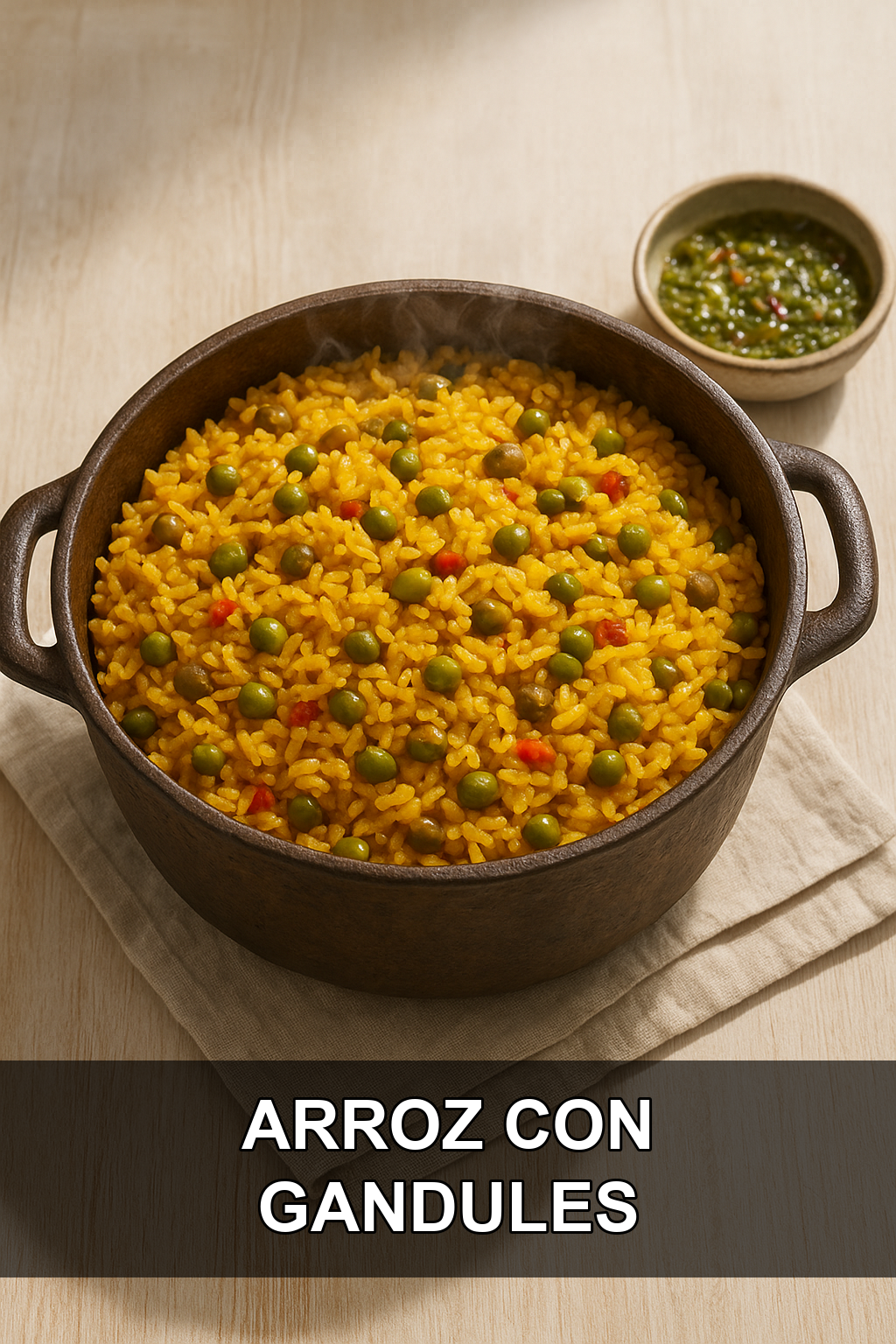
Arroz con gandules is a traditional Puerto Rican rice dish made with pigeon peas (gandules), sofrito, and a blend of warm, earthy seasonings like sazón and achiote. It’s cooked in a caldero, a heavy-bottomed pot that helps develop the coveted pegao — the slightly crispy, caramelized layer of rice that forms on the bottom of the pot and is considered a delicacy in its own right.
Often called Puerto Rico’s unofficial national dish, arroz con gandules is a staple at Christmas dinners, family celebrations, and Sunday meals, usually served alongside pernil (roast pork) or pollo guisado. Its flavor comes from layering ingredients thoughtfully, starting with a fragrant sofrito base and building up with tomato, olives, bay leaves, and seasoned broth before the rice ever hits the pot.
Tips for Cooking and Prepping
#1: Build the sofrito base slowly
Cook the sofrito and ham or bacon over medium heat until fragrant and softened, not browned, so the flavors meld without turning bitter or overly caramelized.
#2: Taste the broth before adding rice
Since the rice absorbs the liquid entirely, the broth should taste boldly seasoned on its own; add another bouillon cube if it tastes flat, because this is your only chance to adjust seasoning.
#3: Use parboiled rice for the best texture
Parboiled rice holds its shape and stays fluffy rather than turning mushy, which is important since this rice simmers and steams for a longer stretch of time.
#4: Don’t skip the resting stir
Stirring the rice once the surface liquid is absorbed helps redistribute the pigeon peas and prevents clumping before you cover it to steam on low.
#5: Let it steam low and slow undisturbed
Resist the urge to lift the lid too often during the final 20-25 minutes; a steady low flame is what creates that prized crispy pegao at the bottom of the caldero.
Recipe Variations and Substitutes
You can swap the country ham or bacon for smoked turkey, or leave it out entirely for a vegetarian version by using vegetable broth and skipping the meat. Fresh or frozen pigeon peas work just as well as canned, and if you don’t have sazón con achiote y culantro on hand, a mix of ground annatto, garlic powder, and cumin makes a decent substitute.
What to Serve with Arroz con Gandules
This dish is a natural partner for pernil, roast chicken, or pollo guisado, and it also pairs beautifully with tostones or a simple avocado salad on the side. For a full Puerto Rican spread, add a slice of pan de agua and a cold glass of coquito or fruit punch.
Storing, Make-Ahead, and Freezing Tips
Leftover arroz con gandules keeps well in an airtight container in the fridge for up to 4-5 days and reheats nicely with a splash of water or broth to restore moisture. It also freezes well for up to 2-3 months; just thaw overnight in the fridge before reheating on the stovetop or in the microwave.
FAQs
What are gandules?
Gandules are pigeon peas, small green legumes commonly used in Caribbean and Latin American cooking that add a slightly nutty, earthy flavor to this rice dish.
Can I make arroz con gandules without a caldero?
Yes, a heavy Dutch oven works just as well and will still help develop a nice bottom crust, though the flavor traditionally associated with a caldero comes largely from the seasoning, not the pot itself.
Why is my rice mushy instead of fluffy?
Mushy rice usually means too much liquid was used or the heat was too high during steaming; sticking to the 3-cup liquid measurement and lowering the flame during the final cook time helps keep the grains separate and fluffy.
Can I use white rice instead of parboiled rice?
You can, but parboiled rice is recommended because it’s more forgiving and less likely to turn sticky or overcooked during the longer steaming process this recipe requires.
Is arroz con gandules the same as arroz con habichuelas?
No, arroz con habichuelas is made with beans cooked separately and served over rice, while arroz con gandules cooks the pigeon peas directly into the rice for a one-pot dish.
Arroz con Gandules Recipe
Prep time: 5 min | Cook time: 25 min | Total time: 30 min | Servings: 8
Ingredients
- 1 tablespoon olive oil
- 1/3 cup country ham or bacon, diced (optional)
- 1/3 cup sofrito
- 3 cups water or low sodium chicken broth
- 1 ½ teaspoons sazón con achiote y culantro
- 1 cube chicken bouillon (or more if needed)
- 2 tablespoons tomato paste (or 1/3 cup tomato sauce)
- 1 teaspoon dried Italian seasoning or oregano
- 1/4 cup fresh cilantro, chopped (optional)
- 2-3 bay leaves
- 2 tablespoons pimento stuffed olives (optional)
- 15 ounce can pigeon peas (gandules), drained and rinsed (or 2 cups fresh or frozen)
- 2 cups parboiled rice
Instructions
- Heat your caldero or Dutch oven over medium heat, and add the olive oil, bacon or ham (if using), and sofrito. Stir constantly until fragrant and tender but not browned, about 4 minutes.
- Add the sazón, tomato paste or sauce, and chicken bouillon cube. Stir to combine well.
- Add the drained pigeon peas, Italian seasoning or oregano, bay leaves, and water or broth. Stir in the cilantro and/or olives if using. Bring to a boil and taste for salt, adding another bouillon cube if it needs more seasoning, since this liquid determines the final flavor of the rice.
- Once boiling, add the rice and stir to submerge it, distributing the pigeon peas evenly throughout the pot.
- Cover and cook until the visible surface liquid is absorbed, then stir the rice once more and cover again. Lower the heat to low and let it steam for 20-25 minutes, until all the liquid is absorbed and the grains are fluffy and fully cooked.
For extra-crispy pegao, let the rice cook a few minutes longer undisturbed on low heat once the liquid is fully absorbed before serving.
Leave a Reply
You must be logged in to post a comment.